Maha Saptami 2026 Date, Nabapatrika Rituals & Significance
Maha Saptami 2026 brings devotees across India and the Bengali diaspora into the heart of Durga Puja celebrations. Observed on the seventh day of the bright fortnight (Shukla Paksha) in the month of Ashwin, this auspicious occasion marks the formal beginning of the principal worship of Goddess Durga. In 2026, the Saptami Tithi begins at 5:54 AM on Saturday, October 17, and ends at 8:27 AM on Sunday, October 18. Regional differences in sunrise times mean Delhi-NCR observes key rituals including Navapatrika Puja on October 17, while many traditions in Kolkata and Bengal follow the Bisuddha Siddhanta Panjika and observe Maha Saptami and Kolabou Puja on October 18.
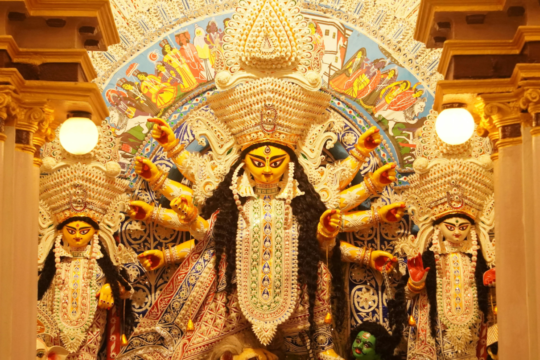
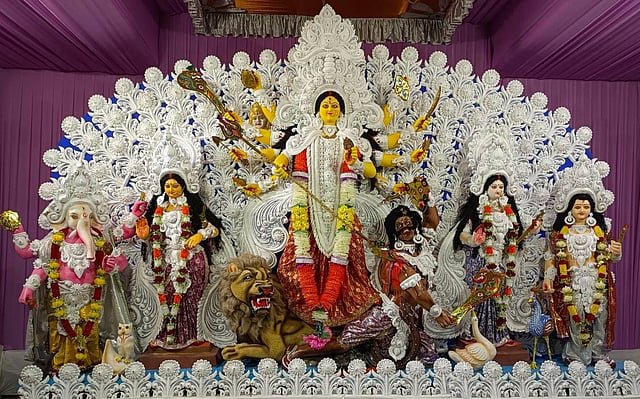
This day holds profound spiritual weight. According to tradition and the Devi Mahatmya, Maha Saptami signifies the moment Goddess Durga begins her epic battle against the buffalo demon Mahishasura. It is also the day dedicated to Maa Kalaratri, the fierce seventh form of Navadurga, who destroys ignorance, fear, and negativity. Devotees seek her blessings for courage, protection, and the triumph of good over evil. The festival unites families, communities, and temples in prayer, cultural performances, and shared devotion, especially in West Bengal, Odisha, Assam, and Bangladesh, where thousands of pandals come alive with dhak drums, conch shells, and the fragrance of incense.
The central ritual of Maha Saptami is Nabapatrika Puja, popularly known as Kola Bou or Kolabou Snan. Nabapatrika means “nine plants.” These nine sacred plants are carefully tied together and worshipped as a living embodiment of Goddess Durga and her divine energies, as well as a symbol of nature’s fertility and abundance. The nine plants are:
- Banana (Kola or Rambha)
- Turmeric (Halud or Haridra)
- Pomegranate (Dalim or Dadima)
- Bel or Bael (Bilva)
- Ashoka
- Jayanti
- Arum or Colocasia (Kochu or Kachu)
- Giant Taro or Maan (Manaka)
- Paddy or Rice (Dhaan or Dhanya)
At dawn, the Nabapatrika is taken in a ceremonial procession to a river, pond, or other water body for a sacred bath. Priests and devotees perform the bathing ritual amid the sound of dhak, ululation by women, and Vedic chants. After the bath, the bundle is draped in a red or orange sari, adorned like a bride, and placed beside the idol of Lord Ganesha in the puja pandal. This act represents the goddess as the mother of Ganesha and underscores the deep ecological reverence in Hindu tradition—nature itself is worshipped as divine.
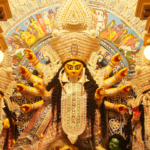
Following the Nabapatrika Snan comes Pran Pratishtha, the life-infusion ceremony. Through mantras, mudras, and sacred water, the priest invokes the divine presence into the clay idol of Goddess Durga. Until this moment the idol is considered an artistic representation; after Pran Pratishtha it becomes the living embodiment of the goddess. Many traditions also perform Mahasnan, in which a mirror reflecting the goddess’s image is ritually bathed with various sacred waters, oils, and soils, symbolizing purification.
The full Shodashopachara Puja follows—sixteen traditional offerings that include water for washing the feet and hands, flowers, incense, lamps, fragrance, fruits, sweets, and other items. Devotees offer pushpanjali (flower offerings) with the chant of “Ya Devi Sarvabhuteshu” and other hymns from the Durga Saptashati. Bhog, typically khichuri, labra (mixed vegetables), fruits, and sweets, is prepared and offered. Evening aarti with dhunuchi (incense burners filled with coconut husk and resin) creates an atmosphere of intense devotion as clouds of fragrant smoke rise and devotees dance to the rhythm of the drums.
In many households and community pandals, the day also includes the worship of the Ashtanayikas—the eight female warriors created by Durga to assist her in battle. The nine plants of the Nabapatrika are understood to represent these eight goddesses plus Durga herself. The ritual therefore becomes both a botanical offering and a symbolic marshalling of divine forces against evil.
Beyond the formal rituals, Maha Saptami is a day of community bonding. Markets bustle with last-minute shoppers buying new clothes, flowers, and offerings. Pandal-hopping begins in earnest. Cultural programmes—classical dance, Rabindra Sangeet, folk performances, and modern themes—take centre stage in larger pandals. In Assam, Odisha, and Bangladesh, similar scenes unfold as devotees throng temples and temporary mandaps. In 2026, Bangladesh alone reported over 33,000 puja mandaps, reflecting the festival’s living vitality.
Astrologically and calendrically, the slight variation between October 17 and 18 arises because the Saptami Tithi straddles two civil dates and because different regions follow different rules regarding sunrise and the prevailing tithi. Devotees are advised to consult their local panjika or temple authorities for the precise muhurat of Nabapatrika Snan and Pran Pratishtha in their city. In Delhi-NCR, sunrise on October 17 is around 6:23 AM, by which time Saptami has already begun, supporting observance on the 17th. In Kolkata, sunrise occurs earlier, while Shashthi is still current, leading many to observe the main rituals on the 18th.
Spiritually, Maha Saptami invites devotees to awaken their own inner strength. Just as Durga prepares for battle, worshippers are encouraged to confront personal obstacles—fear, anger, inertia—with courage and clarity. Fasting or partial fasting is observed by many. Chanting of the Argala Stotram, Devi Suktam, and selected chapters of the Chandi Path is common. The colour associated with the day in some Navratri traditions is grey or a dark shade linked to Kalaratri, though regional practices vary.
As the sun sets on Maha Saptami, the energy shifts toward the more intense rituals of Maha Ashtami and Sandhi Puja that follow. Yet the foundation laid on Saptami—the living presence of the goddess, the honouring of nature through the nine plants, and the collective devotion of the community—remains the spiritual core of the festival. For millions, the sight of the Kola Bou standing gracefully beside Ganesha, the resonant beat of the dhak, and the shared prasad create memories that last long after the idols are immersed.
Whether observed on October 17 or 18 in 2026, Maha Saptami continues to affirm an ancient truth: the divine feminine energy is both fierce and nurturing, present in the clay idol, in the green plants of the earth, and in the hearts of those who call upon her with sincerity. May the blessings of Goddess Durga and Maa Kalaratri bring strength, protection, and victory to all devotees this year.