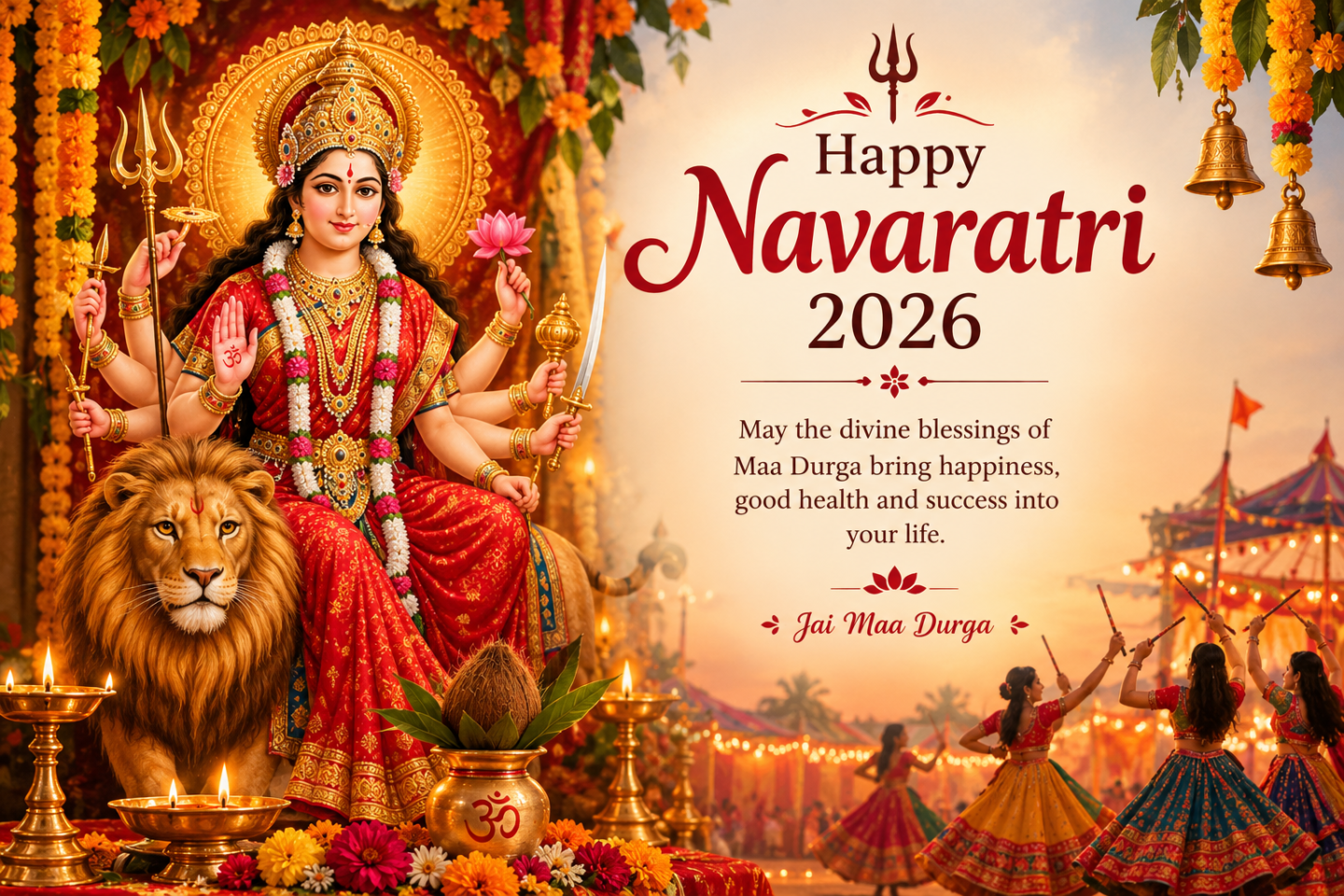
Navaratri 2026: Complete Guide to 9 Days of Goddess Durga Worship, Dates, Colours & Rituals
Sharad Navaratri 2026 has brought a wave of devotion, colour and spiritual energy across India and the global Hindu community. The nine-night festival dedicated to Goddess Durga and her nine forms, collectively known as Navadurga, began on Sunday, 11 October 2026 with the sacred ritual of Ghatasthapana and continues until Monday, 19 October. Vijayadashami, popularly known as Dussehra, falls on Tuesday, 20 October, marking the triumphant conclusion of this powerful celebration of Shakti.
As of today, 15 October 2026, devotees are observing the fifth day dedicated to Maa Skandamata. Temples are overflowing with bhajans, homes are filled with the fragrance of incense and flowers, and communities from Gujarat to West Bengal, Tamil Nadu to Nepal are immersing themselves in the joyous spirit of Navaratri. This comprehensive news report covers every essential detail of Navaratri 2026 so that readers searching for accurate information find everything they need in one place.
Why Navaratri Matters in 2026
Navaratri, meaning “nine nights,” is one of the most significant festivals in the Hindu calendar. It commemorates the epic battle described in the Devi Mahatmya in which Goddess Durga fought the buffalo demon Mahishasura for nine days and nights before defeating him on the tenth day. The festival symbolises the eternal victory of good over evil, light over darkness, and divine feminine energy over ignorance.
In 2026 the timing of the tithis has created a unique calendar. Because Saptami prevails at sunrise on both 17 and 18 October, Durga Ashtami and Maha Navami are observed together on Monday, 19 October in most of North India and according to pan-India panchangs. This rare alignment makes the final two days especially powerful for devotees.
Complete Day-Wise Calendar of Navaratri 2026
Here is the verified day-by-day schedule based on widely followed panchangs:
- Day 1 – 11 October (Sunday): Maa Shailputri – Colour: Orange. Ghatasthapana marks the official start.
- Day 2 – 12 October (Monday): Maa Brahmacharini – Colour: White.
- Day 3 – 13 October (Tuesday): Maa Chandraghanta – Colour: Red. Sindoor Tritiya is also observed.
- Day 4 – 14 October (Wednesday): Maa Kushmanda – Colour: Royal Blue.
- Day 5 – 15 October (Thursday): Maa Skandamata – Colour: Yellow. Upang Lalita Vrat falls on this day.
- Day 6 – 16 October (Friday): Maa Katyayani – Colour: Green. Saraswati Avahan begins.
- Day 7 – 17 October (Saturday): Maa Kalaratri – Colour: Grey.
- Day 8 – 18 October (Sunday): Maa Mahagauri – Colour: Purple.
- Day 9 – 19 October (Monday): Maa Siddhidatri – Colour: Peacock Green. Durga Ashtami, Sandhi Puja and Maha Navami are observed together.
Vijayadashami / Dussehra follows on 20 October with Ayudha Puja, Navratri Parana and the immersion of Durga idols in many regions.
Ghatasthapana and Key Rituals
Ghatasthapana, the installation of the sacred kalash, was performed on 11 October within the auspicious morning muhurat (approximately 6:19 AM to 10:12 AM IST in Delhi, with Abhijit muhurat as an alternative). Families sow barley seeds in a clay pot, place a coconut on top of the kalash and invoke the presence of Goddess Durga. The growing barley shoots throughout the nine days are considered a sign of prosperity.
Daily rituals typically include:
- Morning and evening aarti
- Recitation of Durga Saptashati or Devi Mahatmya
- Offering of flowers, fruits and specially prepared bhog
- Fasting (many devotees observe full or partial fasts)
- Wearing the colour of the day as a mark of devotion
On Ashtami and Navami, Kanya Puja (worship of young girls as forms of the Goddess) is performed with great reverence.
Regional Celebrations Across India
Navaratri is celebrated with distinctive local flavours:
- Gujarat and parts of Western India: Vibrant Garba and Dandiya nights fill open grounds and community halls every evening.
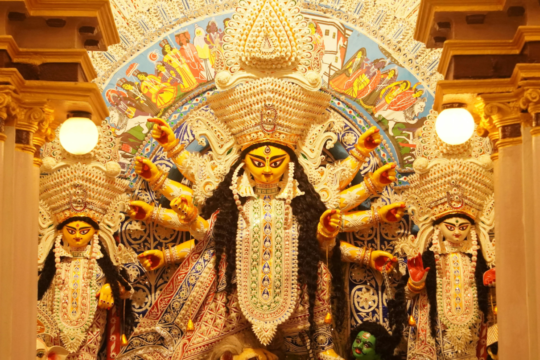
- West Bengal and Eastern India: The festival merges into grand Durga Puja. Elaborate pandals, artistic idols and cultural programmes dominate the landscape. Maha Ashtami and Maha Navami hold special importance.
- Tamil Nadu and South India: Golu (display of dolls) is a cherished tradition. Homes arrange stepped platforms with figurines depicting mythological stories.
- Karnataka: Mysuru Dasara is famous for its royal processions, culminating in the Jamboo Savari.
- Telangana: Bathukamma festival of flowers runs parallel to Navaratri.
- North India: Ramlila performances narrate the story of Lord Rama’s victory over Ravana, culminating in the burning of effigies on Dussehra.
Temples such as Vaishno Devi, Kamakhya, Kalighat, Meenakshi and the Tirumala shrine have organised special darshans and vahana sevas throughout the nine days.
The Nine Forms of Navadurga and Their Significance
Each form of the Goddess represents a distinct aspect of divine power:
- Shailputri – Daughter of the mountains, symbol of strength and stability.
- Brahmacharini – The ascetic form, bestower of knowledge and penance.
- Chandraghanta – The fierce yet peaceful form who removes fear.
- Kushmanda – The cosmic creator who brings the universe into existence with her smile.
- Skandamata – Mother of Kartikeya, embodiment of maternal love and protection.
- Katyayani – The warrior form who grants courage and victory.
- Kalaratri – The dark and fierce form that destroys ignorance and negativity.
- Mahagauri – The pure and radiant form who grants peace and purity.
- Siddhidatri – The giver of all siddhis (spiritual powers) and ultimate fulfilment.
Devotees believe that sincere worship during these nine nights removes obstacles, brings health, prosperity and spiritual growth.
Fasting, Colours and Practical Tips for Devotees
Many people observe vrat during Navaratri, consuming only satvik food such as fruits, milk, sabudana, kuttu and singhara flour preparations. Some observe a complete waterless fast on specific days.
Wearing the designated colour each day is a popular modern tradition that adds visual unity to the celebrations. From bright orange on the first day to peacock green on the ninth, the colours reflect the progressive journey of the soul.
Practical advice for 2026:
- Confirm local muhurat timings as they vary slightly by city.
- Maintain cleanliness and a positive atmosphere at home.
- Participate in community aartis or online live darshans if travel is difficult.
- On 19 October, plan Kanya Puja carefully as Ashtami and Navami coincide.
The Spiritual Message of Navaratri 2026
Beyond rituals and colours, Navaratri invites every individual to look within. The nine nights represent the gradual purification of the mind and awakening of inner Shakti. In a world filled with challenges, the festival reminds humanity that divine strength resides within each person and that righteousness ultimately prevails.
As the festival moves toward its climax on 19 and 20 October, millions will gather for Sandhi Puja, the critical moment when Ashtami meets Navami, believed to be especially powerful for invoking the Goddess’s blessings.
Navaratri 2026 continues to unite families, strengthen community bonds and reaffirm faith in the protective power of Maa Durga. Whether through quiet home worship, energetic Garba circles or majestic temple processions, the message remains the same: may the divine mother bless everyone with strength, wisdom and lasting joy.
Jai Mata Di!