Shocking Ban: Delhi Shuts Central Park for CJP Protest Today – Police Issue Strict Warning
New Delhi: In a major development that has drawn widespread attention across the national capital, the New Delhi Municipal Council (NDMC) has ordered the complete closure of Central Park in Connaught Place on October 16 and 17, 2026. The decision comes directly ahead of the Cockroach Janta Party’s (CJP) planned “Lehra do Tiranga” march, turning the spotlight once again on the ongoing cjp protest activities in the heart of Delhi.
The NDMC notice, issued on October 15, clearly states that the popular green space located at the centre of Connaught Place’s inner circle “shall remain closed to the general public on 16th October 2026 & 17th October 2026, due to administrative reasons.” This sudden lockdown of one of Delhi’s most iconic public spaces has intensified the already charged atmosphere surrounding the latest phase of the cjp protest.
Delhi Police moved quickly to clarify its position. While acknowledging that small, controlled gatherings for waving the national flag and singing the national anthem might be considered, the force issued a firm public appeal. Protesters and ordinary citizens have been urged not to join any assembly that violates prohibitory orders under Section 163 of the Bharatiya Nagarik Suraksha Sanhita (BNSS). “Appropriate legal action will be taken against those who violate these orders,” the police statement warned. DCP PRO Neha Yadav further noted that the force may allow a limited number of people at a suitable location solely for patriotic activities, but any disruption to peace, order, or local businesses would not be tolerated.
Traffic authorities have also sounded the alert. Delhi Traffic Police announced that movement on several roads in and around Connaught Place is likely to face restrictions from 3 PM onwards on Friday. Commuters have been advised to plan journeys carefully, prefer public transport, and follow directions from traffic personnel. Diversions may be enforced depending on the ground situation, adding another layer of inconvenience for office-goers and shoppers in the busy commercial hub.
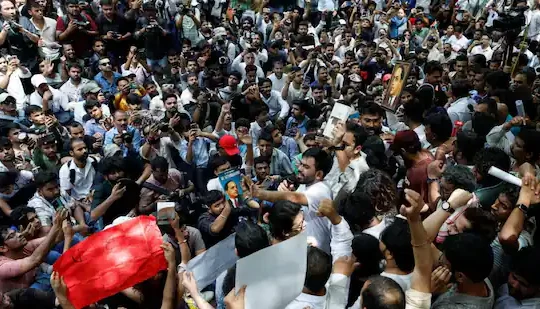
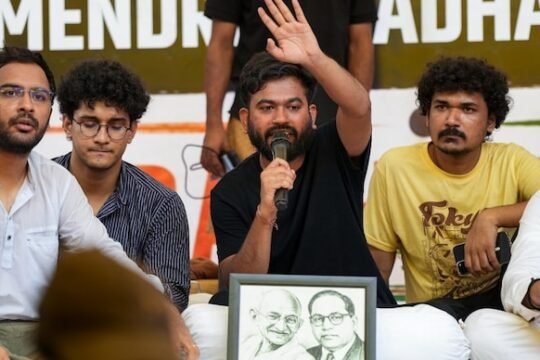
The roots of the current cjp protest stretch back to recent events at Jantar Mantar. Earlier this week, Delhi Police denotified Jantar Mantar as a designated protest site. In response, CJP co-conveners Saurav Das and Ashutosh Ranka entered the venue, raised slogans demanding the resignation of Chief Election Commissioner Gyanesh Kumar, and were subsequently arrested. Both were remanded to five days of judicial custody on Wednesday. The arrests prompted CJP founder Abhijit Dipke to call for a broader show of solidarity.
Addressing a press conference on Thursday, Dipke appealed to political parties and civil society groups to “rise above ideology and come together.” He stressed that the right to vote itself was under threat and that democracy could not survive if voter rights were not protected. The “Lehra do Tiranga” march, scheduled for 5 PM on Friday at Central Park, was presented as a peaceful, patriotic expression of that concern. Participants were encouraged to carry the national flag as a symbol of unity and democratic resolve.
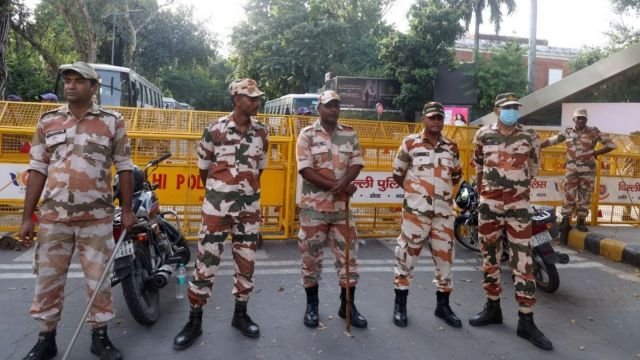
Security arrangements have been significantly stepped up. Multiple companies of paramilitary forces have been stationed across the national capital. Barricades are expected at strategic points, and the movement of both protesters and the general public will be tightly regulated. A senior police officer confirmed that Connaught Place itself is not a designated protest venue. Officials reiterated that alternative sites such as Ramlila Maidan, Burari Ground, or CBD Ground remain available for demonstrations, provided the necessary permissions are obtained in advance.
The cjp protest has already generated heated public debate. Supporters view the march as a legitimate exercise of democratic rights and a stand against alleged large-scale voter deletions. Critics, including some administrative voices, argue that repeated attempts to gather at non-designated locations risk public order and inconvenience residents and traders. The NDMC’s decision to shut Central Park for two full days underscores the administration’s determination to prevent any escalation.
Background context adds further weight to the situation. Just days earlier, chaos had erupted at a press meet addressed by Abhijit Dipke and Neha Bora when slogans of “Band Karo” interrupted the event. Dipke claimed that over 13 crore voters had been deleted from electoral rolls, a figure that continues to fuel the organisation’s campaign. The denotification of Jantar Mantar and the subsequent arrests have only sharpened the confrontation between the group and the authorities.
For ordinary Delhiites, the practical impact is immediate. Central Park, a favourite lunch-time and evening spot for office workers and tourists, will remain inaccessible. Shopkeepers in Connaught Place face potential loss of footfall if traffic diversions and police barricades persist. Tourists hoping to visit the circular market may find their plans disrupted. At the same time, the police emphasis on allowing limited patriotic activity suggests an attempt to balance security concerns with respect for national symbols.
Legal experts note that Section 163 BNSS (the successor provision to the earlier Section 144 CrPC) gives authorities wide powers to prohibit assemblies that could disturb public tranquillity. Any individual or group ignoring the prohibitory orders risks arrest and prosecution. The police statement leaves little room for ambiguity on this point.
As Friday progresses, all eyes remain on Connaught Place. Will CJP supporters attempt to reach Central Park despite the closure? Will the authorities permit a controlled flag-waving event at an alternative spot? Or will the day pass with only scattered gatherings and heightened security presence? The answers will shape the next chapter of the ongoing cjp protest narrative.
The episode also raises broader questions about the space available for peaceful dissent in the national capital. With Jantar Mantar no longer a designated site and Central Park now sealed for administrative reasons, organisers of future protests will have to navigate a narrower set of options and stricter permission requirements. Ramlila Maidan and the other notified grounds may see increased demand in the coming weeks.
For now, the message from both the civic body and the police is clear: the cjp protest planned at Central Park will not be allowed to proceed as originally announced. Citizens have been requested to cooperate, avoid any unlawful assembly, and help maintain the peace and commercial activity of the area. The coming hours will reveal whether that appeal is heeded or whether fresh confrontations emerge on the streets of Connaught Place.
In a city where politics and public spaces frequently collide, today’s developments around the cjp protest serve as a sharp reminder of the delicate balance between the right to assemble and the responsibility to uphold law and order. The closure of Central Park, the police warnings, and the heavy security deployment together mark one of the most significant administrative responses to a civil society mobilisation in recent months.
Residents, traders, and political observers will be watching closely as the day unfolds.