Shocking US Midterms 2026 Results: Democrats Sweep Congress as Trump Concedes Defeat Over Iran
In a stunning nationwide rejection of President Donald Trump’s leadership, Democrats seized control of both the U.S. House of Representatives and the U.S. Senate in the 2026 midterm elections, delivering what multiple outlets described as a widespread repudiation of Republican governance. The US Midterms 2026 results, finalized and projected by the Associated Press on Wednesday, mark one of the most decisive midterm swings in recent American history and set the stage for intense congressional resistance during the final two years of Trump’s second term.
Voters across the country, including in traditionally reliable Republican strongholds, expressed deep frustration over high living costs, tariffs, and the consequences of Trump’s military confrontation with Iran. The conflict drove up fuel and grocery prices, amplifying dissatisfaction with an already unpopular administration. Democrats flipped multiple Senate seats in ruby-red and battleground states while capturing enough House districts—some of which had supported Trump by double-digit margins in 2024—to take firm control of Congress.
Trump Congratulates Democrats but Rejects Personal Blame
President Trump addressed the results in an interview with Fox News, offering a measured but defiant response. “Congratulations to the Democrats. They did a good job. They’ve been looking for this one for 11 years, and they finally got it. But I don’t view it as a hit on me… We’ve had the greatest two years in the history of the presidency,” he said.
Trump acknowledged that the Iran conflict played a role in the Republican losses. “I think a part of it was Iran, but at the same time, people understood the importance of what I’ve done with Iran,” he added. Iranian officials quickly claimed the outcome as validation of their position. Top negotiator Mohammad Bagher Ghalibaf posted on X that Americans had said “no to war,” writing, “Conscience or the cost of living, Americans said NO TO WAR, and we endorse this message.”
The Democrats win 2026 midterms narrative centers on voters’ desire for stronger checks on the White House. According to the Associated Press Voter Poll, many Americans blamed the administration for elevated costs and wanted Congress to impose greater oversight on Trump’s agenda.
Historic Senate Flips and New Faces in Congress
Democrats scored at least seven Senate seats in states that had long favored Republicans. The most dramatic upset came in Kansas, where Methodist megachurch pastor Adam Hamilton defeated Republican Sen. Roger Marshall. Hamilton’s victory ended a 94-year drought for Kansas Democrats in Senate races—the longest such streak in the nation—and featured a record-breaking campaign expenditure of around $110 million in the low-cost state.
In Michigan, progressive Democrat Abdul El-Sayed, 42, defeated Trump ally Mike Rogers to become the first Muslim senator in U.S. history. El-Sayed secured 51.97 percent of the vote despite a polarizing campaign in which opponents sought to link him to the Muslim Brotherhood and Trump repeatedly mocked his name. Of Egyptian descent and married to Indian-origin psychiatrist Sarah Jukaku, El-Sayed is expected to emerge as a vocal critic of the administration.
Additional Democratic Senate pickups included seats in Iowa, Texas, Ohio, Maine, North Carolina, and South Carolina. In Nebraska, however, Republican Pete Ricketts held on against independent Dan Osborn, with Trump having strongly endorsed Ricketts as a champion of farmers, border security, and the Second Amendment.
House Control and Statewide Victories Amplify the Wave
Beyond the Senate, Democrats captured the House, flipping districts that had backed Trump by as much as 18 points two years earlier. The dual chambers now under Democratic control will give the party power to block legislation, launch investigations into the Trump administration, and scrutinize judicial and executive appointments.
Governorships also shifted. Democrats Keisha Lance Bottoms in Georgia, Amy Acton in Ohio, Rod Sand in Iowa, and Gina Hinojosa in Texas flipped Republican-held offices. In California, former Biden administration official and longtime public servant Xavier Becerra defeated Republican Steve Hilton to succeed term-limited Gov. Gavin Newsom. Becerra, who will become California’s first Latino governor since the late 19th century, vowed to defend the state against Trump policies on immigration and voting rights. “If anyone wants to come after California or any one Californian, they better be ready for a fight,” he told supporters near Sacramento.
Other notable House results included Democrat Ro Khanna’s reelection in California’s 17th Congressional District and Ilhan Omar’s decisive victory for a fifth term in Minnesota’s 5th District, where she took 76.45 percent of the vote against Republican John Nagel despite facing a federal investigation and sharp criticism from Trump.
In New York, Attorney General Letitia James, a frequent Trump adversary, won a third term by a wide margin over Republican Saritha Komatireddy.
Elon Musk’s Sarcastic Response and Broader Political Reactions
Billionaire Elon Musk, who had spent approximately $250 million supporting Republican candidates according to reports, reacted with characteristic sarcasm on X. “Data centers in space looking pretty appealing right now,” he wrote, followed by, “Guess my election-interfering space lasers didn’t work this time.” One of Musk’s major investments, the Texas Senate race, saw Republican Ken Paxton fall to Democrat James Talarico, who compared his underdog campaign to David versus Goliath in his victory speech.
Former President Barack Obama praised the results as a call for unity and concrete solutions. “Tonight, the American people sent a clear message—they want a politics that brings people together rather than divides them, and leaders who offer concrete solutions to the challenges they face,” Obama said. He credited outstanding candidates across regions and thanked election officials and volunteers from both parties. Looking ahead, Obama stated that while the current administration has two years remaining, Democrats must “roll up our sleeves, make changes wherever we have the power to do so, prevent further damage, and lay the groundwork for the future.”
Senator Bernie Sanders welcomed the shift in power. “Democrats will now control the House and Senate and be able to hold Trump accountable. That’s great,” he posted, while urging the party to fight aggressively for working families amid massive income inequality. “No more excuses,” Sanders added.
Some observers linked the Democratic momentum in part to the earlier victory of New York Mayor Zohran Mamdani, whose focus on bread-and-butter issues such as healthcare was credited with helping reorient the party toward working-class concerns. Mamdani himself had spoken of a growing movement beginning in New York City and spreading nationally.
Voter Anger Over Costs, Tariffs, and the Iran Conflict
The US Midterms 2026 outcome reflected accumulated grievances. Rising fuel prices linked to the Iran war compounded existing dissatisfaction with tariffs and the overall cost of living. Young voters and those in suburban and previously Republican-leaning areas turned out in force for Democratic candidates. In Georgia, 22-year-old paralegal Michael Diaz captured the mood of many when he said of Democrat Jon Ossoff’s strong performance, “I’m just so happy. I’m so eager.”
The results also carried international echoes. Indian political commentator Tehseen Poonawalla argued that Trump’s earlier critical remarks about India’s economy had unified Indians across political lines. Separately, Cockroach Janta Party founder Abhijeet Dipke used the American results to jab at India’s Chief Election Commissioner, while others framed the vote as part of a broader global pushback against divisive politics.
What Comes Next for Divided Government
With Democrats now holding both chambers, the final two years of Trump’s presidency will feature heightened oversight and legislative gridlock on many fronts. The opposition is positioned to investigate administration actions, challenge appointments, and push its own priorities on healthcare, costs, and foreign policy restraint. At the same time, internal Democratic tensions—between progressive and more traditional factions, particularly on issues such as Israel and healthcare—will test the party’s ability to govern cohesively.
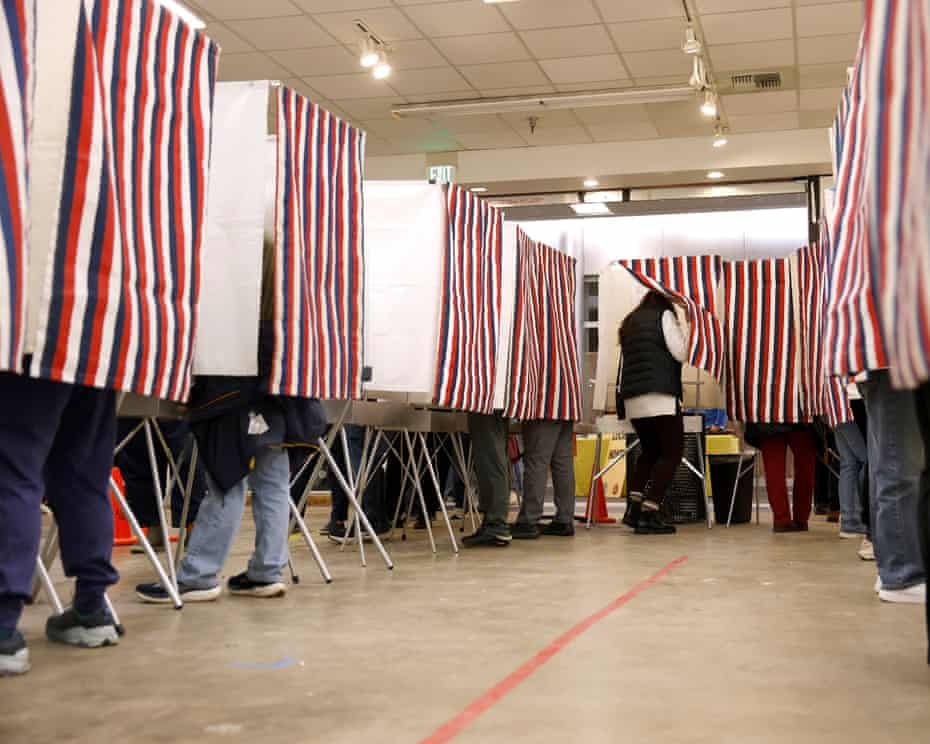
The Democrats win 2026 midterms story is still unfolding as final tallies continue in some races, but the broad contours are clear: a decisive shift in power, a president acknowledging the impact of foreign conflict on domestic politics, and an electorate that used the midterm ballot to demand greater accountability. For millions of Americans who stood in long lines at polling places from Pennsylvania to California, the message delivered on November 3, 2026, was unmistakable.
As the new Congress prepares to convene, both parties face the challenge of translating election night drama into governing results. Republicans must reckon with losses deep into their traditional base, while Democrats must convert their mandate into tangible improvements on the issues that drove voters to the polls—above all, the everyday costs of living and the desire for a less confrontational path on the world stage. The US Midterms 2026 have redrawn the political map in Washington, and the consequences will shape American policy through 2028 and beyond.