Supreme Court Allows Green Crackers for Diwali in Delhi-NCR on November 7 and 8 with Strict Time Slots and Restrictions
Supreme Court Allows Green Crackers for Diwali in Delhi-NCR: Two Strict Time Slots and Key Safeguards Announced
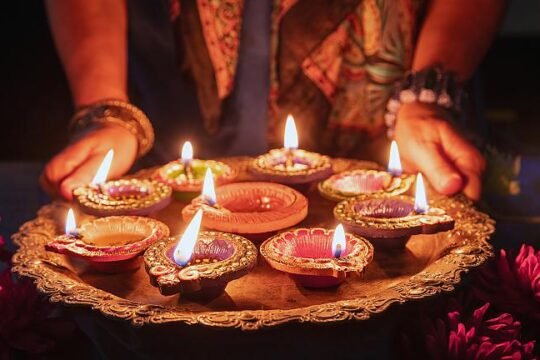
In a significant decision for millions of residents preparing for Diwali celebrations, the Supreme Court of India has permitted the bursting of green firecrackers across the National Capital Region, including Delhi, on November 7 and 8, 2026. The permission comes with tightly defined time windows and multiple safeguards aimed at balancing festive traditions with public health and environmental concerns that have long plagued the region during the festival season.
The apex court has cleared the use of green crackers only during two designated slots: 6 am to 7 am and 8 pm to 10 pm. This limited window is intended to reduce prolonged exposure to emissions while still allowing families and communities to observe traditional Diwali rituals involving lights and sound. The order builds directly on the court’s earlier directions issued on October 15, 2025, maintaining continuity in the regulatory approach toward firecracker use in one of India’s most polluted urban corridors.
Why the Focus on Green Crackers and Controlled Timing
Delhi-NCR has repeatedly faced severe air quality deterioration around Diwali. Traditional firecrackers release high levels of particulate matter, sulphur dioxide and other pollutants that push the Air Quality Index into the “severe” category for days. Green crackers, developed and certified to produce lower emissions and reduced noise, have been positioned by regulators as a relatively less harmful alternative. By restricting their use to just two short periods each day, the Supreme Court seeks to limit the cumulative impact on air quality and on vulnerable populations.
The court has also imposed a clear spatial restriction. Bursting of any firecrackers is prohibited within a 300-metre radius of hospitals, nursing homes, primary and district health centres, old-age homes and notified silence zones. Authorities have been directed to identify these locations, formally designate them as “No-Cracker Zones,” mark the areas appropriately on the ground, and publicise the restrictions widely so that residents and enforcement teams are fully aware.
Educational institutions have also been included in the list of places that must be treated as No-Cracker Zones. This comprehensive mapping and public communication exercise is expected to reduce accidental violations and protect patients, the elderly and students from sudden noise and smoke spikes.
Practical Implications for Residents and Enforcement Agencies
For ordinary residents of Delhi, Noida, Gurugram, Faridabad, Ghaziabad and surrounding areas, the order means celebrations will need careful planning. Families intending to burst green crackers must stick strictly to the two permitted slots. Buying and stocking only certified green crackers becomes essential, as conventional high-emission crackers remain outside the scope of the permission.
Local administrations, police and pollution control boards now carry the responsibility of identifying and clearly marking the 300-metre buffer zones around sensitive institutions. They must also run information campaigns through newspapers, social media, public announcements and local networks so that the rules reach every neighbourhood. Enforcement is expected to be visible, particularly in densely populated residential colonies and market areas where firecracker sales and use traditionally peak.
The Supreme Court’s approach reflects a consistent judicial effort over recent years to prevent the complete ban on festive practices while refusing to ignore the documented public-health costs of unrestricted firecracker use. By tying the current permission to the October 2025 framework, the court has signalled that the regulatory framework is not being reinvented each year but is being applied with refinements based on experience.
Broader Context of Air Quality and Festive Celebrations
Delhi-NCR’s winter air quality crisis is driven by a combination of factors: vehicular emissions, industrial activity, construction dust, stubble burning in neighbouring states and the additional load from firecrackers. During Diwali, the contribution from crackers often becomes the most visible and emotionally charged component of the debate. Successive court interventions have gradually shifted the market toward green crackers and have trained both manufacturers and consumers to expect restrictions rather than open-ended permission.
The two-hour evening window (8 pm to 10 pm) is particularly significant because it aligns with the traditional time when most households light lamps and burst crackers. The early-morning one-hour slot offers an additional option, possibly useful for those who prefer quieter celebrations or wish to avoid evening crowds. Together, the slots total three hours across two days—far more limited than the unrestricted use that once stretched late into the night.
Vulnerable groups stand to benefit most from the spatial restrictions. Patients in hospitals, elderly residents of old-age homes and children in schools will have physical buffers against sudden noise and smoke. Notified silence zones, which already enjoy legal protection under noise pollution rules, receive reinforced status through the No-Cracker Zone designation.
What Authorities Must Do Next
The order places clear operational duties on the government machinery. First, a definitive list of hospitals, nursing homes, health centres, old-age homes, educational institutions and silence zones must be compiled and geolocated. Second, physical demarcation—through signage, barriers or digital maps—must be completed well before November 7. Third, sustained public communication is required so that the rules are understood as protective measures rather than arbitrary curbs.
Manufacturers and sellers of green crackers also face an implicit compliance burden. Only products meeting the certified low-emission standards should reach the market. Any attempt to pass off conventional crackers as green ones would undermine both the spirit and the letter of the court’s directions.
Looking Ahead to Diwali 2026
As the festival approaches, the success of this balanced permission will depend on disciplined observance by citizens and consistent enforcement by agencies. The Supreme Court has chosen a middle path: it has neither imposed a total ban nor granted unrestricted freedom. Instead, it has created a narrow, time-bound and location-sensitive window for green crackers.
Residents who wish to celebrate with firecrackers now have clear parameters. Those living near hospitals or silence zones must respect the 300-metre exclusion. Families with young children, elderly members or respiratory patients may find the restricted hours and designated zones particularly helpful in reducing exposure.
The coming days will show how effectively the No-Cracker Zones are identified and publicised, and how willingly the public adheres to the two time slots. For now, the legal position is unambiguous: green crackers are allowed in Delhi-NCR on November 7 and 8, 2026, only between 6 am and 7 am and between 8 pm and 10 pm, and nowhere within 300 metres of the protected institutions listed by the court.
This measured approach aims to let the lights of Diwali shine while keeping the air a little cleaner and the most vulnerable a little safer.