Delhi High Court Directs Centre to Provide Additional Security to Pappu Yadav Amid Death Threats After Parliament Protests
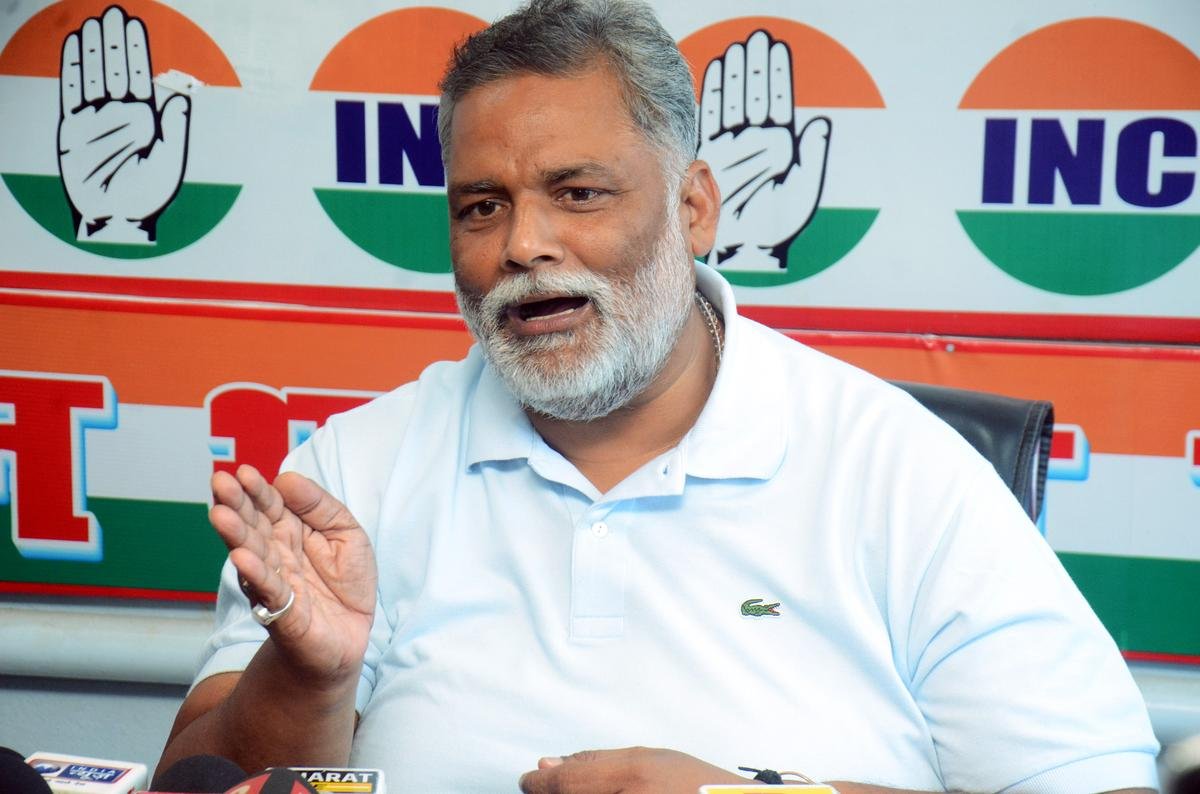
New Delhi: In a significant development for the safety of elected representatives, the Delhi High Court on Tuesday directed the Centre to immediately provide one additional personal security officer (PSO) to Independent MP Pappu Yadav. The order comes while the Union Home Ministry considers his formal request for enhanced, countrywide Y+ security cover.
Pappu Yadav, the lawmaker representing Purnia in Bihar, had approached the court citing credible death threats that emerged after he took part in protests inside the Parliament complex. Those protests focused on two sensitive issues: the alleged NEET examination irregularities and claims of misappropriation of donations collected for the Shri Ram Janmabhoomi Teerth Kshetra Trust.
Justice Manoj Jain, while hearing the matter, took note of an untoward incident that had already occurred at Yadav’s official residence in the national capital. “There is something significant. He is the sitting MP,” the judge observed. He further remarked that even if the existing security was described as adequate, the fact that an incident had still taken place warranted a temporary increase in protection.
Centre’s standing counsel Ashish Dixit informed the court that Yadav currently receives protection from one PSO along with certain other security personnel. He assured the bench that the MP’s representation, submitted to the Home Ministry on August 5 seeking pan-India Y+ security, was under active consideration and would be decided within three weeks. Dixit, however, maintained that security levels are normally enhanced only after a formal threat perception assessment.
Senior advocate Shadan Farasat, appearing for Pappu Yadav, told the court that the politician would not press the petition further at this stage if interim relief in the form of an additional PSO was granted. Accepting the suggestion, the High Court disposed of the writ petition as not pressed, with a clear direction that the respondent must provide one additional PSO without further delay on a temporary basis until a final decision on the representation is taken. The court also left the door open for Yadav to seek further legal remedies if he remains dissatisfied with the eventual decision of the Home Ministry.
Farasat highlighted that the Patna High Court had already directed Y+ security for Pappu Yadav within Bihar. He argued that the present threat scenario, which includes an alleged bounty of Rs 51 lakh on the MP’s head and a person who openly threatened to murder him, justified similar protection across the country, including Delhi. According to the counsel, the individual who made the murder threat has still not been apprehended.
In his petition, Pappu Yadav had sought a direction to the authorities to provide him with security arrangements “commensurate with his prevailing threat perception throughout the territory of India.” The petition stated that despite a credible threat followed by an actual attempt on his life, the Home Ministry had neither conducted a fresh threat assessment nor decided the pending request for central security cover.
The sequence of events that led to the heightened threat began with Yadav’s participation in a protest at the Parliament House complex. During the demonstration, he reportedly dressed as a Hindu seer and enacted a scene highlighting alleged misuse of funds meant for the Ram Temple. This prompted a complaint filed before the Additional Chief Judicial Magistrate in Prayagraj by Sushil Kumar Mishra, a high court advocate and co-convenor of the BJP’s legal cell in Uttar Pradesh. The complaint alleged that Yadav’s actions during the protest were objectionable.
Tension escalated further on August 2 when a man threw a slipper at Pappu Yadav during a press conference held at his official residence. The MP had been defending his protest action at the time of the attack. The incident, occurring despite the presence of existing security arrangements, became a key factor in the High Court’s decision to order temporary reinforcement.
Security arrangements for Members of Parliament are ordinarily determined on the basis of threat perception assessments carried out by central and state agencies. Standard cover for an MP typically includes one PSO. Higher categories such as Y+ involve a larger contingent of personnel and are reserved for individuals facing elevated risk. Pappu Yadav’s counsel argued that the combination of an open murder threat, a reported financial bounty, and the physical attack at his residence met the threshold for such elevated protection on a national scale.
The Delhi High Court’s interim direction ensures that an additional PSO will be deployed promptly, bridging the gap until the Home Ministry completes its review. The court made it clear that the temporary measure does not prejudice the final decision on the Y+ request. If the ministry’s eventual order falls short of the threat level perceived by the MP, he retains the liberty to return to court.
This case underscores the continuing challenges surrounding the security of public representatives who engage in high-visibility political actions. Protests inside or near Parliament often attract intense public and political reaction. When those protests touch upon emotionally charged subjects such as religious institutions or national examinations, the personal risk to the participants can rise sharply. The court’s intervention reflects a pragmatic approach: providing immediate, limited enhancement while the formal administrative process runs its course.
Pappu Yadav, whose full name is Rajesh Ranjan, has long been a vocal and unconventional figure in Bihar politics. His decision to stage a dramatic protest over the Ram Temple trust funds and the NEET controversy placed him at the centre of a fresh controversy. The subsequent complaint in Prayagraj and the slipper attack in Delhi illustrate how quickly political theatre can translate into personal vulnerability.
Legal observers note that the High Court’s order carefully balances two considerations. On one hand, it respects the executive’s primary role in assessing and assigning security. On the other, it refuses to leave a sitting MP without additional protection when concrete incidents have already occurred. By limiting the relief to one extra PSO on a temporary footing, the court avoided preempting the ministry’s threat assessment while still addressing the immediate safety concern.
The representation seeking Y+ cover remains pending. Once the Home Ministry issues its decision, the outcome will determine whether Pappu Yadav receives the broader, countrywide protection he has requested. Until then, the additional PSO mandated by the Delhi High Court will form the first line of reinforced security around the Bihar MP.
In the larger context of parliamentary democracy, the episode serves as a reminder that the right to protest and the duty to protect elected representatives must coexist. When threats materialise into physical attacks, courts have shown willingness to step in with interim measures. The coming weeks will reveal whether the administrative machinery responds with a commensurate long-term security upgrade for Pappu Yadav.
For now, the clear judicial direction stands: the Centre must provide one additional personal security officer to Pappu Yadav without delay. The temporary boost offers a measure of immediate safety while the formal evaluation of his threat perception continues.