Ultimate Diwali 2026 Date Guide: 5 Joyful Days of Festival of Lights & Lakshmi Puja Timings
Diwali 2026, the grand festival of lights, arrives on Sunday, November 8, bringing waves of joy, prosperity and spiritual renewal across India and the global Hindu diaspora. As families prepare to light countless diyas, exchange sweets and seek blessings from Goddess Lakshmi and Lord Ganesha, this year’s celebrations stand out for their unique alignment of tithis that place key rituals on overlapping days. Whether you are searching for the exact Diwali 2026 date, the full five-day schedule, Lakshmi Puja muhurat or the deeper meaning behind the festival of lights, this comprehensive guide delivers everything you need for a memorable and auspicious celebration.
The festival of lights has always symbolized the eternal triumph of good over evil, knowledge over ignorance and light over darkness. In 2026, that message feels especially powerful as communities worldwide come together after years of evolving traditions shaped by modern life while staying rooted in ancient scriptures. From the bustling markets of Delhi and Mumbai to quiet homes in villages and vibrant diaspora gatherings in the United States, United Kingdom, Singapore and beyond, Diwali 2026 promises illumination in every sense.
Exact Diwali 2026 Date and Why It Falls on November 8
According to the Hindu lunisolar calendar, Diwali is observed on Kartik Amavasya, the new moon night of the month of Kartik. In 2026, the Amavasya tithi begins at approximately 11:27–11:28 AM on November 8 and continues until around 12:31–12:32 PM on November 9 (timings based on New Delhi). Because the auspicious Pradosh Kaal—the evening period after sunset considered ideal for Lakshmi Puja—falls while Amavasya is still prevailing on November 8, the main Diwali and Lakshmi Puja are celebrated on Sunday, November 8.
This clarification settles the common question of whether Diwali 2026 is on the 8th or 9th. Multiple authoritative sources including Drik Panchang calculations and central government holiday listings confirm November 8 as the primary day. Regional variations exist in the precise observation of surrounding days, yet the core festival of lights remains firmly on the 8th.
Complete 5-Day Diwali 2026 Calendar: From Dhanteras to Bhai Dooj
The traditional five-day structure of Diwali creates a beautiful progression of rituals, each carrying distinct spiritual and social significance. Here is the widely accepted schedule for 2026 (New Delhi timings; local panchangs may vary slightly by city):
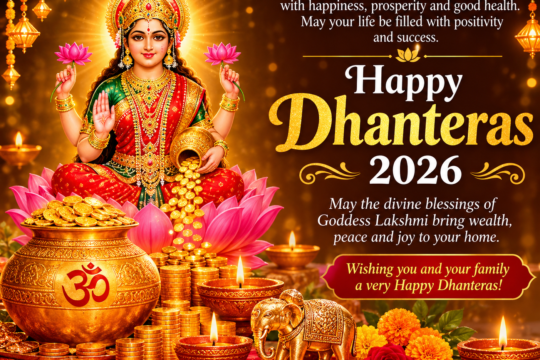
- Day 1 – Dhanteras (Dhantrayodashi): Friday, November 6, 2026
Puja window in Delhi: roughly 6:02 PM to 7:57 PM.
This day honors Lord Dhanvantari, the physician of the gods, and Lord Kubera, the treasurer of wealth. Families traditionally purchase gold, silver, utensils or new household items as a symbol of inviting prosperity. Lighting a special Yama Deepam in the evening is believed to ward off untimely death and bring longevity. Markets across India come alive with festive shopping as people prepare their homes for the days ahead. - Day 2 – Choti Diwali / Kali Chaudas / Naraka Chaturdashi Eve: Saturday, November 7, 2026
Evening lamps are lit and, in many western Indian traditions especially Gujarat, Kali Chaudas is observed with prayers for protection from negative energies. Some regions also perform Hanuman Puja. The Chaturdashi tithi spans from the morning of the 7th into the morning of the 8th, creating the characteristic split observances of this year’s festival. - Day 3 – Main Diwali & Lakshmi Puja + Naraka Chaturdashi: Sunday, November 8, 2026
This is the heart of Diwali 2026.
Early morning: Abhyang Snan (oil and herbal bath) is performed before sunrise in many communities, particularly in Maharashtra and the South, commemorating Lord Krishna’s victory over the demon Narakasura.
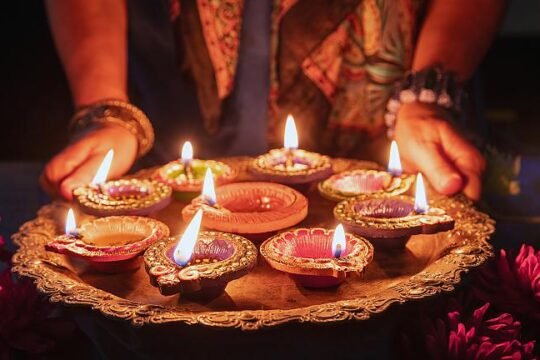
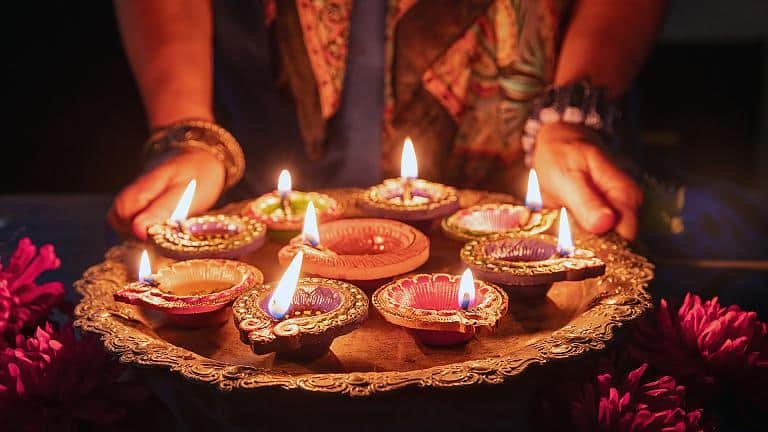
Evening: Lakshmi Puja muhurat in New Delhi falls between approximately 5:54 PM and 7:50 PM during Pradosh Kaal. Families clean and decorate their homes, create intricate rangolis, place diyas at entrances and windows, and perform the joint worship of Goddess Lakshmi and Lord Ganesha. New clothes are worn, sweets are shared, and fireworks light up the night sky in places where they are permitted. In North India this night also celebrates Lord Rama’s return to Ayodhya after 14 years of exile and his victory over Ravana. In the South, the same day often serves as the primary Deepavali with emphasis on the Krishna legend. - Day 4 – Govardhan Puja / Annakut / Bali Pratipada / Gujarati New Year: Tuesday, November 10, 2026
Morning puja window in Delhi around 6:39–8:51 AM.
Devotees prepare a mountain of vegetarian food offerings (Annakut) in gratitude to Lord Krishna for lifting Govardhan Hill to protect the people of Vrindavan. In Gujarat this day marks Bestu Varas, the Gujarati New Year, while in Maharashtra and Karnataka it is observed as Bali Pratipada or Diwali Padwa. Homes and temples fill with colorful displays of food and renewed prayers for abundance. - Day 5 – Bhai Dooj / Bhau Beej / Yama Dwitiya: Wednesday, November 11, 2026
Afternoon tilak period roughly 1:10 PM to 3:21 PM.
Sisters apply tilak on their brothers’ foreheads, perform aarti and pray for their long life and prosperity. Brothers in return offer gifts and reaffirm their protective bond. This touching conclusion to the festival of lights strengthens family ties and carries the spirit of care into the year ahead.
Some regions extend observances slightly earlier with Govatsa Dwadashi on November 5 or include additional local customs, yet the core five days remain the backbone of Diwali 2026 celebrations.
Spiritual Significance of the Festival of Lights
Diwali is far more than a calendar event. At its essence it is a reminder that light always conquers darkness. The most widely told story in North India recounts Lord Rama, Sita and Lakshmana’s joyous return to Ayodhya. The citizens lit rows of oil lamps to guide their beloved king home on the darkest night, creating the original “row of lights” or Deepavali.
In southern traditions the focus often rests on Lord Krishna’s defeat of Narakasura, freeing thousands of captive women and restoring dharma. Jains commemorate the nirvana of Lord Mahavira, lighting lamps to keep the flame of knowledge alive. Sikhs observe Bandi Chhor Divas, celebrating Guru Hargobind’s release from prison along with 52 other princes, an event marked by the illumination of the Golden Temple.
Beyond mythology, Diwali encourages practical spiritual practices: thorough cleaning of the home to remove stagnation, lighting diyas to invite positive energy, sharing wealth through gifts and charity, and gathering as families to reinforce bonds of love and gratitude. In an age of digital distraction, the festival of lights offers a powerful annual reset—an invitation to illuminate one’s inner world as brightly as the outer.
How India and the World Celebrate Diwali 2026
Celebrations vary beautifully across regions. In Gujarat, the focus on wealth and the New Year brings spectacular markets and business community rituals. In Tamil Nadu, Karnataka, Andhra Pradesh and Kerala, the morning oil bath and early Deepavali observances take center stage. Bengal observes Kali Puja on the same Amavasya night, with elaborate pandals and night-long worship of the fierce mother goddess. In Uttar Pradesh and Bihar, the return of Rama narrative dominates public processions and Ramlila performances that often culminate near Diwali.
Outside India, major cities host large-scale public events. Times Square in New York, Disney World in Florida, and community centers across the UK, Canada, Australia, Singapore, Malaysia, Fiji, Trinidad and Guyana light up with cultural performances, food festivals and collective diya lighting. Many countries list Diwali or a substitute day as a public holiday, allowing the diaspora to celebrate fully.
Practical Tips for an Auspicious Diwali 2026
Plan your Lakshmi Puja carefully according to your local sunset and panchang. Clean the house thoroughly in the days leading up to Dhanteras. Prefer eco-friendly diyas, natural rangoli colors and reduced fireworks where possible to honor both tradition and the environment. Prepare or purchase traditional sweets such as ladoos, barfis, chakli and mathri. Most importantly, set aside time for genuine family connection—share stories, play games, and express gratitude.
Businesses often begin new account books on Diwali, seeking Lakshmi’s blessings for the year ahead. Students and professionals alike use the occasion to set positive intentions for growth and clarity.
Looking Ahead: The Enduring Power of Diwali
As Diwali 2026 unfolds on November 8, it once again proves that ancient wisdom remains profoundly relevant. In a world that can feel chaotic, the simple act of lighting a diya carries radical hope. Each flame declares that darkness is temporary, that good ultimately prevails, and that human beings possess the power to create light—both outer and inner.
May the festival of lights fill every home with prosperity, every heart with peace, and every relationship with deeper connection. Happy Diwali 2026. May Goddess Lakshmi bless you with abundance, Lord Ganesha remove all obstacles, and the light of knowledge guide your path throughout the coming year.
This detailed overview of Diwali 2026—covering the exact date, five-day calendar, muhurat timings, mythological roots, regional variations and practical guidance—equips readers to celebrate with full understanding and joy. Whether you are planning family rituals, seeking the best shopping days, or simply wanting to deepen your appreciation of the festival of lights, the information here supports a truly illuminated and meaningful Diwali.