Chhath Puja 2026 Dates & Sacred Rituals: Complete 4-Day Guide to Nahay Khay, Kharna, Sandhya Arghya & Usha Arghya
Chhath Puja 2026 is set to light up riverbanks and ponds across Bihar, Jharkhand, eastern Uttar Pradesh, Nepal’s Terai region and growing communities in Delhi, Mumbai and beyond from November 13 to 16. This ancient festival of gratitude to Surya Dev (the Sun God) and Chhathi Maiya stands apart from most Hindu observances: it involves no idols, no temples as the primary venue, and no intermediary priests. Devotees stand waist-deep in water and offer arghya directly to the visible rising and setting sun. With the main Sandhya Arghya falling on Sunday, November 15, and the concluding Usha Arghya at dawn on Monday, November 16, preparations are already intense on ghats and in homes.
Chhath Puja 2026 dates follow the lunar calendar. The four-day sequence begins on Kartik Shukla Chaturthi and ends on Saptami. Confirmed timings from multiple panchangs place:
- Day 1 – Nahay Khay: Friday, 13 November 2026
- Day 2 – Kharna (Lohanda): Saturday, 14 November 2026
- Day 3 – Sandhya Arghya: Sunday, 15 November 2026 (main day, sunset offering)
- Day 4 – Usha Arghya & Parana: Monday, 16 November 2026 (sunrise offering and breaking of the fast)
The 36-hour nirjala (waterless) fast that begins after the Kharna meal is one of the most rigorous in Hindu tradition. Its successful completion is considered a powerful act of devotion and self-purification.
Why Chhath Puja Holds Unique Spiritual Power
Chhath is rooted in Vedic reverence for the sun as the source of life energy. Hymns in the Rigveda praise Surya, and the festival finds mention in both the Ramayana and Mahabharata. According to tradition, after returning from exile, Lord Rama and Sita observed the rites. In the Mahabharata, Karna, son of Surya, is described as an ardent devotee who stood in water for hours offering prayers, while Draupadi is said to have performed the vrat on the advice of sage Dhaumya to help the Pandavas regain their kingdom. Another popular legend tells of King Priyavrata whose stillborn son was revived by the grace of Chhathi Maiya, establishing her role as protector of children and bestower of longevity.
Unlike temple-centred festivals, Chhath is performed at natural water bodies. The sun is treated as a living, accessible deity. Cleanliness of body, home, kitchen and the ghat itself is non-negotiable. Only sattvic food prepared without onion, garlic or impure ingredients is allowed. Thekua (wheat-flour and jaggery biscuits), seasonal fruits, sugarcane, coconut, banana and rice-based offerings fill the bamboo soop or daura that devotees carry on their heads to the water’s edge.
Detailed Day-by-Day Rituals of Chhath Puja 2026
Day 1 – Nahay Khay (13 November): The festival opens with purification. Vratis (those observing the fast) take a holy bath, preferably in a river, thoroughly clean the house and cook a simple meal of bottle gourd (lauki), rice and lentils seasoned only with rock salt. The meal is first offered to the sun and then eaten. From this point the household enters a state of ritual purity. New or specially cleaned utensils, often earthen or bronze, are used.
Day 2 – Kharna (14 November): A day-long fast is observed. In the evening the vrati prepares rasiya (jaggery kheer) and whole-wheat roti on an earthen stove, traditionally using mango wood. After offering the prasad to Chhathi Maiya and Surya, the vrati breaks the day’s fast. Immediately afterward the rigorous 36-hour nirjala vrat begins. No food or water is taken until after Usha Arghya on the morning of the 16th.
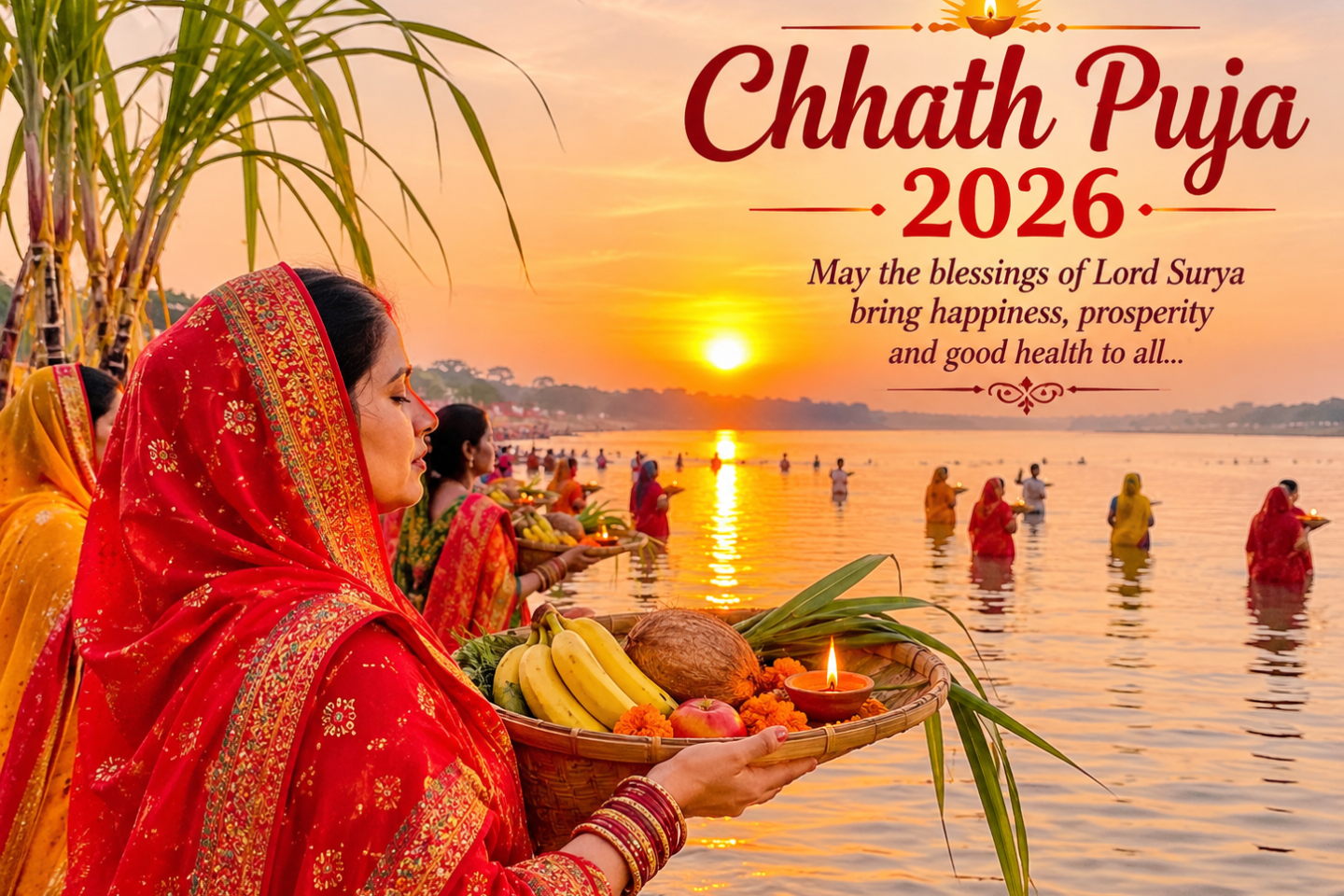
Day 3 – Sandhya Arghya (15 November): This is the emotional and visual climax. In the late afternoon families walk in procession to the ghat carrying the soop filled with thekua, fruits, diyas and sugarcane. Devotees enter the water, face the setting sun and offer arghya by pouring water mixed with milk and flowers from a lota while the soop is held aloft. Folk songs in Magahi, Bhojpuri and Maithili fill the air. The sight of thousands of devotees standing in water at sunset, lamps flickering and the sky turning gold, is one of the most powerful images in the Indian festival calendar.
Day 4 – Usha Arghya (16 November): Before dawn the same families return to the water. Arghya is offered to the rising sun. Once the sun fully appears, the fast is broken with prasad (parana). The atmosphere is one of quiet triumph and deep gratitude. Families share the remaining prasad and return home, the festival complete.
Growing Scale and Community Preparations in 2026
This year the festival is expected to draw even larger crowds. In Delhi alone more than 1,400 ghats are being prepared, including a newly developed 11-km stretch along the Munak Canal. State governments in Bihar, Jharkhand and Uttar Pradesh have issued directives for cleanliness of water bodies, temporary lighting, medical camps and crowd management. In Lucknow, the 43rd Chhath Mahaparv at Laxman Mela Ground on the Gomti is scheduled to be inaugurated by the Chief Minister, with cultural programmes featuring popular artists. Similar large-scale arrangements are underway in Patna, Ranchi, Varanasi and major cities hosting Bihari and Purvanchali communities.
The festival’s ecological message is increasingly highlighted. Devotees are urged to keep ghats clean, avoid plastic and leave the water bodies as pure as they found them. Many organisers now promote eco-friendly soops and biodegradable packaging for prasad.
Scientific and Yogic Dimensions
Ancient practitioners viewed the prolonged fast and sun exposure as a form of solar energy absorption and detoxification. Standing in water at the transitional moments of sunrise and sunset was believed to balance the body’s energies. Modern devotees often speak of the mental clarity and physical lightness that follow the successful completion of the 36-hour nirjala vrat. The discipline required—strict purity, silence or controlled speech, and unwavering focus—makes Chhath a living school of self-mastery.
How Families Prepare
Weeks in advance households begin collecting ingredients for thekua, cleaning the courtyard, and arranging bamboo baskets. Songs are practised, new clothes (usually in shades of red, yellow or orange) are bought, and travel plans are made for those returning to ancestral villages. For the diaspora in other Indian cities and abroad, temporary ponds or large water tanks are sometimes created so that the core ritual of standing in water can still be performed.
Looking Ahead
As Chhath Puja 2026 approaches, the message remains the same as it has for centuries: gratitude to the life-giving sun, protection of children, purification of body and mind, and harmony with nature. Whether observed on the banks of the Ganga in Bihar, the Gomti in Lucknow, or a community pond in a metro city, the four days demand sincerity and reward participants with a profound sense of completion.
Devotees are advised to check local sunrise and sunset timings for precise Arghya moments, as these vary by city. In Patna, for example, Sandhya Arghya on 15 November is expected around 5:00–5:01 pm and Usha Arghya on 16 November around 6:07 am. Similar city-specific charts are available from reliable panchang sources.
Chhath Puja continues to expand beyond its traditional heartland while retaining its austere and direct character. In an age of elaborate temple festivals and digital celebrations, this ancient water-and-sun ritual stands as a reminder of the simplest and oldest form of worship: standing before the source of light itself and offering thanks.
May the blessings of Surya Dev and Chhathi Maiya bring health, prosperity and harmony to all who observe the sacred four days of Chhath Puja 2026.