Zubeen Garg First Death Anniversary 2026: Zubeen Divas Tribute, Legacy and Case Updates
Assam is living through a year that still feels unfinished. One year after the sudden death of Zubeen Garg in Singapore on 19 September 2025, the state has turned remembrance into a public ritual. From 17 to 19 September 2026, Zubeen Divas at Zubeen Khetra in Sonapur has drawn pilgrims, fans, ministers and fellow artistes. Flowers, gamusas, multi-faith prayers and songs have filled the memorial that now stands as the closest thing Assam has to a shrine for its most loved modern voice.
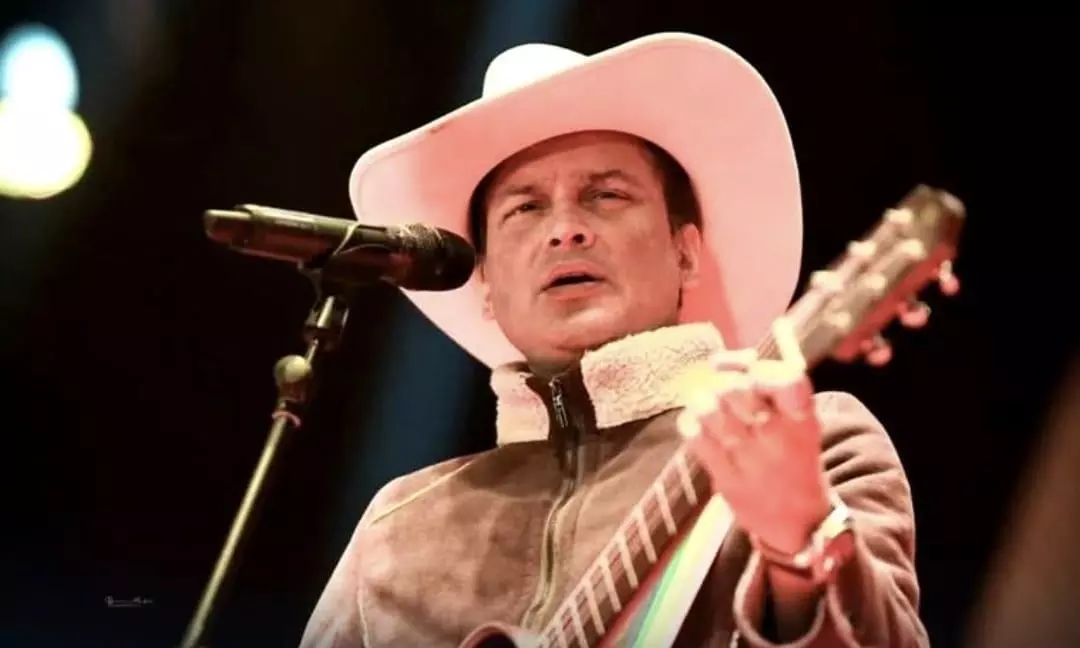
Zubeen Garg was not only a singer. For three decades he was the soundtrack of Assamese life: Bihu nights, film songs, protest moods, wedding playlists and late-night radio. Born Zubeen Borthakur on 18 November 1972 in Tura, Meghalaya, to poet-magistrate Mohini Mohon Borthakur and singer Ily Borthakur, he was named after conductor Zubin Mehta. He grew up between Meghalaya and Assam, learned tabla for years, absorbed folk forms and exploded onto cassette culture in 1992 with the album Anamika. That debut, and songs such as Mayabini and Gaane Ki Aane, made a college dropout the voice of a generation that had lived through agitation and insurgency.
He recorded in more than 40 languages and dialects — Assamese, Hindi, Bengali, Bodo, Mising, Karbi, Nepali, Tamil, Telugu and many more. Industry accounts put his output at well over 38,000 songs across roughly 200 albums and film scores. He played guitar, drums, tabla, harmonica, keyboard, dhol and other instruments. In Bollywood he is still identified with Ya Ali from Gangster (2006), a nationwide hit that won him the Global Indian Film Award for Best Playback Singer. He never treated that fame as an exit visa. He kept returning to Assamese cinema and live stages, acting and composing in films from Hiya Diya Niya to Mission China and Dr. Bezbaruah 2. A National Film Award for music direction and an honorary D.Litt. in 2024 sat beside state honours and the informal title fans still use: Luit Kontho, the voice of the Brahmaputra.
That is why the first anniversary is not a quiet family tithi alone. The Directorate of Cultural Affairs and the Kalaguru Artists Foundation have structured three days of prayer, naam prasanga, community programmes, a cultural showcase of Assam’s diversity, Bhagawat Path and Bhaona. Zubeen Khetra, built as a lasting memorial in Sonapur, has become a place people visit when they want to speak to him. On 17 September 2026 his widow, Garima Saikia Garg, said she still talks to him every day. “Whenever I feel anxious or want to tell him something or ask for his advice, I come here,” she told reporters. “If I have been able to keep going till today, it is because of him.” Visitors continue to arrive with flowers and gamusas from across the state. Earthen lamps were restricted for crowd safety as numbers rose.
The same week, Bollywood composer-singer Salim Merchant visited the Kahilipara residence and Zubeen’s studio. Garima welcomed him with a traditional gamusa. Merchant later called the studio visit emotional and posted that he loves Zubeen, loves Assam and will always support Assamese music. He had already performed Dhumuhar Gaan, a tribute linked to Garg’s legacy, composed by Anurag Saikia with lyrics by Rahul Gautam Sarma. National artistes treating Assam’s grief as shared culture is part of why search interest in Zubeen Garg spikes again every September.
The anniversary sits beside unfinished legal business. Garg died at 52 during a visit to Singapore. Assam police and a special investigation treated the circumstances as a criminal case. A fast-track court in Kamrup (Metro) is trying seven accused, among them Siddharth Sharma, Shyamkanu Mahanta, Shekhar Jyoti Goswami, Amritprava Mahanta, Sandipon Garg, Nandeswar Borah and Paresh Baishya. Charges were framed in 2026; the accused have denied them. Witnesses who were in Singapore, including Sushmita Goswami, have testified about geo-tagged videos from a yacht gathering and the first emergency medical call. The court has also ordered the Assam CID to examine how a magistrate-recorded witness statement reached social media pages, and has flagged jail paperwork irregularities. Bail pleas for some accused have been deferred by the Gauhati High Court; a Supreme Court listing on another bail matter was pushed later into 2026. The family and public have repeatedly asked for a speedy, clean trial. This article does not retry the case. It notes that the search for facts continues in court while the public search for meaning continues at Zubeen Khetra.
Monthly tithis at the Kahilipara home have kept a quieter rhythm: Garima preparing rice, fish curry, fried vegetables, dal and the roti he liked. Culture Minister Bimal Borah visited the studio ahead of the three-day state programme. Murals, fan gatherings and new performance spaces named after him show how quickly a private loss became civic memory. Even controversies — a mural erased and later promised again — prove the same point: Assam will not let the image fade.
For Google and for readers, the useful story is not only the tragedy. It is scale and continuity. Zubeen Garg professionalised Assamese pop without discarding folk grain. He made Bihu sound contemporary. He proved a Northeast voice could dominate a Hindi chart and still choose home. Younger singers still copy his phrasing. Film producers still chase the warmth of his lower register. Streaming playlists still open with Ya Ali for rest-of-India listeners and with Anamika-era tracks for Assamese ones.
Zubeen Divas 2026 is therefore both mourning and inventory. One year on, the void is real: no new album, no sudden stage appearance, no argumentative interview that used to dominate local television. The counter-inventory is also real: a memorial that functions like a public square, a widow who refuses silence, visiting musicians who treat the studio as sacred, and a courtroom that must still answer how a 52-year-old cultural giant died far from the Brahmaputra.
If you are searching Zubeen Garg today, you are probably looking for three things at once — the songs, the anniversary events, and the case. The songs are intact. The events run through 19 September 2026, the exact date he died. The case will take longer. What will not take longer is the verdict of his audience. Assam has already decided that the man who sang in forty languages left one clear message in the language that mattered most: he belonged here, and the music does not expire with the singer.