Tragic Loss: Jorge Messi Dies Aged 68
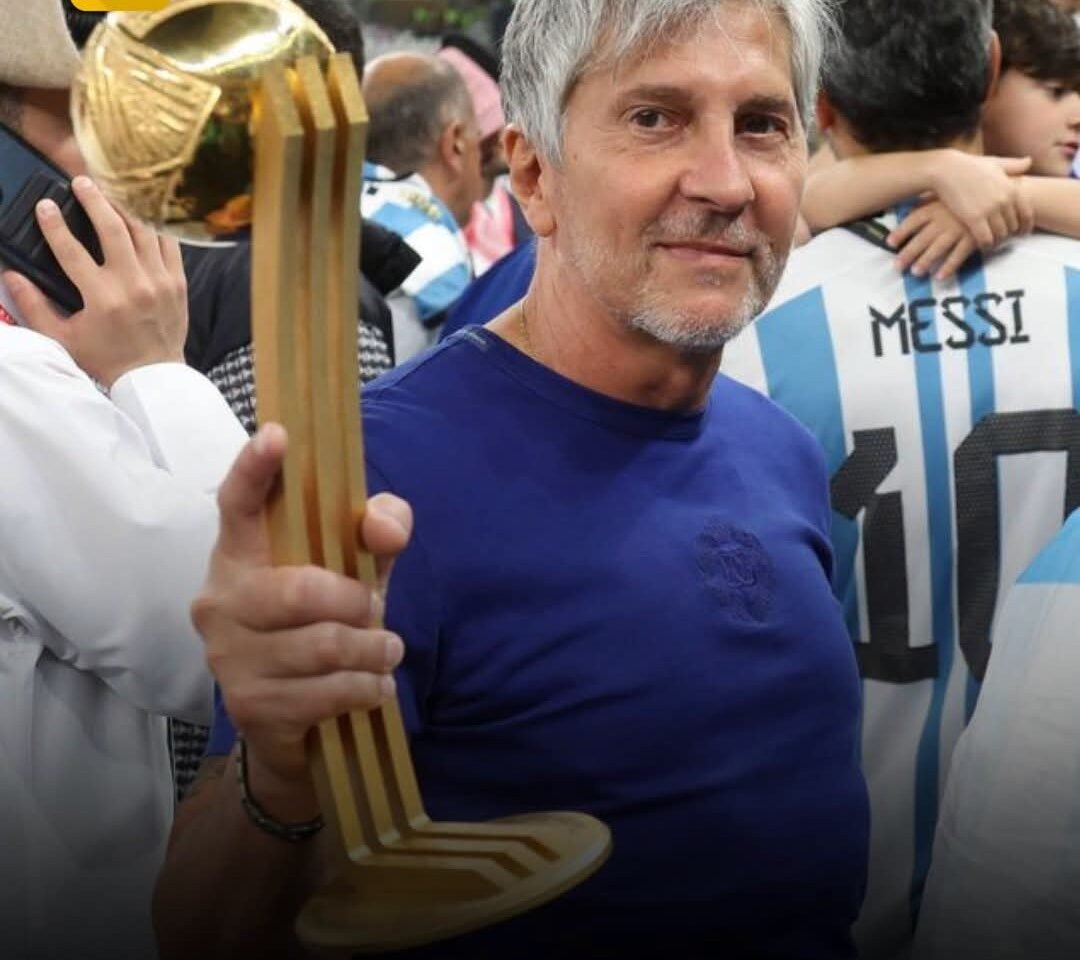
Jorge Messi, the father, agent and lifelong support of Lionel Messi, died on Saturday at a hospital in Rosario, Argentina. He was 68. The news was confirmed by Club Atlético Newell’s Old Boys, the Rosario club that first nurtured the young Lionel Messi, in a social media post that described Jorge as “the pillar and the person who, with vision, rigor and affection, supported the career of the best player of all time, alongside his wife, Celia Cuccittini.”
The club stated that Jorge had undergone treatment in recent months for an unspecified illness. He is survived by his wife Celia and their four children: Lionel, older brothers Rodrigo and Matías, and younger sister María Sol.
Lionel Messi had already shown visible emotion during Argentina’s opening match of this year’s World Cup against Algeria. After scoring the first of his three goals that night, he was seen weeping. He later explained that the tears were “for a reason unrelated to sports.” Media speculation at the time prompted a firm family statement confirming that “Jorge is experiencing a health issue” while condemning the lack of sensitivity shown toward a private family matter. Jorge was unable to attend the tournament in North America, though Lionel returned to Rosario after the competition before rejoining Inter Miami.
Born and raised in Rosario, Jorge Messi worked as a chemical technician and steelworker. As a young man he played midfield and reached the youth ranks of Newell’s Old Boys before military service ended his own playing ambitions. That early connection to the club would later prove decisive for his third son. When a teenage Lionel Messi needed treatment for a growth-hormone deficiency and a pathway into professional football, it was Jorge who traveled with him to Barcelona for the trial that opened the doors to La Masia.
In a 2007 interview with Radio del Plata, Lionel recalled those difficult early days: “My dad was always by my side. Sometimes I would lock myself in my room to cry when we arrived in Barcelona, or my dad would do the same without me seeing him… My dad even asked me what I wanted to do when we were feeling down, if I wanted to stay or go back, and I wanted to stay, and he stayed with me.”
Jorge went on to serve as Lionel’s agent throughout the player’s career. He negotiated the original contracts with FC Barcelona, the later moves to Paris Saint-Germain and Inter Miami, and managed image rights together with investments in real estate, hotels and restaurants. One of those ventures, the VIP Rosario restaurant, closed for the day after the announcement of his death, a small local sign marking the family’s loss.
Tributes arrived quickly from the clubs and organizations that had been part of the Messi story. FC Barcelona released a statement extending condolences “on behalf of the entire Barça family” and thanking Jorge “for his commitment to our club, for entrusting us with the beginnings and the most glorious years of his son Leo’s football career. May he rest in peace.”
Inter Miami, scheduled to host Monterrey in the Leagues Cup, said: “Our hearts are with our captain, Leo, and the entire Messi family.” Paris Saint-Germain offered its “deepest condolences.” CONMEBOL expressed respect and affection for Lionel, while Claudio Tapia, president of the Argentine Football Association, issued a lengthy statement recognizing Jorge “for having raised a person of values: humble, respectful, and deeply committed to others.” The association ordered a moment of silence at all matches across every category of Argentine football and instructed players, referees and coaching staff to wear black armbands.
Newell’s Old Boys, the club that first spotted the talent of a small boy from Rosario and later watched him become an eight-time Ballon d’Or winner and 2022 World Cup champion, framed Jorge’s role with particular clarity. He was not only a parent but the steady figure who combined professional rigor with parental affection, guiding contracts, protecting image rights and remaining present through the homesickness of those first years in Catalonia and the later triumphs on the world stage.
Lionel Messi’s career has been defined by extraordinary individual brilliance and collective success with Argentina and his clubs. Behind that public story stood a quieter one: a father who left his own unfinished football ambitions, worked in steel and chemicals, and then dedicated himself to ensuring his son could pursue the game at the highest level. The family statement issued during the World Cup had already made clear their desire for privacy around Jorge’s health. The same request for respect accompanies the news of his passing.
In Rosario the flags of Newell’s will almost certainly fly at half-mast. Across Argentina, black armbands will appear on matchdays. In Miami, Barcelona and Paris the clubs that once employed Lionel Messi have already spoken. The football world has lost the man who, more than any other, enabled the career of its most decorated player.
Jorge Messi’s life was not lived in the spotlight that permanently surrounds his son. Yet without the decisions he made in the early 2000s—the journey to Barcelona, the willingness to stay when homesickness threatened to end everything, the careful negotiation of contracts and commercial rights—the history of modern football would look different. He leaves behind a family that has asked only for privacy and dignity, and a football community that now pauses to acknowledge the quiet architect behind one of the greatest careers the game has ever seen.
May he rest in peace.