Abhijeet Dipke Calls PM Modi Embarrassment and Coward After Release | Cockroach Janta Party Protest Continues Against CEC Gyanesh Kumar
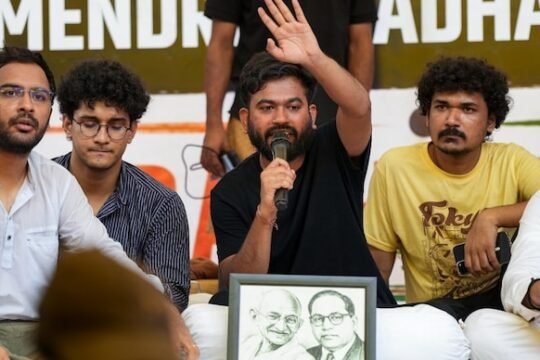
Abhijeet Dipke, convener of the Cockroach Janta Party (CJP), launched a sharp verbal attack on Prime Minister Narendra Modi hours after his release from nearly 24 hours of detention in Delhi. In a post on X on Sunday morning, Abhijeet Dipke declared that Modi, as Prime Minister, is “an embarrassment to India” and claimed the country has never seen a bigger “coward” and “bully.”
The statement from Abhijeet Dipke came just over an hour after an executive magistrate ordered the release of Dipke along with CJP co-conveners Saurav Das and Ashutosh Ranka. The three leaders had been detained by Delhi Police at Indira Gandhi International Airport on Saturday. According to people familiar with the matter, Flight AI 2428 landed at 10.18 am and was directed to remote bay R12 on instructions from the airport’s Airside Operations Control Centre. Delhi Police took Abhijeet Dipke, Saurav Das and Ashutosh Ranka into custody from inside the aircraft itself.
Their release after approximately 24 hours of detention carried one condition set by the court: they “cannot breach peace” for one year, as confirmed by the CJP’s legal head. Abhijeet Dipke’s immediate public criticism of the Prime Minister underscored the group’s determination to keep pressure on authorities.
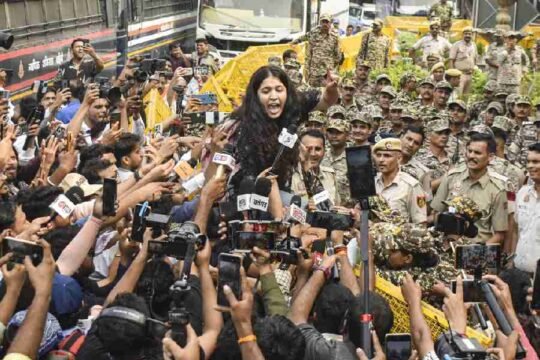
The Cockroach Janta Party has been leading protests demanding the resignation of Chief Election Commissioner Gyanesh Kumar. After an estimated 7,000 people were detained on Saturday during a major crackdown, CJP announced it would continue attempts to protest on Sunday. The group scheduled a press conference for 2 pm on Sunday to outline its next steps.
CJP leader Ajinkya Shinde, who assumed temporary charge after Abhijeet Dipke’s detention, made it clear the movement would not retreat. “The government thought we would back down after the detention of Abhijeet Dipke, Saurav Das and Ashutosh Ranka. But we won’t. We will continue our agitation till Gyanesh Kumar resigns,” Shinde said. He confirmed that supporters would again try to reach Jantar Mantar and remain until their demands were met.
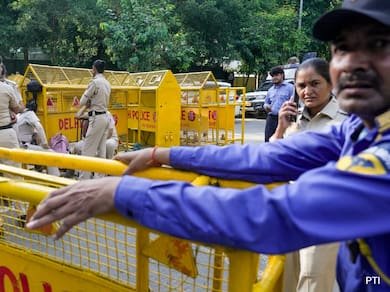
In response, Delhi Police announced that central Delhi would remain sealed on Sunday. Authorities kept Jantar Mantar shut, barricaded the Capital’s borders and diverted traffic at 30 points. The measures followed the large-scale detentions the previous day and came as the Supreme Court prepared to hear a plea accusing authorities of defying its order against a complete shutdown of metro and train services.
Abhijeet Dipke’s post on X quickly circulated among supporters and critics alike. By labelling the Prime Minister an “embarrassment to India” and the biggest “coward” and “bully” the nation has seen, Dipke framed the detention episode as evidence of political intolerance. The timing of the statement—barely an hour after the court-ordered release—signalled that the Cockroach Janta Party intended to convert the detention into a rallying point rather than a setback.
The sequence of events began with the arrival of the three CJP leaders in Delhi on Saturday morning. Their removal from the aircraft and subsequent detention formed the centrepiece of the security operation that authorities described as necessary to maintain public order. CJP, however, presented the detentions as an attempt to silence dissent against the Chief Election Commissioner.
Throughout Saturday, an estimated 7,000 people associated with the protest were taken into custody. Despite the scale of the crackdown, Ajinkya Shinde insisted the campaign would continue. The decision to hold a press conference at 2 pm on Sunday and to attempt another march toward Jantar Mantar demonstrated the group’s refusal to accept the sealing of central Delhi as a permanent barrier.
Abhijeet Dipke’s release did not end the legal restrictions. The one-year “cannot breach peace” condition imposed by the executive magistrate places clear limits on future actions by Dipke, Das and Ranka. CJP’s legal head confirmed the condition, indicating that any further protest activity by the three leaders would have to navigate this judicial boundary carefully.
Meanwhile, the sealing of Delhi continued into Sunday. Police maintained barricades at the Capital’s borders, kept Jantar Mantar inaccessible and implemented traffic diversions at 30 locations. These steps were presented as preventive measures after the previous day’s large number of detentions. The Supreme Court’s scheduled hearing on the plea regarding metro and train services added another layer of legal scrutiny to the administrative response.
The Cockroach Janta Party’s core demand remains the resignation of Chief Election Commissioner Gyanesh Kumar. Every public statement from Abhijeet Dipke and Ajinkya Shinde has returned to this single point. By linking the detention of its leaders directly to the broader campaign against the CEC, CJP has sought to portray the police action as part of a larger pattern of suppression rather than a routine law-and-order exercise.
Abhijeet Dipke’s choice of language—“embarrassment,” “coward,” “bully”—was deliberately confrontational. In the hours following his release, the post served as both personal reaction and political messaging. Supporters viewed it as a refusal to be intimidated; critics saw it as inflammatory. Either interpretation kept Abhijeet Dipke and the Cockroach Janta Party at the centre of public attention on Sunday.
As the day progressed, the planned 2 pm press conference was expected to provide further details on how CJP intended to sustain the protest under the constraints of sealed roads, closed public spaces and the peace-bond condition placed on its top leaders. Ajinkya Shinde’s earlier remarks suggested the group would keep attempting to reach Jantar Mantar regardless of the security arrangements.
The detention of Abhijeet Dipke, Saurav Das and Ashutosh Ranka from inside a commercial aircraft marked an unusual escalation in the handling of political protesters. The subsequent court-ordered release after nearly 24 hours, coupled with the immediate and strongly worded statement from Abhijeet Dipke, transformed a security operation into a fresh political flashpoint.
Delhi’s continued lockdown on Sunday, the barricading of borders, the diversion of traffic and the closure of Jantar Mantar all pointed to authorities’ determination to prevent any large gathering. At the same time, the Cockroach Janta Party’s public commitment to continue the agitation until Gyanesh Kumar resigns indicated that the confrontation was far from over.
Abhijeet Dipke’s characterisation of the Prime Minister remains the most direct personal attack to emerge from the episode. By declaring that India has never seen a bigger coward and bully, and that Modi as Prime Minister is an embarrassment to the country, Dipke placed the focus squarely on the highest political office while the protest itself continued to target the Chief Election Commissioner.
The coming hours and days will test whether the one-year peace condition, the sealing of central Delhi and the large number of detentions already carried out can contain the Cockroach Janta Party’s campaign—or whether Abhijeet Dipke’s post-release statement has instead injected fresh energy into the movement. For now, the group’s message is unambiguous: the detention of its leaders has not ended the demand for Gyanesh Kumar’s resignation, and Abhijeet Dipke has chosen the most confrontational language available to make that point.