President Droupadi Murmu Appoints 6 New Governors in Major State Reshuffle
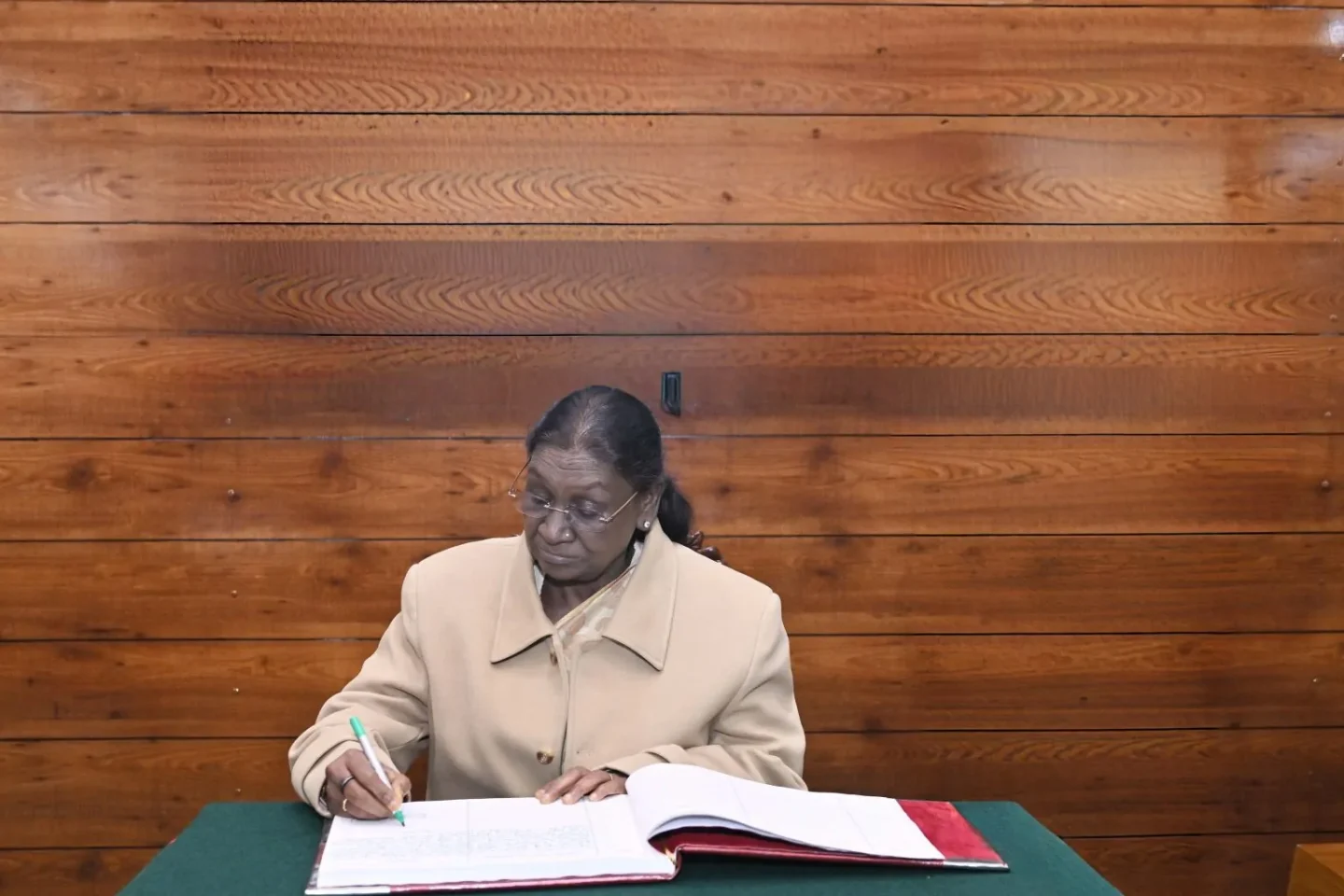
President Droupadi Murmu has appointed new Governors in six states, marking a significant administrative reshuffle that will reshape the constitutional leadership in key regions of India. The appointments, announced through an official communique from Rashtrapati Bhavan, involve both transfers of serving Governors and the induction of four former parliamentarians into gubernatorial roles. These changes cover Kerala, Tamil Nadu, Odisha, Karnataka, Uttarakhand and Sikkim, and will take effect from the dates the appointees formally assume charge of their respective offices.
In one of the most closely watched moves, Om Prakash Mathur, who has been serving as the Governor of Sikkim, has been appointed the new Governor of Kerala. Mathur’s transfer brings an experienced administrator to the southern state at a time when the relationship between Raj Bhavan and the elected government has remained a subject of public attention. Simultaneously, the current Governor of Kerala, Rajendra Vishwanath Arlekar, has been appointed the new Governor of Tamil Nadu. Arlekar’s move to Tamil Nadu ends a period of dual-charge arrangements and places a steady, experienced hand in a state that has witnessed frequent friction between the state government and the gubernatorial office in recent years.
Four new faces drawn from the ranks of former parliamentarians will also assume gubernatorial responsibilities. Braj Mohan Ram has been appointed the new Governor of Odisha, succeeding the incumbent Hari Babu Kambhampati. Dr. Sudha Yadav will take charge as the new Governor of Karnataka, succeeding Thaawarchand Gehlot. Dr. Dhal Singh Bisen has been named the new Governor of Uttarakhand, where he will succeed Lieutenant General Gurmit Singh (retd). Dushyant Gautam has been appointed the new Governor of Sikkim, filling the vacancy created by Om Prakash Mathur’s transfer to Kerala.
These appointments form part of a broader pattern of gubernatorial changes effected by the President. In March this year, President Murmu carried out a major reshuffle of Governors and Lieutenant Governors across several states and Union Territories, including Delhi, Ladakh, Telangana, Maharashtra, Bihar, West Bengal, Tamil Nadu, Himachal Pradesh and Nagaland. The latest round continues that process of realignment, ensuring that constitutional posts remain filled with individuals considered suitable for the sensitive responsibilities of the office.
The role of a Governor under the Indian Constitution is both ceremonial and substantive. Appointed by the President under Article 155, a Governor serves as the nominal head of the state while exercising critical powers in areas such as the summoning and proroguing of the state legislature, the assent to bills, the appointment of the Chief Minister, and the reporting of constitutional breakdowns to the Centre under Article 356. In states where political equations are finely balanced or where differences between the ruling party and the Raj Bhavan have historically surfaced, the personality and approach of the Governor can significantly influence the tone of Centre-state relations.
The decision to move Rajendra Vishwanath Arlekar from Kerala to Tamil Nadu is particularly noteworthy. Tamil Nadu has, over successive administrations, seen public disagreements between the elected government and successive Governors on issues ranging from the appointment of university vice-chancellors to the clearance of bills and the conduct of legislative proceedings. By installing a full-time Governor with prior experience in a neighbouring southern state, the Centre appears to signal a preference for continuity and administrative steadiness. The formal placement of Arlekar ends the interim dual-charge phase and is expected to provide clearer lines of responsibility at Raj Bhavan in Chennai.
In Kerala, Om Prakash Mathur steps into a state that has also experienced occasional tensions between the Left Democratic Front government and previous Governors. Mathur’s tenure in Sikkim, a smaller but strategically important northeastern state, is regarded as having provided him with useful experience in navigating Centre-state dynamics in a region with unique geographical and political characteristics. His arrival in Thiruvananthapuram will be watched for the approach he adopts toward the state’s political executive.
The four first-time Governors bring parliamentary backgrounds that are expected to aid them in understanding legislative processes and federal sensitivities. Braj Mohan Ram’s appointment to Odisha comes at a time when the state is preparing for important developmental and political transitions. Dr. Sudha Yadav’s nomination as Governor of Karnataka places a woman administrator in one of India’s most economically dynamic states, continuing a gradual increase in the representation of women in high constitutional offices. Dr. Dhal Singh Bisen’s move to Uttarakhand, a state with significant strategic importance along the northern border, and Dushyant Gautam’s posting to Sikkim complete a carefully calibrated set of choices.
All six appointments will become operational only when the respective individuals take the oath of office. Until that formal assumption of charge, the existing incumbents or those holding additional charge will continue to discharge the functions of the office. This staggered transition is standard practice and allows for orderly handovers without creating administrative vacuums.
The timing of the announcements also carries political resonance. Gubernatorial appointments are frequently interpreted through the lens of Centre-state relations, especially when they involve states ruled by parties other than the one in power at the Centre. Kerala, Tamil Nadu, Karnataka and Odisha currently have governments led by parties or coalitions that are not aligned with the ruling dispensation in New Delhi. In such contexts, the choice of Governor is often scrutinised for signals about the Centre’s preferred style of engagement—whether assertive, conciliatory or strictly constitutional.
Observers note that the inclusion of four former parliamentarians among the new appointees reflects a continuing preference for individuals with legislative experience. Parliamentarians who have served in the Lok Sabha or Rajya Sabha typically possess familiarity with the processes of law-making, the nuances of federal negotiation, and the public expectations attached to high office. This background can prove valuable when Governors are called upon to mediate between competing constitutional claims or to exercise discretionary powers in moments of political uncertainty.
The March reshuffle earlier this year had already demonstrated the President’s willingness to effect wide-ranging changes across the gubernatorial map. That earlier exercise covered both states and Union Territories and included high-profile postings such as those in Delhi and West Bengal. The current round, though smaller in numerical scale, is no less significant because it addresses states that have featured prominently in debates over the role and conduct of Governors. By completing pending transitions in Tamil Nadu and Kerala while simultaneously refreshing leadership in Odisha, Karnataka, Uttarakhand and Sikkim, the appointments create a more settled administrative landscape.
Public and political reactions to such announcements typically follow predictable patterns. Ruling parties in the affected states often issue measured statements welcoming the constitutional process while underscoring the expectation that the new Governors will function within the framework of cooperative federalism. Opposition parties and civil society groups, meanwhile, tend to emphasise the need for neutrality and restraint on the part of Raj Bhavan. The coming weeks will reveal how each of the six new Governors interprets the conventions and constitutional boundaries of the office.
In practical terms, the new Governors will inherit ongoing administrative and ceremonial responsibilities. These range from the daily functioning of Raj Bhavan to the discharge of duties as Chancellor of state universities, the oversight of certain autonomous bodies, and the representation of the state on formal occasions. In border states such as Sikkim and Uttarakhand, additional sensitivities related to national security and international borders add further layers of responsibility. In economically advanced states such as Karnataka and Tamil Nadu, the Governors will operate in environments of high public visibility and intense media scrutiny.
The appointments also underscore the continuing importance of the Governor’s office in India’s federal architecture more than seven decades after the Constitution came into force. While the office has evolved through judicial interpretation, political practice and occasional controversy, it remains a critical link between the Union and the states. The latest decisions by President Droupadi Murmu reaffirm the Centre’s authority to staff these posts and its intention to keep the gubernatorial cadre refreshed and aligned with current administrative priorities.
As the six appointees prepare to assume charge, attention will turn to the dates of their oath-taking ceremonies and the early signals they send about their approach to office. Om Prakash Mathur’s arrival in Kerala, Rajendra Vishwanath Arlekar’s transition to Tamil Nadu, and the debuts of Braj Mohan Ram, Dr. Sudha Yadav, Dr. Dhal Singh Bisen and Dushyant Gautam collectively represent one of the more substantial mid-term realignments of state-level constitutional leadership in recent years. The impact of these new Governors on Centre-state relations, legislative processes and public administration will unfold in the months ahead, watched closely by political observers, constitutional experts and citizens across the six states.