India Celebrates Historic 80th Independence Day 2026 with Yuva Shakti Vision
India today marks its glorious 80th Independence Day on 15 August 2026, a landmark occasion that blends deep historical reverence with forward-looking national ambition. While the nation has completed 79 full years of freedom since midnight on 15 August 1947, this year’s celebration counts as the 80th Independence Day because the first flag-hoisting and observance itself took place on that historic date in 1947. Official sources, including the Press Information Bureau, confirm the 80th edition, resolving the annual counting confusion that often confuses the public.
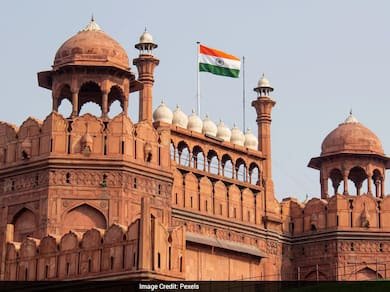
Prime Minister Narendra Modi is leading the main national ceremony from the ramparts of the Red Fort in New Delhi. The event features the traditional unfurling of the Tricolour, a 21-gun salute, Guard of Honour by the three services and Delhi Police, and the Prime Minister’s address to the nation. For the first time in the official Red Fort programme, the national song Vande Mataram will be rendered, marking the completion of 150 years since Bankim Chandra Chatterjee composed it. This cultural milestone adds a powerful emotional layer to the day’s proceedings.
The central theme for Independence Day 2026 is “Yuva Shakti for Viksit Bharat@2047.” It places India’s youth at the heart of the national narrative, recognising their role as innovators, entrepreneurs, scientists, athletes and change-makers who will drive the country toward developed-nation status by the centenary of independence in 2047. Parallel emphasis on 150 years of Vande Mataram underscores continuity between the freedom struggle and present-day aspirations. The twin focus reflects a deliberate shift from pure remembrance toward mobilisation of the country’s demographic dividend.
Across the country, celebrations began early. The Har Ghar Tiranga campaign, running from 9 to 17 August, has encouraged citizens to hoist the national flag at homes, offices, schools and public spaces. In a notable expansion this year, the Tiranga Yatra has reached remote villages in former Left-Wing Extremism-affected areas of Chhattisgarh, including dozens of locations in Bastar where the national flag is being raised for the first time since Independence. Such outreach symbolises the deepening of national integration and the progressive clearing of internal security challenges.
Gallantry awards and honorary ranks have been announced on the eve of the occasion. The President has approved 78 gallantry awards, including 13 posthumous, along with 89 Mentions-in-Despatches. Lists of honorary ranks for personnel of the Army, Navy and Air Force further highlight the contribution of the armed forces. Special guests invited to the Red Fort include beneficiaries of the PM Vishwakarma scheme, underscoring the government’s emphasis on linking national milestones with schemes that empower artisans and skilled workers.
Globally, Indian missions have organised vibrant programmes. Proclamations declaring 15 August as India Day have been issued in several U.S. cities and states. Cultural performances, receptions and community events in Berlin, Chicago, New York, Seattle and other centres have showcased India’s soft power and the growing diaspora’s contribution to bilateral ties. These overseas celebrations reinforce the message that India’s Independence Day resonates far beyond its borders.
The historical significance of the day remains undiminished. On 15 August 1947, after nearly two centuries of British colonial rule and a long freedom struggle marked by both non-violent and revolutionary streams, India emerged as a free nation. Leaders such as Mahatma Gandhi, Jawaharlal Nehru, Subhas Chandra Bose, Sardar Vallabhbhai Patel and countless unnamed freedom fighters paid heavy personal prices. Partition brought immense human tragedy, yet the new republic committed itself to democracy, secularism and constitutional governance. Every Independence Day since has served as both a tribute to those sacrifices and a renewal of the pledge to build a stronger, more inclusive India.
In 2026 the narrative has evolved. While the Red Fort ceremony retains its solemn core, the surrounding programmes deliberately spotlight youth energy, technological progress, women’s empowerment (Sashakt Nari, Sashakt Bharat), defence modernisation and space achievements. Schools and colleges across states are organising special assemblies, cultural programmes and competitions centred on the theme of Yuva Shakti. Government offices, public sector units and private organisations are participating in flag-hoisting and patriotic events, creating a nationwide wave of visible national pride.
The counting debate itself has become an annual educational moment. Subtracting 1947 from 2026 yields 79 completed years of independence. Yet because 15 August 1947 was counted as the first Independence Day, each subsequent 15 August advances the celebration number. Thus 2026 is correctly described as both the completion of 79 years of freedom and the observance of the 80th Independence Day. Official communications from the government have consistently used the “80th Independence Day” designation, providing clarity for citizens, media and educational institutions.
As the Prime Minister addresses the nation, attention will focus on the roadmap toward Viksit Bharat by 2047. The speech is expected to weave together reflections on the freedom struggle, current developmental achievements and the responsibilities of the younger generation. The presence of traditional attire-clad representatives from various states and Union Territories at the Red Fort will visually reinforce the idea of unity in diversity that has defined independent India.
Beyond the official events, ordinary citizens are marking the day in personal ways—decorating homes with the Tricolour, sharing messages of patriotism on social media, attending local programmes and reflecting on what freedom means in daily life. The combination of institutional ceremony and grassroots participation has long been the strength of India’s Independence Day observances.
This 80th Independence Day arrives at a moment when India occupies a more prominent place on the global stage than at any previous point in its independent history. Economic growth, technological capabilities, defence preparedness and soft-power influence have expanded significantly. Yet the core values that animated the freedom struggle—self-reliance, dignity, justice and inclusive progress—remain the guiding lights. The emphasis on Yuva Shakti signals confidence that the next generation will carry those values forward while adapting them to new challenges and opportunities.
As the Tricolour flutters across the length and breadth of the country and Vande Mataram echoes at the Red Fort for the first time in the official programme, Indians are invited to celebrate not only past achievement but future possibility. The 80th Independence Day is both a proud milestone and a call to sustained collective effort. It reminds every citizen that independence was hard-won and that its full promise continues to unfold through the energy, skill and commitment of the people, especially the youth who will shape the India of 2047.
In homes, schools, offices and public squares, the spirit of the day is unmistakable. Flags wave, songs rise, and a sense of shared belonging renews itself. On this historic 80th Independence Day, India stands united in gratitude for the past and determination for the decades ahead.