No UPI Day on October 2: Traders Protest 0.4% MDR Charges Nationwide
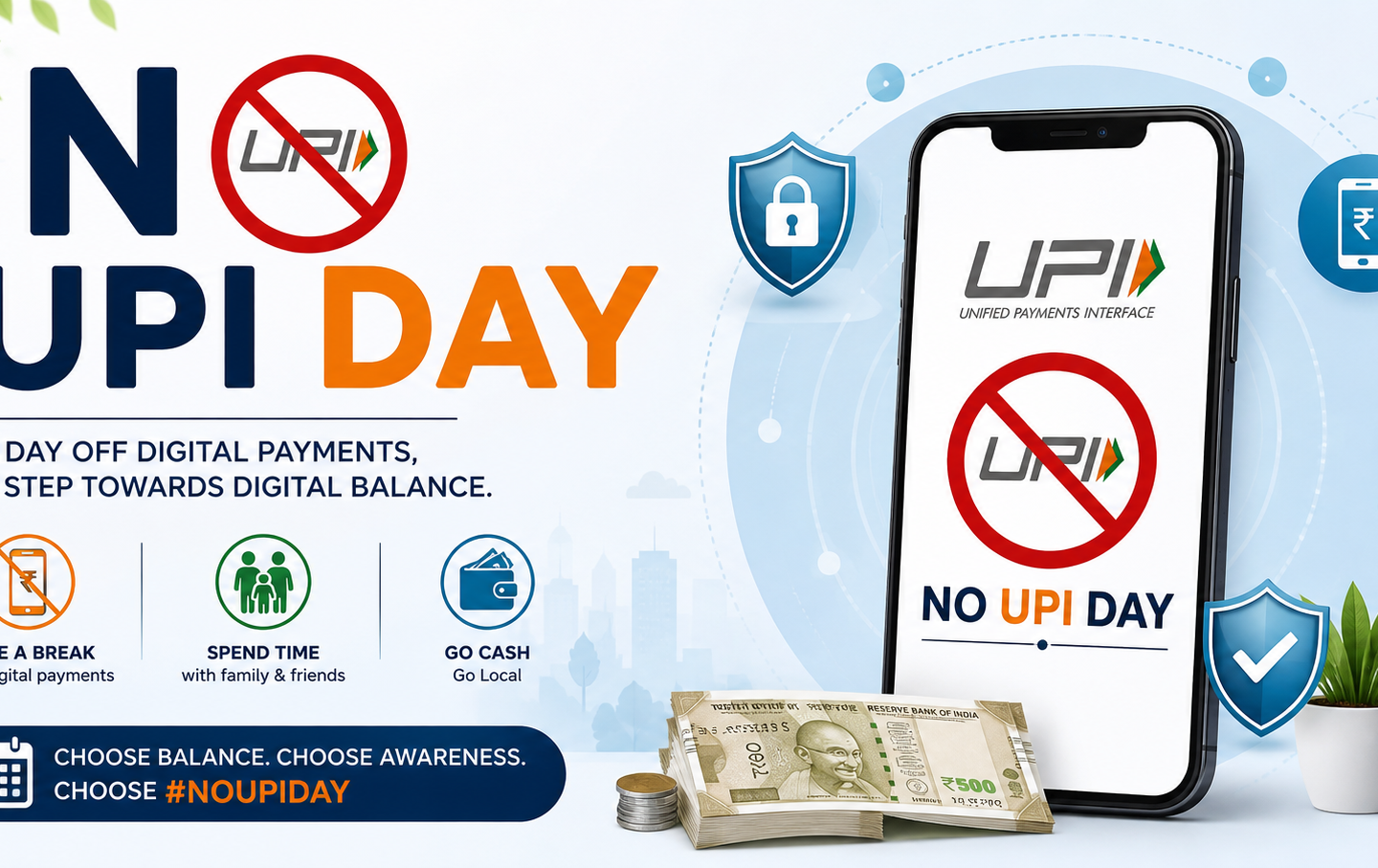
Traders and business associations across India are gearing up for a high-impact symbolic protest on October 2, 2026. They have announced a nationwide “No UPI Day” to oppose the upcoming 0.4 per cent merchant discount rate (MDR) on certain Unified Payments Interface transactions. The day coincides with Gandhi Jayanti, adding a layer of symbolic weight to the action as participants plan to cover UPI QR codes, scanners and sound boxes with black cloth.
The primary keyword “no upi day” is already dominating discussions among retail traders, distributors, jewellers and small merchants who fear the new charge will erode their already thin margins. Secondary focus on UPI MDR charges explains why the protest is gaining traction in states such as Maharashtra, Gujarat and Madhya Pradesh.
Why Traders Are Calling for No UPI Day
From October 15, 2026, a 0.4 per cent MDR will apply to eligible person-to-merchant (P2M) UPI payments above ₹2,000. The charge is capped at ₹300 for transactions of ₹75,000 and above. Person-to-person transfers and merchant payments of ₹2,000 or less remain free. Small vendors classified under person-to-person-merchant categories with monthly receipts up to ₹1 lakh are also exempt.
Traders argue that even this limited levy will squeeze businesses operating on net margins of 0.75 to 1.5 per cent. In August 2026 alone, UPI processed 15.51 billion P2M transactions worth ₹8.95 trillion, with payments above ₹2,000 accounting for roughly 67 per cent of the value. Merchants say they cannot absorb the cost without eventually passing it on or reducing acceptance of digital payments.
The Maharashtra Chamber of Commerce, Industry & Agriculture (MACCIA) has taken a leading role. Its president, Ravindra Mangave, stated that the chamber has coordinated with trader associations across India. MACCIA and its approximately 500 affiliate bodies plan to meet the Maharashtra Chief Minister to present their demands. Supporting organisations include the Federation of Retail Traders Welfare Association, All India Consumer Products Distributors Federation, All India Mobile Retailers Association, All India Jewellers and Goldsmith Federation, and All India Edible Oil Traders Federation. In Gujarat, more than 600 trade associations have signalled participation, while earlier local actions in Madhya Pradesh cities such as Bhopal and Indore already saw shops covering QR codes.
It is important to note that the Confederation of All India Traders (CAIT) has publicly distanced itself from the call. CAIT clarified that it has issued no resolution or official announcement endorsing a nationwide No UPI Day and that reports attributing the protest to the body are incorrect and misleading. Any independent actions by regional groups should not be linked to CAIT.
What Will Happen on No UPI Day October 2
Participating shops and establishments intend to:
- Cover UPI QR codes, scanners, sound boxes and related devices with black cloth.
- Temporarily refuse UPI payments for the day.
- Accept only cash or, in some cases, cards.
- Display messages such as “No UPI Day” to inform customers.
UPI as a system will continue to function normally. The protest is limited to the acceptance behaviour of participating merchants and does not involve any shutdown of the National Payments Corporation of India platform or bank systems. Consumers who rely solely on UPI are advised to carry cash on October 2, especially when visiting markets, grocery stores, jewellery shops, mobile retailers and other small-to-medium outlets expected to join the action.
In Maharashtra, organisers estimate involvement of around 20,000 traders. Nationwide participation is expected to be significant among the estimated 30–40 lakh small retailers who operate on narrow margins. Some groups have indicated that further escalation could follow if their concerns remain unaddressed after the symbolic day.
Impact on Consumers and the Digital Payments Ecosystem
The government and officials have repeatedly clarified that customers will not be charged the MDR. Finance Ministry statements have emphasised that the fee is a merchant-side cost. Everyday low-value UPI transactions that form the bulk of daily retail activity remain free. NPCI data also shows that around three-fourths of India’s more than 60 million digital-payment-accepting merchants have never recorded a transaction above ₹2,000, insulating a large segment from the levy.
Nevertheless, the No UPI Day protest highlights growing friction between the rapid expansion of digital payments and the cost structure faced by small businesses. UPI has been largely fee-free for merchants for nearly six years, driving extraordinary adoption. The introduction of even a capped MDR on higher-value transactions is viewed by many traders as the first step toward broader charges that could alter acceptance behaviour.
For consumers, the practical takeaway is simple: plan for cash on October 2 in areas where local trader associations have announced participation. Larger organised retail chains and platforms are less likely to join the black-cloth protest, so digital options should remain available there.
Broader Context and Next Steps
The timing on Gandhi Jayanti is deliberate. Organisers describe the black-cloth covering as a non-violent, symbolic form of protest in the spirit of Mahatma Gandhi’s methods. They intend to use the visibility of the day to press state and central authorities for a review or rollback of the MDR framework.
MACCIA and allied bodies plan to escalate dialogue with state governments. Traders have also linked the issue to the broader operating environment for small businesses, citing thin margins, competition and the cumulative effect of any new cost. If the government does not address the concerns, some associations have signalled readiness for intensified agitation in the following weeks.
Meanwhile, the official position remains that the MDR will take effect from October 15 as announced, applying only to the specified higher-value merchant transactions. No change in the implementation date has been indicated