R.N. Ravi Is New Governor of West Bengal: CV Ananda Bose Resigns Suddenly Ahead of Crucial 2026 Assembly Polls
In a major political development shaking West Bengal’s administrative landscape, R.N. Ravi is new Governor of West Bengal, succeeding Dr. C.V. Ananda Bose who resigned abruptly on Thursday, March 5, 2026. The resignation, submitted to President Droupadi Murmu in Delhi, comes just weeks before the state gears up for the high-stakes West Bengal Assembly elections 2026, scheduled to be held in April-May 2026 to elect all 294 members of the Legislative Assembly.
The tenure of the current Assembly ends on May 7, 2026, making this gubernatorial change a significant event in the run-up to the polls. Sources from Lok Bhavan (formerly Raj Bhavan) confirmed that Bose handed in his resignation earlier in the day, while he himself told PTI, “I have spent enough time at Governor’s office.” Bose had assumed office in November 2022, serving for over three years amid frequent tensions with the state government led by Chief Minister Mamata Banerjee.
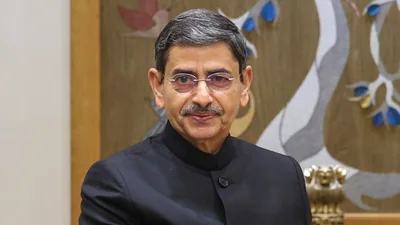
Union Home Minister Amit Shah personally informed Mamata Banerjee about the appointment of R.N. Ravi as the new Governor. Ravi, a retired IPS officer from the 1976 Kerala cadre with a background in intelligence and national security, currently serves as the Governor of Tamil Nadu. Reports indicate he may hold additional charge or be transferred to West Bengal, though an official Rashtrapati Bhavan notification is awaited for formal confirmation.
Mamata Banerjee’s Shocked Response: Allegations of Political Pressure and Breach of Federal Norms
West Bengal Chief Minister Mamata Banerjee wasted no time in reacting strongly to the development. In a detailed post on X (formerly Twitter), she expressed being “shocked and deeply concerned” by Bose’s sudden resignation. She highlighted that the reasons remain unclear to her but suggested possible external pressures.
“I would not be surprised if the Governor has been subjected to some pressure from the Union Home Minister to serve certain political interests on the eve of the forthcoming State Assembly elections,” Banerjee wrote.
She further criticized the Centre for not consulting her government before deciding on the successor, calling it a violation of established conventions.
“Union Home Minister just informed me that R.N. Ravi is being appointed as Governor of West Bengal. He never consulted with me as per the established convention in this regard. Such actions undermine the spirit of the Constitution of India and strike at the very foundation of our federal structure. The Centre must respect the principles of cooperative federalism and refrain from taking unilateral decisions that erode democratic conventions and the dignity of States,” she added.
Banerjee’s remarks underscore the ongoing friction between the Trinamool Congress-led state government and the BJP-ruled Centre, a dynamic that has defined West Bengal politics in recent years. The timing of the change—right before the Election Commission is expected to announce poll dates (possibly in the second week of March, with the full bench visiting the state from March 8)—has fueled speculation about strategic motives.
Who Is R.N. Ravi? Background of the Incoming Governor
R.N. Ravi (full name Ravindra Narayana Ravi) brings a distinguished career in public service to his new potential role. A former Deputy National Security Advisor and key interlocutor in the Naga peace talks, Ravi served as Governor of Nagaland from 2019 before being appointed to Tamil Nadu in September 2021.
In Tamil Nadu, Ravi’s tenure has been marked by occasional controversies with the DMK government, including disputes over protocol and state issues—similar to the pattern seen in West Bengal under Bose. His appointment to West Bengal, another opposition-ruled state, raises questions about whether the Centre is positioning governors to play a more active role in the pre-election phase.
As R.N. Ravi is new Governor of West Bengal, observers note his experience in handling sensitive political and security matters could influence Raj Bhavan’s approach to state affairs, especially with elections looming.
CV Ananda Bose’s Tenure: A Period of Frequent Clashes
Dr. C.V. Ananda Bose’s time as Governor was anything but smooth. Appointed in November 2022, he often found himself at odds with Mamata Banerjee’s administration over issues like university appointments, state legislation assent, and protocol matters. Recent reports even mentioned his enrollment as a voter in West Bengal, adding to the intrigue surrounding his exit.
Bose cited having “spent enough time” in the role, with some sources pointing to health reasons, though he did not elaborate publicly. His resignation ends a chapter of visible Centre-state discord in West Bengal.
Implications for West Bengal Assembly Elections 2026
The West Bengal Assembly elections 2026 are poised to be a fierce contest, with Trinamool Congress aiming for a third consecutive term against a resurgent BJP. The gubernatorial shift could impact administrative decisions related to poll preparations, law and order, and model code of conduct enforcement.
The Election Commission has been reviewing preparations, with a full bench visit starting March 8. Voter list revisions and other pre-poll activities are underway. A new Governor at this juncture might bring fresh dynamics to Raj Bhavan’s interactions with the state government and the poll panel.
Political analysts suggest this move could be part of broader central strategies in opposition strongholds. Mamata Banerjee’s invocation of “cooperative federalism” echoes her long-standing demands for greater state consultation in key appointments.
Broader Political Context and Reactions
The development has sparked reactions across the political spectrum. While TMC leaders echoed Banerjee’s concerns, BJP spokespersons have remained silent so far, with no official comment on the resignation or appointment.
This event adds to a series of governor-related controversies in non-BJP states, highlighting debates over the role of Governors under Article 153-162 of the Constitution. Critics argue that unilateral appointments weaken federal principles, while supporters view Governors as constitutional safeguards.
As West Bengal prepares for what promises to be an intense electoral battle, the appointment of R.N. Ravi as new Governor will be closely watched for its impact on governance, Centre-state relations, and the democratic process.
Stay tuned for official confirmations from Rashtrapati Bhavan and further updates on the West Bengal Assembly elections 2026 timeline. This story is developing, and more details on R.N. Ravi‘s transition to West Bengal are expected soon.