Raksha Bandhan 2026: Date, Shubh Muhurat, Rituals, History & Significance of the Sacred Sibling Festival
Raksha Bandhan 2026 is being celebrated today, Friday, 28 August 2026, across India and by Indian communities worldwide. This sacred festival, also popularly known as the Rakhi festival, falls on the full-moon day (Purnima) of the Hindu month of Shravan and honours the timeless bond of love, protection, and mutual care between brothers and sisters.
This year brought the familiar calendar confusion: would Raksha Bandhan 2026 fall on 27 August or 28 August? After careful examination of the Panchang, the answer is clear. The festival is observed on 28 August 2026.
Why the Date Confusion Happened and the Correct Decision
The Shravana Purnima Tithi begins at approximately 9:08 AM on 27 August 2026 and ends at 9:48 AM on 28 August 2026. Because the full-moon tithi is present at sunrise only on 28 August, traditional rules of Udaya Tithi (the tithi prevailing at sunrise) place the festival on Friday, 28 August.
An additional and decisive factor is Bhadra Kaal. Bhadra, considered inauspicious for auspicious ceremonies such as tying Rakhi, falls largely on 27 August and ends before sunrise on 28 August. Therefore, the safest and most widely accepted day for Raksha Bandhan 2026 is 28 August.
Raksha Bandhan 2026 Shubh Muhurat – Best Time to Tie Rakhi
According to Drik Panchang calculations for New Delhi, the primary auspicious window for the Rakhi-tying ceremony is:
5:57 AM to 9:48 AM on 28 August 2026 (duration of about 3 hours 51 minutes).
City-wise approximate timings include:
- Mumbai: 6:22/6:23 AM to 9:48 AM
- Bengaluru: around 6:08 AM to 9:48 AM
- Kolkata: earlier start near 5:18 AM to 9:48 AM
- Other major cities follow similar morning windows adjusted to local sunrise.
Families who miss the morning muhurat may use the Aparahna period later in the day (approximately 1:46 PM to 4:20 PM in Delhi), though the morning window remains preferred. Always verify exact local timings with a regional Panchang, as sunrise varies by location.
Note: A partial lunar eclipse (Chandra Grahan) occurs on 28 August but is not visible in India, so it does not impose Sutak restrictions on the rituals.
What Is Raksha Bandhan? Meaning and Core Significance
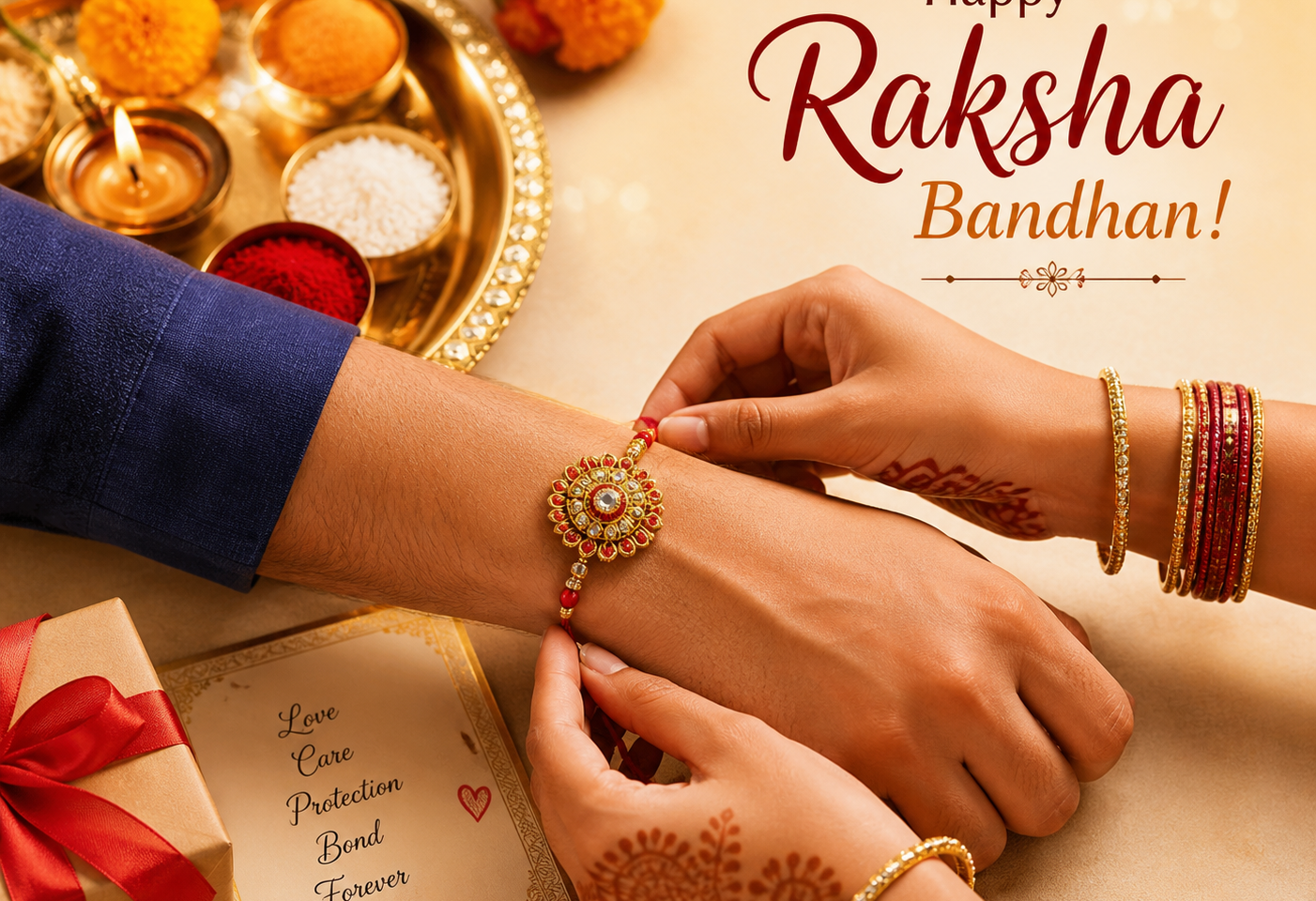
The name “Raksha Bandhan” comes from two Sanskrit words: Raksha (protection) and Bandhan (bond or tie). Together they mean “the bond of protection.” On this day a sister ties a sacred thread called a Rakhi around her brother’s right wrist, praying for his long life, health, prosperity, and happiness. In return the brother vows lifelong protection and support and usually offers gifts.
Beyond the biological sibling relationship, the festival has expanded to include cousins, close friends, neighbours, and even soldiers or community members who are treated as brothers. It remains one of the purest expressions of familial love and emotional security in Indian culture.
Historical and Mythological Roots of Raksha Bandhan
Raksha Bandhan does not originate from a single historical event. Its roots lie in multiple ancient traditions of tying protective threads (raksha or pratisara) on the full-moon day of Shravana, mentioned in texts such as the Atharvaveda and later Puranas.
Several beloved legends give the festival its emotional depth:
- Indra and Shachi (Bhavishya Purana)
When the gods were losing a long war against the asuras, Indra’s wife Shachi (Indrani), on the advice of the sage Brihaspati, tied a consecrated protective thread on Indra’s wrist after invoking divine blessings. Strengthened by this raksha, Indra achieved victory. This is often cited as one of the earliest scriptural references to the ritual. - Lord Krishna and Draupadi (Mahabharata tradition)
When Krishna’s finger was injured by the Sudarshana Chakra, Draupadi immediately tore a strip from her sari and bound the wound. Deeply moved, Krishna promised to protect her always—a promise he famously fulfilled during the attempt to disrobe her in the Kaurava court. - Goddess Lakshmi and King Bali
After Lord Vishnu (in Vamana avatar) stayed with the generous demon king Bali, Goddess Lakshmi disguised herself, tied a rakhi on Bali’s wrist, and accepted him as her brother. She then requested the return of her husband to Vaikuntha, which Bali granted. - Historical anecdotes
Stories of Queen Karnavati of Mewar sending a rakhi to Emperor Humayun seeking protection, and of Roxana (wife of Alexander) sending a thread to King Porus, further illustrate how the symbol of the protective thread crossed political and cultural boundaries. In the early 20th century, Rabindranath Tagore promoted Raksha Bandhan as a symbol of Hindu-Muslim unity during the Partition of Bengal.
These stories collectively emphasise that the true power of the Rakhi lies not in the thread itself but in the sincere intention of care and the promise of mutual responsibility.
How Raksha Bandhan Is Celebrated – Step-by-Step Rituals
The rituals are simple, heartfelt, and largely uniform across most of India, with regional variations in details and names (Rakhi Purnima in the north, Rakhri among Sikhs, Janai Purnima among some communities).
Typical sequence:
- Family members bathe early and wear clean or new traditional clothes.
- The sister prepares a puja thali containing:
- One or more Rakhis
- Roli or kumkum
- Akshat (unbroken rice grains)
- A lit diya or candle
- Sweets (ladoo, barfi, peda, or modern chocolates)
- Optional items such as flowers or a small water vessel
- She applies a tilak of roli and rice on her brother’s forehead.
- She performs a short aarti while praying for his well-being.
- She ties the Rakhi on his right wrist, often chanting a traditional mantra or simply expressing good wishes.
- The brother offers gifts, money, or both and verbally or silently renews his promise of protection.
- Siblings feed each other sweets, and the family shares a festive meal.
In many homes the day also includes worship of Lord Ganesha, Vishnu, or family deities before the main ceremony.
Modern Celebrations and Evolving Traditions
While the core remains unchanged, Raksha Bandhan 2026 reflects contemporary life. Online Rakhi delivery services, virtual ceremonies for siblings living abroad, and eco-friendly or personalised Rakhis have become common. Many sisters now also tie Rakhis to soldiers at border posts, police personnel, or community protectors, expanding the idea of “brother” to the larger social fabric.
Gift trends range from traditional clothes and sweets to gadgets, jewellery, and experiential gifts. Social media is filled with family photographs, emotional messages, and creative Rakhi designs. Yet the essence stays the same: a few quiet minutes of connection that reaffirm belonging in an increasingly busy world.
Regional and Community Variations
- In North India the festival is observed with full traditional pomp.
- In parts of Maharashtra and Gujarat it coincides with Narali Purnima (coconut festival for fisherfolk).
- Among Brahmins it often overlaps with Upakarma (changing of the sacred thread).
- Sikhs celebrate it as Rakhri, and many Buddhist and Jain communities observe similar protective-thread customs.
The festival is a public holiday in most Indian states, allowing families to travel and reunite.
Why Raksha Bandhan Continues to Matter in 2026
In an age of nuclear families, migration, and digital distance, Raksha Bandhan remains a powerful annual reminder that some bonds are meant to be renewed deliberately. The simple act of tying a thread and making a promise creates emotional security that no amount of technology can replace. It teaches children the values of responsibility, gratitude, and unconditional support.
For many, the day also carries quiet nostalgia—remembering childhood celebrations, grandparents, or siblings who are no longer near. The festival therefore functions both as a joyous reunion and a gentle acknowledgment of life’s changes.
Practical Tips for a Meaningful Raksha Bandhan 2026
- Confirm the local muhurat for your city.
- Choose a Rakhi that the brother will actually wear comfortably.
- Keep the ceremony unhurried; the emotional exchange matters more than elaborate décor.
- If siblings are far away, a video call during the muhurat still carries the spirit of the day.
- Include elders and younger children so the tradition is passed on naturally.
Conclusion
Raksha Bandhan 2026, observed on 28 August with the morning muhurat after Bhadra has ended, once again invites every family to pause and honour the protective bond that lies at the heart of Indian social life. Whether celebrated with an elaborate thali or a simple thread and a heartfelt promise, the festival continues to weave love, duty, and continuity across generations.
May every brother and sister who ties or receives a Rakhi this year feel the strength of that sacred bandhan—protection that flows both ways, and a bond that time cannot break.
Happy Raksha Bandhan 2026!