India China Meeting: 25th Round of Boundary Talks Between NSA Ajit Doval and Wang Yi in Beijing Ahead of Xi’s BRICS Visit
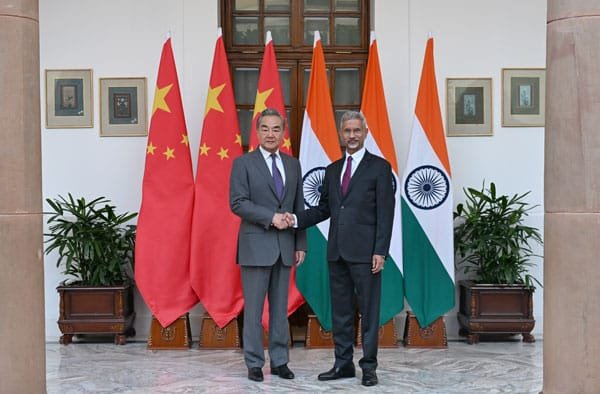
National Security Advisor Ajit Doval will hold the 25th round of boundary talks with Chinese Foreign Minister Wang Yi in Beijing on Tuesday under the Special Representatives framework. The high-level India China meeting forms a critical step in managing the long-standing border dispute and preparing the ground for Chinese President Xi Jinping’s expected visit to India next month for the BRICS Summit.
According to a statement from the Ministry of External Affairs, Doval’s two-day visit to China will also include a call on Vice President Han Zheng. The talks come at a time when both sides have been working to stabilise relations after years of heightened tension along the Line of Actual Control.
Xi Jinping is scheduled to travel to India for the BRICS Summit on September 12-13. The visit will mark his first trip to the country in seven years and is being closely watched as a potential indicator of the direction of India-China relations. The upcoming summit provides an important backdrop for the current round of discussions between Doval and Wang Yi.
This India China meeting is the second high-level engagement between the two countries within a matter of weeks. On August 6, officials from both sides held discussions under the Working Mechanism for Consultation and Coordination framework. Those talks covered boundary delimitation, border management, mechanism-building and trans-border cooperation. The rapid sequence of meetings underlines a deliberate effort to maintain diplomatic momentum.
Over the past two years, India and China have taken measured steps to reduce friction along the border. Partial disengagement in eastern Ladakh, the creation of buffer zones along the LAC, and reciprocal limited patrolling arrangements have helped lower the risk of confrontation. These arrangements have not restored the situation that existed before 2020, yet they represent tangible progress in managing differences on the ground.
India has also eased some of the restrictions on Chinese investments that were imposed after the 2020 clashes. Border trade has been reopened in certain sectors, and efforts are under way to resume direct flights. These moves aim to restore people-to-people contact and commercial exchanges that had been sharply curtailed.
The relationship reached its lowest point since the 1962 war following the Galwan Valley clash, in which 20 Indian soldiers lost their lives. High-level political dialogue remained frozen for an extended period. A shift began when India started rolling back some of the hardline positions adopted after 2020. In October 2024, the two countries reached an understanding that partially resolved the standoff in Ladakh. That agreement enabled a meeting between Prime Minister Narendra Modi and President Xi on the sidelines of the BRICS summit in Russia. Since then, regular high-level engagements have continued.
Despite these steps, core sources of friction remain unresolved. China continues to occupy approximately 43,000 square kilometres of territory in Aksai Chin and does not accept India’s sovereignty claims over Ladakh and Arunachal Pradesh. Beijing’s close strategic and military support for Pakistan remains another major point of concern for New Delhi. During recent military tensions, China is reported to have provided real-time intelligence and technological assistance to Pakistan, reinforcing Indian perceptions of an unfavourable strategic environment.
China expert Anushka Saxena has observed that Beijing continues to withhold clearly defined concessions because it views friction along the border as leverage that can be calibrated according to circumstances. Settling the LAC question once and for all is a long-drawn process that both sides will pursue at their own pace. There is no guarantee that a future unilateral assertion by China will not disrupt the current trajectory of talks. Saxena has also noted that China understands the delimitation exercise carries greater political weight for India, which explains Beijing’s approach of seeking concessions rather than readily granting them.
Ahead of the talks in Beijing, Hu Shisheng, a leading Chinese scholar on South Asia, stated that the focus of both countries would be on “institutionalising stability” even while “structural differences” in the relationship remain. This assessment captures the pragmatic nature of the current phase of engagement. Neither side expects an immediate breakthrough on the boundary question. Instead, the priority is to create reliable mechanisms that can prevent crises and keep channels of communication open.
The Special Representatives framework itself has a long history. It was established to provide a dedicated high-level channel for discussing the boundary question. The fact that the two sides have now reached the 25th round demonstrates both the persistence of the dispute and the shared recognition that dialogue remains preferable to confrontation. Each round has contributed to a body of understandings on principles, confidence-building measures and practical arrangements, even if the final settlement remains distant.
For India, the current India China meeting serves multiple objectives. It allows New Delhi to keep the border issue on the agenda at the highest level, to test Chinese intentions in the run-up to the BRICS Summit, and to explore incremental improvements in bilateral cooperation. For China, the talks offer an opportunity to present a stabilised relationship with India as part of its broader diplomatic outreach and to reduce the risk of border incidents that could overshadow Xi’s visit.
The broader strategic context continues to shape the discussions. India’s growing partnerships with other major powers, its focus on infrastructure development along the northern borders, and its careful management of economic ties with China all form part of the background against which the talks take place. On the Chinese side, domestic priorities, regional diplomacy and the desire to avoid multiple simultaneous tensions influence the approach to the India relationship.
Observers note that the path forward is likely to remain incremental. Further disengagement at remaining friction points, clearer protocols for patrolling, and stronger institutional mechanisms for crisis management are realistic near-term goals. Larger questions of territorial settlement and strategic trust will require sustained political will on both sides and are unlikely to be resolved in a single meeting or even a single year.
As NSA Ajit Doval sits down with Wang Yi in Beijing, the emphasis is expected to stay on practical steps that can lock in the relative calm achieved over the past two years. The outcomes of these talks will be closely examined for any signals about the tone of Xi Jinping’s forthcoming visit and the overall trajectory of India-China relations in the months ahead.
The 25th round of Special Representatives talks therefore represents more than a routine diplomatic engagement. It is a test of whether the two countries can continue to manage their differences through dialogue while structural issues remain unresolved. The results will influence not only the immediate border situation but also the wider atmosphere in which the BRICS Summit and subsequent high-level interactions take place.
Both sides appear to recognise that a return to the intense confrontation of 2020 serves neither country’s interests. At the same time, neither is prepared to make fundamental concessions on core territorial claims. The challenge for the India China meeting under way in Beijing is to navigate this narrow space carefully, expanding areas of cooperation where possible and containing areas of disagreement where necessary. The coming days will show how successfully the two special representatives are able to advance that difficult but essential agenda.