CBSE 3 Language Rule 2026-27: Three Languages Compulsory for Class 9 & 10, At Least Two Native Indian Languages – Full Details, Implications & Guidelines
Introduction: Major Shift in CBSE Language Education
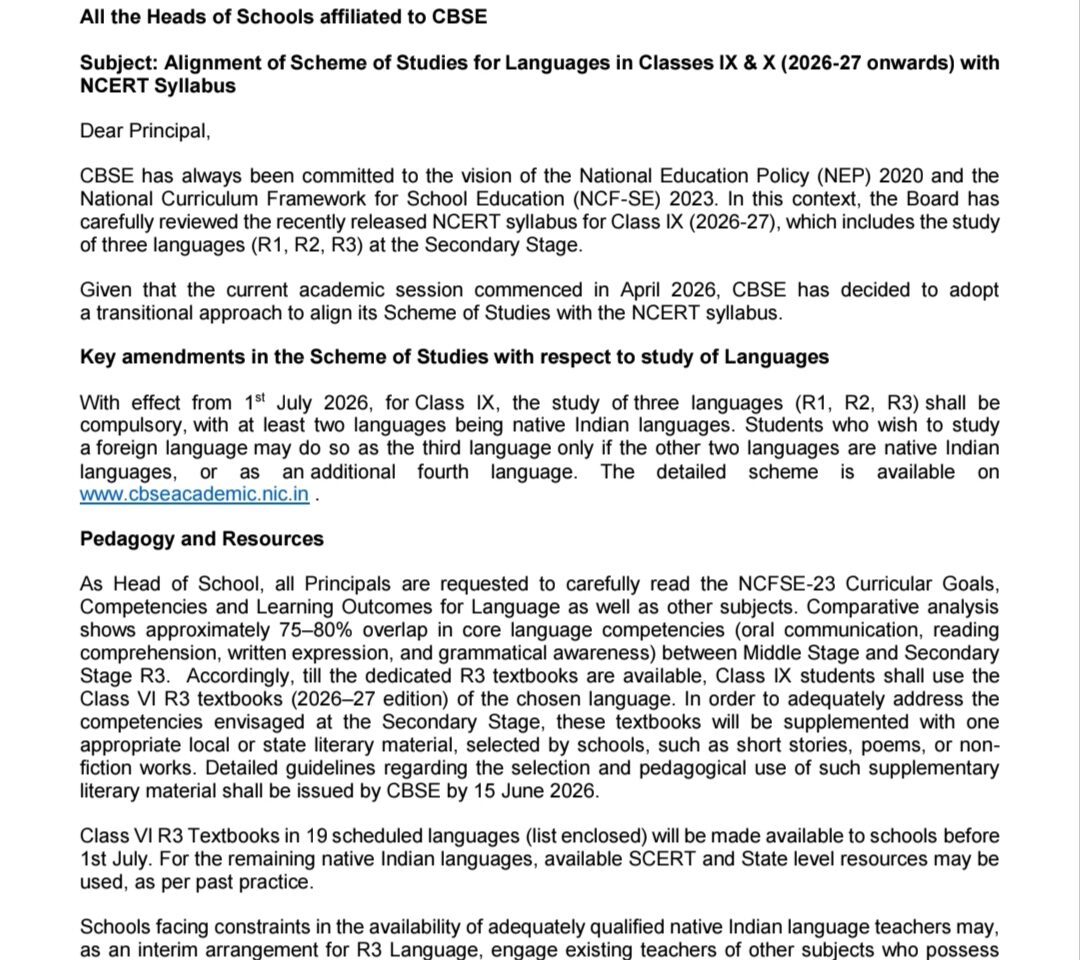
The Central Board of Secondary Education (CBSE) has introduced a transformative CBSE 3 language rule that will reshape language learning for millions of students starting from the academic session 2026-27. In a circular issued on May 15, 2026 (Circular No. Acad-33/2026), the board mandated the compulsory study of three languages — designated as R1, R2, and R3 — for students in Classes 9 and 10, effective July 1, 2026.
This landmark decision aligns the board’s scheme of studies with the National Education Policy (NEP) 2020 and the National Curriculum Framework for School Education (NCF-SE) 2023. It emphasizes multilingualism, cultural rootedness, and cognitive development while offering flexibility for students and schools.
For parents, educators, and school administrators searching for “CBSE 3 language rule” or “CBSE three languages compulsory Class 9 10,” this comprehensive guide covers every aspect: eligibility, implementation timeline, resource availability, challenges, benefits, and practical tips.
Understanding the CBSE 3 Language Rule: R1, R2, and R3 Explained
Under the revised policy:
- R1: Typically the primary language of instruction or the student’s strongest language (often English or the regional language).
- R2: A second language different from R1.
- R3: A third language different from both R1 and R2.
Key Mandate: At least two of the three languages (R1, R2, R3) must be native Indian languages. Examples include Hindi, Sanskrit, Tamil, Bengali, Assamese, Urdu, or any of the 22 scheduled languages recognized in the Indian Constitution.
Students wishing to study a foreign language (such as French, German, Spanish, or Japanese) can do so only as R3 if the other two are native Indian languages. Alternatively, foreign languages can be taken as an additional fourth language. This ensures strong grounding in Indian linguistic heritage while allowing global exposure.
The policy promotes proficiency across reading, writing, comprehension, oral communication, grammar, and literary appreciation. Notably, the third language (R3) in Class 10 will likely follow internal school assessments rather than a full board exam, reducing pressure while maintaining passing requirements.
Background: From NEP 2020 to NCF-SE 2023 Implementation
The CBSE 3 language rule is not sudden but a structured rollout of NEP 2020’s vision. The policy advocates that students learn at least three languages, with two being native to India, to foster multilingualism, cognitive benefits, and national integration.
NCF-SE 2023 builds on this by detailing competencies for each stage. There is significant overlap (75-80%) in language skills like reading comprehension, oral proficiency, grammar, and writing between middle and secondary stages. This allows smoother progression and efficient use of resources.
CBSE reviewed the newly released NCERT syllabi for 2026-27 before issuing the circular, ensuring alignment with updated curricular goals and learning outcomes.
Implementation Timeline and Transitional Arrangements
The current academic session began in April 2026, but the new rule applies from July 1, 2026, for Class 9. A transitional approach accommodates ongoing students.
- For 2026-27: Class 9 students will use Class 6 R3 textbooks for the chosen third language until dedicated secondary-level materials are ready.
- CBSE will provide Class 6 R3 textbooks in 19 scheduled languages to schools before July 1, 2026.
- Schools must supplement with local or state literary materials — poems, short stories, fiction, and regional works.
- Detailed guidelines on supplementary materials will be issued by June 15, 2026.
This phased implementation minimizes disruption while building foundational skills early (R3 introduced progressively from Class 6 in some contexts).
Guidelines for Schools and Teaching Resources
CBSE has directed affiliated schools to:
- Review updated curriculum goals, competencies, and learning outcomes.
- Ensure qualified teachers for chosen languages.
- Adopt flexible interim measures for teacher shortages:
- Inter-school resource sharing via Sahodaya clusters.
- Hybrid/online teaching support.
- Engagement of retired language teachers.
- Hiring qualified postgraduates.
The board acknowledges practical challenges, especially in urban or smaller schools where certain regional languages may lack instructors. These provisions promote collaborative solutions.
Benefits of the CBSE 3 Language Rule
Cognitive and Academic Advantages:
- Multilingualism enhances brain plasticity, problem-solving, and multitasking abilities. Research shows children exposed to multiple languages develop superior metalinguistic awareness.
Cultural Preservation:
- Prioritizing native Indian languages strengthens connection to heritage, literature, and regional identities. It counters the dominance of English-only education in some metros.
National Integration:
- Learning languages beyond one’s region fosters empathy and unity in diversity.
Global Readiness:
- Strong Indian language base + optional foreign language prepares students for higher education and careers in a globalized world.
Equity and Inclusion:
- Flexibility respects diverse linguistic backgrounds. Provisions exist for students with special needs.
Parents in regions like Assam (where the user is based) can leverage languages like Assamese alongside Hindi/English, enriching local cultural education.
Challenges and How CBSE Addresses Them
- Teacher Availability: Major concern for less common languages. CBSE’s flexible arrangements (sharing, hybrid, retirees) aim to bridge gaps.
- Resource Development: Interim use of Class 6 books + supplements. Full textbooks expected progressively.
- Student Workload: Internal assessment for R3 and skill-overlap help manage burden. Focus remains on joyful, competency-based learning rather than rote.
- Parental and Regional Concerns: Some southern states historically resisted Hindi imposition, but the policy offers choice without compulsion of specific languages.
Schools must communicate transparently with parents about options available by June 30, 2026, in many cases.
What Students and Parents Should Do Now
- Explore Language Options: Discuss with schools early. Common combinations: English (R1), Hindi (R2), Regional Language/Sanskrit (R3).
- Assess Proficiency: Students can switch languages in early secondary years if they demonstrate basic skills.
- Leverage Supplements: Encourage reading regional literature, watching films, or participating in language clubs.
- Monitor Updates: Check the official CBSE academic website and school circulars for June 15 guidelines.
- For Foreign Language Aspirants: Prioritize two Indian languages first.
Expert Perspectives and Broader Impact
Educationists hail this as a step towards holistic development. Multilingual education correlates with better academic performance in other subjects and improved employability in diverse sectors like tourism, diplomacy, content creation, and translation.
In a country with 22 scheduled languages and hundreds of dialects, this policy celebrates linguistic diversity while building a common framework. For CBSE’s 28,000+ affiliated schools across India and abroad (including UAE, where many Indian expatriates study), it standardizes yet localizes education.
Long-term, it supports NEP’s goal of making India a knowledge superpower by rooting education in its civilizational strengths.
Comparison with Previous CBSE Language Scheme
Previously, many students studied two languages (English + one other) up to Class 10, with a third optional. The new CBSE 3 language rule makes three mandatory at secondary stage, extending the three-language exposure from middle school. This ensures deeper proficiency rather than superficial exposure.
Future Outlook: Beyond 2026-27
CBSE plans further alignment in higher classes. By Class 11-12, students may continue with two languages, maintaining at least one Indian language. Ongoing NCERT material development and teacher training programs will support sustained implementation.
Schools are encouraged to innovate with technology — language apps, AI tools for pronunciation, and virtual exchanges with other regions.
Conclusion: Embracing Multilingual India
The CBSE 3 language rule 2026-27 marks a pivotal moment in Indian school education. By making three languages compulsory — with a strong emphasis on native Indian ones — CBSE is not just fulfilling NEP 2020 mandates but nurturing well-rounded, culturally aware, and globally competent citizens.
While the transition poses logistical challenges, the board’s pragmatic guidelines on resources, teachers, and assessments demonstrate a student-centric approach. Parents and schools in places like Guwahati, Assam, or across the country should view this as an opportunity to enrich learning journeys.
Stay updated via official channels. Schools must act promptly on teacher arrangements and material procurement. For students entering Class 9 in 2026-27, this policy opens doors to linguistic richness that will benefit them lifelong.