Trump in China 2026: Xi Jinping Warns of Taiwan Conflict as Leaders Seek Trade Wins in Historic Beijing Summit
Trump in China: Xi Delivers Stark Taiwan Warning Amid Pomp, Trade Talks, and High-Stakes Diplomacy
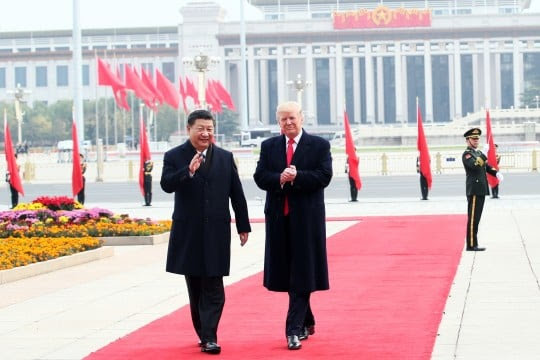
In a landmark visit that marks the first trip by a U.S. President to China in nearly a decade, President Donald Trump arrived in Beijing for an extensive summit with Chinese President Xi Jinping. The meetings, filled with elaborate ceremonies and frank discussions, have thrust Trump in China into the global spotlight, highlighting both opportunities for economic cooperation and deep-seated tensions, particularly over Taiwan.
The summit, held at Beijing’s iconic Great Hall of the People, comes at a critical juncture. With Trump’s approval ratings facing pressure from the ongoing conflict involving Iran, the U.S. leader is seeking tangible economic victories. China, meanwhile, is leveraging its position to emphasize core interests. The two-and-a-half-hour-plus talks on Thursday underscored a complex dynamic: warm public rhetoric paired with firm private red lines.
Xi Jinping’s Direct Warning on Taiwan
From the outset, Xi Jinping placed the Taiwan question at the center of the agenda. According to Chinese state media, Xi told Trump that the Taiwan issue is “the most important issue in China-US relations.” He warned that any missteps could lead the two powers into “clashes or even conflict,” potentially pushing the entire bilateral relationship into a “highly perilous situation.”
This stark opening salvo set a serious tone despite the surrounding pageantry. Xi stressed that Beijing views Taiwan as an inalienable part of its territory and expects Washington to adhere to the One China principle. Al Jazeera reporting from Beijing noted that while China is open to flexibility on issues like trade, technology, and even aspects of the Iran situation, Taiwan remains non-negotiable.
Trump in China responded with characteristic optimism in public remarks, praising Xi as a “great leader” and “friend.” He extended an invitation for Xi to visit the White House in September, signaling a desire to maintain personal rapport even amid policy differences.
Grand Welcome and Mutual Praise at the State Banquet
The visit featured classic diplomatic theater. Trump was greeted with an honor guard, throngs of children waving flowers and flags, and a lavish state banquet. In his toast, Trump highlighted the “deep sense of mutual respect” between the peoples of the U.S. and China, drawing on historical references to underscore shared potential.
Xi, in turn, stated that “the people of China and the United States are both great peoples.” He added that the “great rejuvenation of the Chinese nation” and “making America great again” could proceed hand in hand. Both leaders affirmed that the U.S.-China relationship is the most important bilateral tie in the world and vowed not to let it derail.
Preparatory talks between economic teams in South Korea reportedly yielded “balanced and positive outcomes,” providing a foundation for further agreements on market access, investment, and trade balances.
Trade, Economy, and Strategic Discussions
The White House described the meeting as productive, noting discussions on expanding market access for American businesses in China and boosting Chinese investment into U.S. industries. Trump is under pressure to deliver wins for American workers and companies, especially in agriculture, technology, and manufacturing sectors.
Beyond economics, the leaders addressed pressing global issues. They agreed on the need for the Strait of Hormuz to remain open for the free flow of energy and that Iran should not develop nuclear weapons. This convergence comes as the U.S. navigates its involvement in the Middle East conflict.
For the U.S., priorities include stabilizing trade relations and managing the Iran file. For China, securing U.S. restraint or understanding on Taiwan tops the list. Analysts describe this as a classic leverage exchange in great power diplomacy.
U.S. Strategic Ambiguity on Taiwan Remains
U.S. policy toward Taiwan continues under “strategic ambiguity.” Washington acknowledges Taiwan’s existence, maintains unofficial ties, sells defensive arms, but officially recognizes only one China. Taiwan’s Mainland Affairs Council stated there were “no surprising messages” from the summit so far and that Taipei remains in close contact with Washington.
U.S. Treasury Secretary Scott Bessent indicated that Trump understands the sensitivities and would address the matter in coming days. Secretary of State Marco Rubio later confirmed that U.S. policy on Taiwan has not changed despite Xi’s strong emphasis.
Broader Context: Why This Summit Matters
Trump in China 2026 represents more than bilateral talks—it is a pivotal moment in 21st-century geopolitics. The world’s two largest economies account for a massive share of global GDP, trade, and innovation. Any disruption risks reverberating through supply chains, financial markets, and security alliances worldwide.
China’s economy faces its own challenges, including slowing growth and demographic pressures, making stable U.S. relations valuable. The U.S., dealing with domestic political considerations and international commitments, sees economic decoupling as costly but strategic competition as necessary.
Experts point out that while public niceties dominate headlines, the underlying competition in technology, military capabilities, and influence in the Indo-Pacific remains intense. Taiwan, located just 100 miles from mainland China, is the most dangerous flashpoint. Any conflict there could draw in the U.S. under the Taiwan Relations Act and potentially escalate into a wider confrontation.
Reactions and Analysis from Beijing
Correspondents on the ground, including Al Jazeera’s Katrina Yu and Alan Fisher, captured the mood. Beijing is projecting confidence and willingness to cooperate on mutual interests while drawing a firm line on sovereignty issues. The overall message: partnership is possible, but not at the expense of core interests.
Trump’s team views the summit as an opportunity to reset relations on more favorable terms for American businesses. Early indications suggest progress on specific deals, though details remain under wraps pending further negotiations on Day 2.
What Comes Next?
The summit continues into a second day with more discussions expected. Markets will watch closely for announcements on tariffs, investment frameworks, rare earth minerals, and technology cooperation. Geopolitical observers will scrutinize any shifts—or lack thereof—regarding Taiwan arms sales, freedom of navigation in the Taiwan Strait, and military posturing.
Taiwanese officials continue monitoring developments, emphasizing the importance of maintaining peace and stability in the region. Allies in the Indo-Pacific, including Japan, Australia, and the Philippines, are also attuned to outcomes that could affect regional security architectures.
Historical Significance
This visit revives high-level personal diplomacy not seen since Trump’s earlier term. The pomp recalls past state visits but occurs in a transformed global landscape: heightened tech rivalry, supply chain reconfiguration efforts, and a more multipolar world.
As Trump and Xi toast to future cooperation, the challenge lies in translating warm words into durable frameworks that manage competition without descending into conflict. The Taiwan question looms large, serving as both a test of diplomatic skill and a reminder of the stakes involved in U.S.-China relations.
Trump in China has delivered drama, diplomacy, and a clear delineation of priorities. Whether this summit yields lasting economic gains and stabilizes tensions—or merely papers over deeper divides—will become clearer in the weeks and months ahead as follow-up negotiations unfold.
This article will be updated with further developments from Day 2 of the