Assam and Meghalaya Chief Ministers Unite to Restore Peace After Shillong Violence
Assam and Meghalaya have rapidly intensified efforts to contain rising tensions following violence in Shillong, with Chief Ministers Himanta Biswa Sarma and Conrad K Sangma jointly committing to restore peace, trust and normalcy between the neighbouring states. The coordinated outreach comes in the immediate aftermath of unrest that erupted during a Khasi Students’ Union (KSU) black-flag motorcycle rally in Meghalaya’s capital on 19 August 2026 and the subsequent reactions felt across the Assam-Meghalaya border.
In a post on X, Meghalaya Chief Minister Conrad K Sangma confirmed he had spoken directly with his Assam counterpart regarding the unfortunate violence in Shillong and the reactions that followed, which affected ordinary people and commuters of both states. “We have agreed to work together, as always, to normalise the situation,” Sangma stated. He announced that designated ministers from Assam and Meghalaya would meet to take discussions forward and explore concrete ways to restore peace, trust and normalcy. Sangma also issued a public appeal to citizens in both states to maintain peace, harmony and restraint, underlining the deep historical bonds that link Assam and Meghalaya. “Meghalaya and Assam share deep bonds, and we must work together to protect them,” he emphasised.
Responding to the developments, Assam Chief Minister Himanta Biswa Sarma confirmed he had conveyed Assam’s concerns to Sangma over the recent incidents in Shillong, particularly those involving Assam-registered vehicles. Sarma directed Assam Minister for Border Protection Atul Bora to coordinate closely with Meghalaya authorities and work towards ensuring that peace and normalcy prevail. Describing Assam and Meghalaya as “sister states” bound by deep historical, cultural and people-to-people ties, Sarma stressed that mutual respect, restraint and sensitivity must guide the response. “We must do everything within our power to preserve the harmony, friendship and goodwill that have long defined the relationship between our people,” he said.
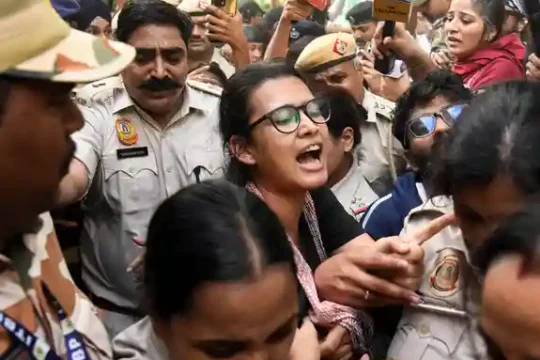
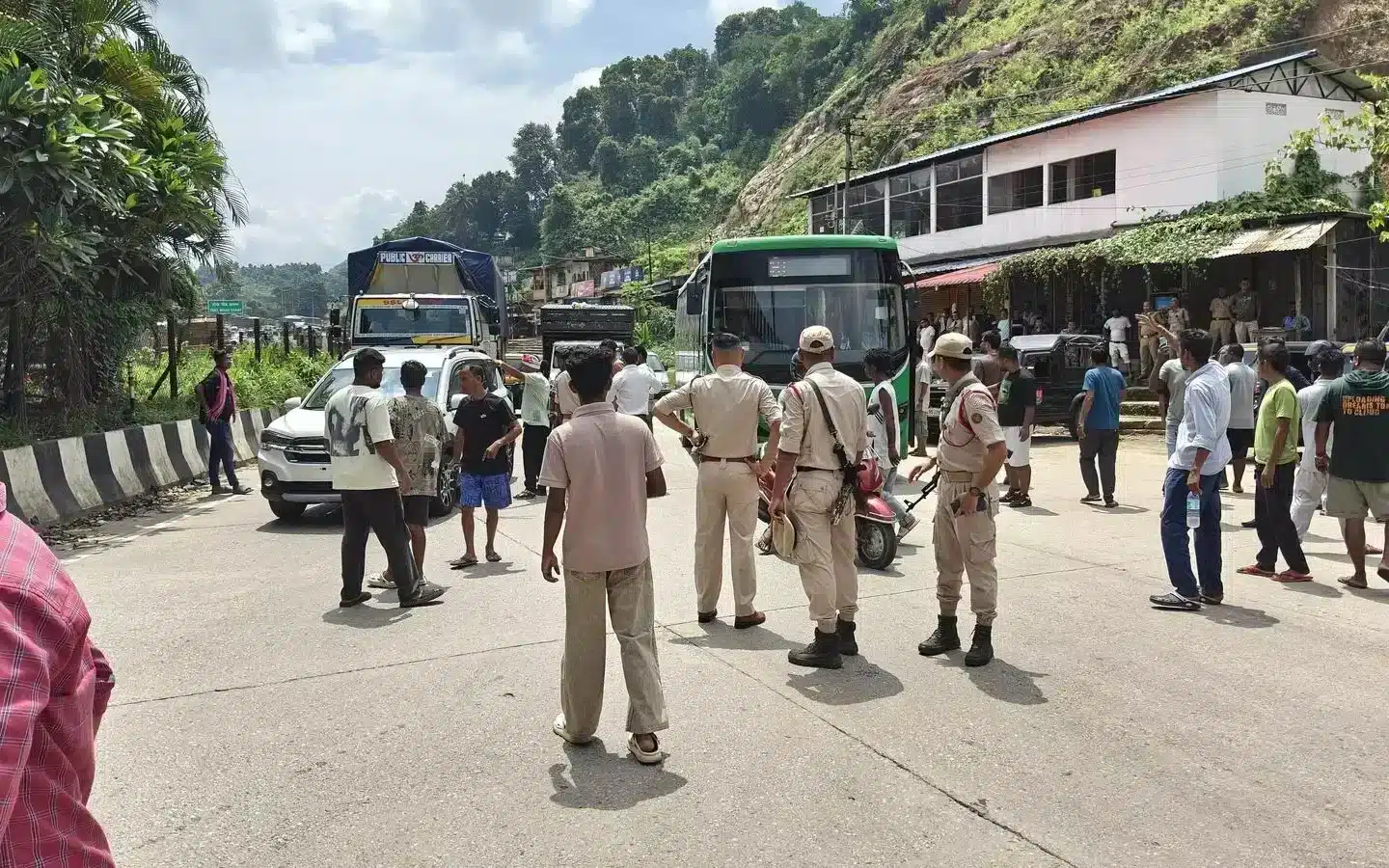
The violence itself broke out during the KSU black-flag motorcycle rally in Shillong on 19 August. Reports indicate that several vehicles were vandalised, people were assaulted and public property was damaged. Government vehicles were also reportedly set on fire. The fallout quickly crossed state lines. Tensions were reported along the Assam-Meghalaya border, and Assam-registered vehicles became targets of the unrest in Shillong. These developments raised the risk of the localised incident escalating into broader inter-state friction, prompting the swift intervention by the two chief ministers.
Both governments are treating the situation as a matter requiring immediate and coordinated action. The decision to depute designated ministers for follow-up discussions signals a structured approach aimed at preventing further deterioration. By publicly affirming their commitment to work together “as always,” Sarma and Sangma have sought to reassure citizens on both sides of the border that the longstanding relationship between Assam and Meghalaya remains a priority.
The episode highlights the complex dynamics that occasionally surface in Northeast India, where ethnic, student-led and identity-related mobilisations can rapidly spill across administrative boundaries. Shillong, as the capital of Meghalaya, has historically been a focal point for such expressions. The involvement of Assam-registered vehicles in the violence created an immediate cross-border dimension that neither state could ignore. The targeting of vehicles and the subsequent reports of tension along the border underscored how quickly local events can affect daily life for traders, commuters and ordinary residents who depend on the free movement of people and goods between the two states.
In their public statements, both leaders deliberately framed the response in terms of shared history and mutual interest rather than blame. Sarma’s characterisation of Assam and Meghalaya as sister states and Sangma’s emphasis on deep bonds serve to re-anchor the narrative around cooperation. The appointment of Assam’s Border Protection Minister Atul Bora as the coordinating point person further institutionalises the response, ensuring that border-related concerns receive focused attention while broader confidence-building measures are explored.
For residents of both states, the practical impact of the unrest was immediate. Commuters and traders faced uncertainty, and the atmosphere of restraint appealed for by both chief ministers becomes essential to prevent isolated acts of retaliation. The agreement that designated ministers will meet provides a formal channel for addressing grievances, reviewing security arrangements and exploring confidence-building steps that can restore normalcy on the ground.
The speed of the political response is notable. Within a day of the violence, the two chief ministers had spoken, issued public statements, designated ministerial interlocutors and jointly appealed for calm. This sequence demonstrates an awareness that inter-state relations in the Northeast remain sensitive and that early, visible leadership is required to contain spill-over effects. By choosing the language of partnership and shared destiny, both leaders have sought to de-escalate the situation before it hardens into prolonged tension.
Looking ahead, the success of these efforts will depend on the outcomes of the ministerial-level discussions and the ability of local administrations to prevent further incidents. Maintaining open lines of communication, ensuring the safety of vehicles and citizens from both states, and addressing the underlying issues that fuelled the original rally will be critical. The public appeals for peace, harmony and restraint issued by Sangma and Sarma place a shared responsibility on citizens as well as governments.
Assam and Meghalaya have repeatedly demonstrated the capacity to manage differences through dialogue. The current episode, though serious, fits into a broader pattern in which political leadership on both sides has prioritised the preservation of people-to-people ties. The statements issued on 20 August reaffirm that priority. By treating the Shillong violence and its cross-border repercussions as a joint challenge rather than a bilateral dispute, the two chief ministers have set a constructive tone.
In the coming days, attention will focus on the ministerial meetings and any concrete measures announced to restore confidence. For the people of Assam and Meghalaya, the immediate need is the return of normal movement, the absence of further violence and the reaffirmation that the longstanding bonds between the two states remain intact. The coordinated response by Himanta Biswa Sarma and Conrad K Sangma offers a clear signal that both governments intend to protect that relationship and prevent the events of 19 August from casting a longer shadow over their shared future.
The developments also serve as a reminder of the importance of sensitive handling of student and civil society mobilisations in the region. While the right to peaceful protest is recognised, the rapid descent into violence and the targeting of vehicles from a neighbouring state illustrate the risks when such events spiral. The joint commitment by the two chief ministers to restore peace, trust and normalcy provides a framework within which those risks can be managed and reduced.
As the designated ministers prepare to meet, the message from the highest political leadership in both Assam and Meghalaya remains consistent: the relationship between the two states is too valuable to be left vulnerable to isolated incidents of unrest. Through continued dialogue, coordination on border issues and a shared appeal for restraint, Assam and Meghalaya are working to ensure that peace returns and that the deep historical, cultural and human connections between their people are preserved.