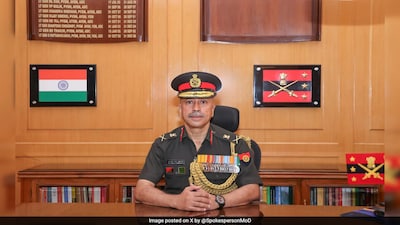
Lt Gen NS Raja Subramani Appointed Next Chief of Defence Staff (CDS) of India – Full Profile, Career Highlights & Strategic Implications 2026
Lt Gen NS Raja Subramani Appointed as India’s Next Chief of Defence Staff: A New Era in Military Leadership
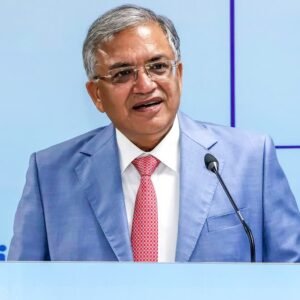
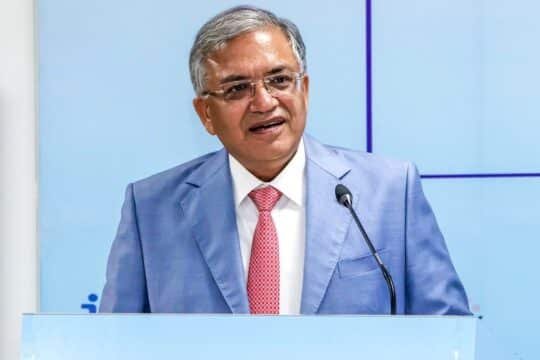
In a significant development for India’s defence establishment, the government on Saturday announced the appointment of Lieutenant General (Retd) NS Raja Subramani as the country’s next Chief of Defence Staff (CDS). He will assume office on May 30, 2026, succeeding General Anil Chauhan. Concurrently, Vice Admiral Krishna Swaminathan has been named the new Chief of the Indian Navy, set to take charge on May 31, 2026, succeeding Admiral Dinesh K Tripathi.
These high-level appointments come at a critical juncture as the Indian Armed Forces push forward with major structural reforms, including the ambitious theatreisation process aimed at enhancing jointness and operational efficiency across the Army, Navy, and Air Force.
Who is Lt Gen NS Raja Subramani? Complete Profile and Career Journey
Lieutenant General NS Raja Subramani, PVSM, AVSM, SM, VSM (Retd), brings nearly four decades of distinguished service to the pivotal CDS role. Commissioned into the Garhwal Rifles in December 1985 after training at the National Defence Academy (NDA), Khadakwasla, and the Indian Military Academy (IMA), Dehradun, Subramani has served across diverse conflict zones and terrain profiles.
His illustrious career includes key command, staff, and instructional appointments. He served as General Officer Commanding-in-Chief (GOC-in-C) of the Central Army Command in Lucknow, providing him with deep insights into operational dynamics along India’s western and northern borders. Prior to retirement, he held the position of Vice Chief of the Army Staff (VCOAS), superannuating on July 31, 2025.
Post-retirement, Lt Gen NS Raja Subramani was appointed Military Adviser to the National Security Council Secretariat (NSCS) on September 1, 2025. This role positioned him as a crucial link between the armed forces and the highest echelons of national security decision-making under NSA Ajit Doval. His prior experience in this advisory capacity mirrors that of his predecessor, Gen Anil Chauhan, underscoring the government’s confidence in his strategic acumen.
Academically accomplished, Subramani is an alumnus of the Joint Services Command and Staff College, Bracknell, UK, and the National Defence College, New Delhi. He holds a Master of Arts degree from King’s College London and an MPhil in Defence Studies from Madras University. These qualifications have equipped him with a sophisticated understanding of international military strategy and joint operations.
The officer has been decorated with several prestigious awards, including the Param Vishisht Seva Medal (PVSM), Ati Vishisht Seva Medal (AVSM), Sena Medal (SM), and Vishisht Seva Medal (VSM), recognizing his exceptional service and leadership.
Lt Gen NS Raja Subramani as CDS: Role, Responsibilities, and Ongoing Reforms
The Chief of Defence Staff (CDS) position, created in 2020 following recommendations from various expert committees, serves as the principal military adviser to the Defence Minister and heads the Department of Military Affairs (DMA). Lt Gen NS Raja Subramani will also function as Secretary, Department of Military Affairs.
Key responsibilities include:
- Promoting jointness and integration among the three services.
- Overseeing the creation of Integrated Theatre Commands (theatreisation).
- Advising on defence procurement, logistics, and resource optimization.
- Coordinating tri-service training, doctrine development, and operational planning.
Theatreisation remains the cornerstone of current military reforms. This involves restructuring the armed forces into unified geographical or functional commands (e.g., Northern Theatre for China border, Western Theatre for Pakistan border, Maritime Theatre, etc.), where assets from all services operate under a single commander. This shift from service-specific silos to integrated operations is expected to improve combat effectiveness, reduce duplication, and enhance response times in multi-domain warfare.
Lt Gen NS Raja Subramani assumes the role amid accelerated reforms. Gen Anil Chauhan’s tenure was extended by eight months in September 2025 specifically to maintain momentum on these initiatives. Experts anticipate that Subramani’s extensive border experience and joint staff background will prove invaluable in navigating inter-service coordination challenges and finalizing the theatre command structure.
Vice Admiral Krishna Swaminathan: New Chief of the Indian Navy
Complementing the CDS appointment, Vice Admiral Krishna Swaminathan, currently heading the Western Naval Command in Mumbai, will take over as the next Navy Chief. Commissioned on July 1, 1987, Swaminathan is a specialist in communication and electronic warfare.
His career highlights include command of key assets such as missile vessels INS Vidyut and INS Vinash, missile corvette INS Kulish, guided missile destroyer INS Mysore, and aircraft carrier INS Vikramaditya. He has served as Navy Vice Chief, Chief of Personnel, Controller of Personnel Services, and Chief of Staff of Western Naval Command.
Swaminathan played a pivotal role in naval training as Chief Staff Officer (Training) at Southern Naval Command and was instrumental in establishing the Indian Naval Safety Team. An alumnus of NDA, Joint Services Command and Staff College (UK), College of Naval Warfare, and US Naval War College, he brings vast operational and strategic expertise to the top naval post.
Strategic Context: Why These Appointments Matter for India’s Defence
India faces complex security challenges, including a two-front threat scenario involving China along the Line of Actual Control and Pakistan along the Line of Control and International Border. The appointments of Lt Gen NS Raja Subramani as CDS and Vice Admiral Swaminathan as Navy Chief signal continuity and fresh impetus to modernization and integration efforts.
The CDS office is central to implementing the “Year of Reforms” initiatives, empowering joint decision-making, and optimizing India’s defence budget, which is among the world’s largest. Enhanced focus on indigenization (Atmanirbhar Bharat), cyber, space, and special operations domains is expected under the new leadership.
Lt Gen NS Raja Subramani‘s proven track record in high-altitude and desert operations, combined with his NSCS experience, positions him ideally to bridge policy and operational realms. His leadership is likely to accelerate pending decisions on ranks, roles, and command structures for theatre commanders.
Broader Implications and Future Outlook
These changes reinforce the government’s commitment to a robust, future-ready military. As India aspires to greater regional and global influence, integrated command structures under strong leadership like that of NS Raja Subramani will be crucial for deterrence, rapid deployment, and multi-domain dominance.
The seamless transition— with Subramani taking over just before the end of Chauhan’s extended tenure—ensures no disruption in ongoing reforms. Defence analysts view this as a pragmatic move that leverages experienced hands familiar with both field realities and strategic policymaking.
For military enthusiasts, strategic watchers, and national security professionals, the tenure of Lt Gen NS Raja Subramani as CDS will be closely monitored for progress on theatreisation, joint logistics, and capability development in emerging domains like drones, AI, and hypersonics.
Conclusion: The appointment of Lt Gen NS Raja Subramani as the third Chief of Defence Staff marks another milestone in India’s journey toward military transformation. With his rich operational experience, academic prowess, and deep understanding of border dynamics, he is well-poised to steer the armed forces through critical reforms. Alongside Vice Admiral Krishna Swaminathan’s elevation, these leadership changes promise strengthened jointmanship and enhanced national security architecture in the coming years.