Vishwakarma Puja 2026: Ultimate Guide to Date, Rituals & Benefits
New Delhi, September 17, 2026 – Millions of devotees across India are celebrating Vishwakarma Puja 2026 today with great enthusiasm and devotion. This auspicious festival, also known as Vishwakarma Jayanti, falls on Thursday, September 17, coinciding with Kanya Sankranti, the day the Sun enters Virgo (Kanya Rashi). Workers, engineers, artisans, mechanics, factory owners, and skilled professionals are cleaning their workplaces, decorating tools and machinery, and offering prayers to Lord Vishwakarma, the divine architect of the universe.
Vishwakarma Puja 2026 holds special importance because it marks a powerful solar transition. According to the Hindu Panchang, Kanya Sankranti occurs at approximately 7:58 AM IST. The Punya Kaal begins around this time and extends until early afternoon, making the morning hours particularly favourable for worship. Many sources list the Maha Punya Kaal in the early hours after Sankranti, ideal for seeking blessings for career growth, safety of equipment, and professional success.
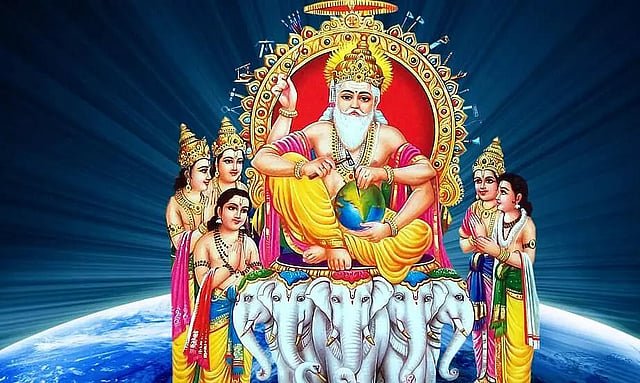
Lord Vishwakarma is revered in Hindu tradition as the celestial craftsman who created the heavens, the weapons of the gods, magnificent cities, and countless divine structures. He is the patron deity of architecture, engineering, craftsmanship, and all forms of skilled labour. On this day, people whose livelihoods depend on tools, machines, vehicles, and technology pause their regular work to express gratitude and seek divine protection against accidents and mechanical failures.
Why Vishwakarma Puja 2026 Is Special
Unlike many Hindu festivals that follow the lunar calendar, Vishwakarma Puja is linked to the solar Sankranti. In 2026, the Sun’s entry into Virgo on September 17 makes the day especially potent for resetting one’s relationship with work. Vedic astrology associates Virgo with discipline, precision, service, and attention to detail. Worshipping Lord Vishwakarma on this day is believed to remove obstacles in professional life, enhance technical skills, and invite steady prosperity through honest effort.
There was some initial confusion whether the festival falls on September 16 or 17. Clear Panchang references confirm that Kanya Sankranti takes place on September 17 at around 7:58 AM, so the majority of India is observing Vishwakarma Puja 2026 today. In some Bengali calendars the observance may shift to September 18, but the core astrological significance remains tied to the solar transition.
Factories, workshops, construction sites, garages, printing presses, and offices across the country have been cleaned and decorated. Vehicles are often garlanded, machines are polished, and computers or modern equipment are also included in the worship in today’s digital age. The festival is particularly vibrant in states such as West Bengal, Odisha, Assam, Bihar, Jharkhand, and industrial hubs throughout North and East India.
Auspicious Timings for Vishwakarma Puja 2026
Devotees are advised to perform the main rituals after the Sankranti moment. Key timings reported for New Delhi and similar locations include:
- Kanya Sankranti: approximately 7:58 AM
- Brahma Muhurta: early morning hours before sunrise
- Abhijit Muhurta: midday window
- Other favourable periods in the forenoon and afternoon
Rahu Kaal should be avoided for the main puja. Local Panchang variations exist, so checking city-specific timings is recommended. Sarvartha Siddhi Yoga and other positive yogas are also active for much of the day, adding to the overall auspiciousness.
Complete Puja Samagri List
To perform Vishwakarma Puja 2026 properly, devotees gather the following items:
- Idol or picture of Lord Vishwakarma
- Clean red or yellow cloth and wooden chowki
- Kalash filled with water, coconut, and mango leaves
- Roli, kumkum, turmeric, sandalwood paste, and akshat (rice grains)
- Flowers, garlands, incense sticks, camphor, and ghee diya
- Fruits, sweets, coconut, betel leaves and nuts, cloves, cardamom
- Sacred thread (janeu), mauli (kalava), Gangajal, and perfume
Many families also prepare seven types of bhog, including panchamrit (milk, curd, honey, sugar, and ghee), moong khichdi, and other traditional offerings that symbolise the five elements and gratitude for sustenance.
Step-by-Step Puja Vidhi
- Wake up early, bathe, and thoroughly clean the workplace or home puja area.
- Sprinkle Gangajal for purification.
- Place a clean cloth on the chowki and install the idol or image of Lord Vishwakarma.
- Set up the kalash nearby and light the diya and incense.
- Offer roli, chandan, akshat, flowers, and fruits while chanting mantras.
- Decorate tools, machines, and vehicles with flowers and apply tilak.
- Perform aarti and distribute prasad among family members, colleagues, and workers.
The most commonly recited mantra is “Om Vishwakarmaye Namah.” Longer traditional mantras such as “Om Adhara Shaktiye Namah, Om Mehadharaye Namah, Om Vishwakarmaye Namah” are also chanted by priests. Many devotees silently pray for the smooth functioning of their equipment, protection from accidents, and continued professional success.
7 Powerful Rituals and Practices Observed Today
Across the country, seven key practices stand out during Vishwakarma Puja 2026:
- Complete cleaning and reorganisation of the workspace.
- Worship of tools and machinery as living extensions of skill.
- Offering of special bhog and prasad.
- Chanting of Vishwakarma mantras for focus and precision.
- Charity and sharing of food with workers and the needy.
- Avoiding the use of tools and machines for regular work on this day in traditional settings.
- Setting positive intentions (sankalpa) for the coming year of labour and innovation.
These rituals reinforce respect for labour and the instruments that support livelihoods. In modern offices, people even offer prayers before computers and software systems, adapting the ancient tradition to contemporary life.
Significance and Benefits
Performing Vishwakarma Puja is believed to bring multiple blessings: safety at the workplace, growth in business, improvement in technical skills, removal of career hurdles, and overall prosperity. It is considered an excellent day to start new ventures related to craftsmanship, engineering, or manufacturing. The festival also promotes the values of hard work, creativity, and gratitude.
Astrologically, the Sun’s entry into Virgo encourages disciplined effort and problem-solving. Devotees use the day to realign their professional goals with higher purpose. Many report a renewed sense of motivation and positive energy after the rituals.
Regional Celebrations and Modern Observance
In industrial belts and cities, the festival is marked by community gatherings, cultural programmes, and collective aartis. Workers receive new clothes or small gifts in some organisations. Social media is filled with greetings, photos of decorated machines, and messages seeking Lord Vishwakarma’s blessings for success and happiness.
While traditional artisans continue age-old practices, younger professionals in technology and engineering fields are also embracing the festival, recognising its message of honouring skill and innovation. The core spirit remains unchanged: respect for the tools that enable creation and progress.
As the day progresses, families and colleagues will share prasad, exchange good wishes, and look forward to a year of productive and safe work under the divine guidance of Lord Vishwakarma. Vishwakarma Puja 2026 serves as a beautiful reminder that every craft, every machine, and every honest effort is sacred when performed with devotion and integrity.
May Lord Vishwakarma bless all devotees with skill, safety, prosperity, and success on this auspicious occasion. Happy Vishwakarma Puja 2026!