Bank Strike Deferred: Unions Call Off 3-Day Nationwide Action After IBA Assurance on Five-Day Week
Bank Strike Deferred: Unions Postpone 3-Day Nationwide Action After Late-Night IBA Talks
In a major development that brings immediate relief to millions of bank customers across India, the proposed three-day nationwide bank strike has been deferred. The United Forum of Bank Unions (UFBU) announced late on Sunday night that the industrial action planned from Monday to Wednesday (September 28 to 30) will not go ahead. The decision followed a high-level meeting with the Indian Banks’ Association (IBA) held at 9:30 PM on September 27.
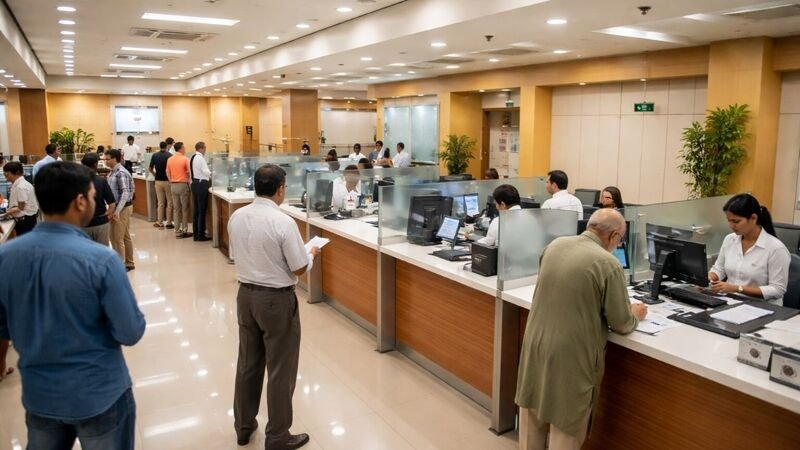
Banks will therefore function normally on Monday. ATMs, branches, and digital services are expected to operate without disruption, ending days of uncertainty for account holders, businesses, and pensioners who rely on uninterrupted banking.
Why the Bank Strike Was Called Off
The UFBU circular issued after the meeting confirmed that a joint high-level committee of the IBA and the unions will be formed immediately. This panel will discuss the long-pending demand for declaring remaining Saturdays as holidays and explore workable alternatives acceptable to employees, management, and customers.
Discussions will also begin on the Performance Linked Incentive (PLI) scheme applicable to Scale IV and above officers. The unions had objected to the scheme’s unilateral implementation by the Department of Financial Services. Residual issues listed in the minutes of the March 8, 2024 agreement will likewise be taken up for early resolution.
In view of these assurances, the UFBU agreed to defer all agitational programmes and strike actions.
Background of the Bank Strike Demand
Bank unions had announced the three-day strike to press for two main demands. The first and most prominent is the implementation of a five-day banking week, with both Saturday and Sunday as weekly holidays. Unions argue that this commitment was part of an agreement reached with the government more than two-and-a-half years ago but has not yet been fulfilled.
The second demand centres on the new Performance Linked Incentive scheme. Unions claim it was introduced without adequate consultation and want modifications before it is fully rolled out.
Addressing a press conference in Shimla, UFBU Himachal Pradesh Convenor and President of the Bankers United Forum of Himachal Pradesh, Narendra Sharma, explained the unions’ position. He said bank employees and officers had no intention of inconveniencing customers. However, when legitimate demands and written commitments remain pending for such a long period, industrial action becomes the only remaining option to draw the government’s attention.
Sharma emphasised that the primary demand remains a five-day work week and the review of the PLI scheme.
What the Joint Panel Will Examine
According to the UFBU circular, the newly formed high-level committee will focus on three key areas:
- Declaring the remaining Saturdays as holidays and exploring practical alternatives that balance employee welfare with customer convenience.
- Starting formal discussions on proposed modifications to the PLI scheme for Scale IV and above officers so that the observations of the unions can be placed before the government.
- Expeditious resolution of residual issues recorded in the March 8, 2024 minutes.
These steps mark a shift from confrontation to structured dialogue. The formation of a joint panel is being viewed by industry observers as a constructive move that could prevent future disruptions.
Impact on Customers and the Banking System
The deferment of the bank strike comes as a significant relief. A three-day closure would have affected salary credits, loan EMIs, cheque clearances, and cash availability in many locations. Although digital banking and ATMs usually continue during strikes, physical branch services and specialised counters often face reduced operations.
With the strike now postponed, Monday’s banking hours will proceed as usual. Customers can carry out routine transactions, deposit and withdraw cash, and complete documentation without the uncertainty that accompanies industrial action.
Bank unions have repeatedly stated that they understand the hardships customers face during strikes. The decision to defer the action after receiving concrete assurances reflects a willingness to prioritise continuous service while still pursuing long-standing demands through negotiation.
Road Ahead for Five-Day Banking Week
The demand for a five-day banking week has been a central issue for bank employees for several years. Proponents argue that most government offices and many private-sector institutions already operate on a five-day schedule and that bank staff deserve similar working conditions. Critics, including some customer groups and sections of the banking industry, have raised concerns about reduced access for rural and semi-urban customers who still depend heavily on physical branches.
The joint committee’s mandate to explore alternatives suggests that any final decision will attempt to balance these competing interests. Possible outcomes could include staggered Saturday openings, extended weekday hours, or a phased introduction of full Saturday holidays.
Meanwhile, the PLI scheme discussions are expected to address concerns about fairness, transparency, and the impact on officers in higher scales. Unions want any modified proposal to be submitted to the government only after their observations are considered.
Broader Context of Bank Employee Agitations
Industrial actions by bank unions are not new. Over the past decade, several nationwide strikes and protests have been organised around wage revisions, working hours, and policy changes introduced by the government or the IBA. In most cases, sustained dialogue has eventually produced settlements, although the process has often been protracted.
The current episode follows a similar pattern: announcement of strike, last-minute talks, formation of a committee, and temporary suspension of action. What distinguishes the latest development is the explicit commitment to form a high-level panel “immediately” and the clear listing of residual issues from the 2024 minutes.
Industry analysts note that timely implementation of the panel’s recommendations will be crucial. Prolonged delays have previously led to renewed agitation. Both the IBA and the UFBU now face the task of converting the Sunday-night understanding into concrete outcomes within a reasonable timeframe.
What Customers Should Know
- Banks will remain open and fully functional on Monday, September 28.
- No disruption is expected in branch services, ATMs, or digital channels because of the deferred strike.
- Further updates on the five-day week and PLI scheme will depend on the progress of the joint committee.
- Customers are advised to complete time-sensitive transactions as usual and monitor official bank communications for any future developments.
Conclusion
The decision to defer the three-day nationwide bank strike marks a welcome pause in industrial tension within the banking sector. By agreeing to form a joint high-level committee and to reopen discussions on Saturdays as holidays, residual issues, and the PLI scheme, both the UFBU and the IBA have chosen negotiation over confrontation.
For bank employees, the move keeps the path open for eventual resolution of long-pending demands. For customers, it ensures that Monday begins with normal banking operations rather than closed shutters. The coming weeks will reveal whether the newly constituted panel can deliver lasting solutions on the five-day banking week and related concerns. Until then, the banking system continues without interruption—an outcome that benefits depositors, borrowers, and the wider economy alike.