Gyanesh Kumar Under Fire as Rahul Gandhi Alleges Vote Theft After EC Commissioners’ Objections Ignored
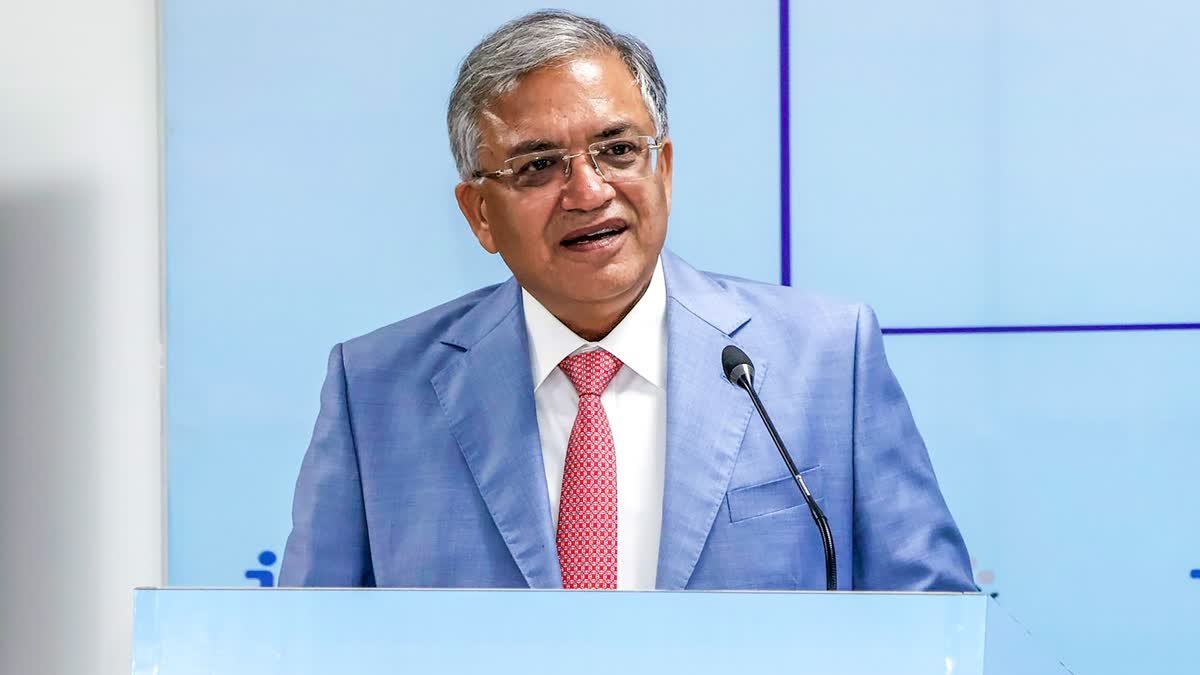
Leader of the Opposition Rahul Gandhi on Thursday launched a scathing attack on the Bharatiya Janata Party and Chief Election Commissioner Gyanesh Kumar, accusing the latter of enabling systematic “vote chori” that undermines the very foundation of Indian democracy. Addressing a press conference in New Delhi, Gandhi declared that votes are being stolen, rendering laws passed by Members of Parliament illegal, and demanded the immediate resignation of Gyanesh Kumar, whom he branded a “traitor.”
The Congress MP’s remarks came in the wake of a detailed investigative report by The Indian Express revealing that Election Commissioners Sukhbir Singh Sandhu and Vivek Joshi had repeatedly raised serious objections to decisions taken by Gyanesh Kumar on the integrity of the voter database, changes in new voter enrolment procedures, and the overall security of electoral rolls. According to the report, the two commissioners were kept in the dark on at least 14 occasions over the past ten months, with some decisions taken without their knowledge. In one instance, they even wrote a formal letter of complaint to the Cabinet Secretary, the top bureaucrat in the Government of India.
Gandhi linked these internal fractures within the three-member Election Commission of India directly to the ongoing Special Intensive Revision (SIR) of electoral rolls. He argued that the disappearance of anti-incumbency—a force that has historically toppled governments across parties and regions—could only be explained by large-scale manipulation of the voter list. “Indira Gandhi was at the height of her popularity after she won the Bangladesh war in 1971 and then faced massive anti-incumbency and pressure within a year or two. The same thing happens to leader after leader, to Congress leaders and to regional parties. But, for some reason, it does not happen to PM Modi, Amit Shah and the BJP,” Gandhi said.
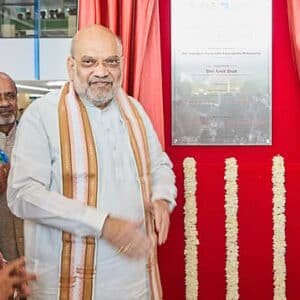
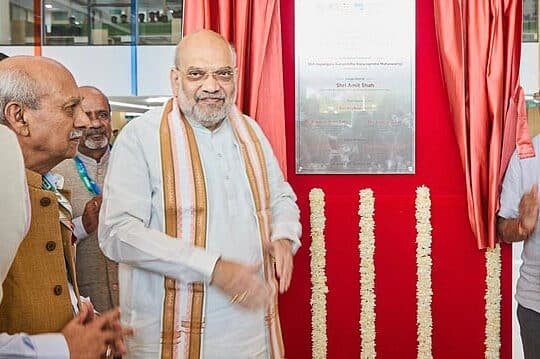
He pointed to statements by Home Minister Amit Shah and Prime Minister Narendra Modi predicting that the BJP would remain in power for 30 years and that the NDA would cross 400 seats in the 2024 Lok Sabha elections. “No political leader could be so confident in a democracy because of a fundamental force called anti-incumbency,” Gandhi asserted. He noted that Haryana, Maharashtra and Uttar Pradesh have historically swung between parties, yet suddenly anti-incumbency appears to have vanished in these states.
The answer the Congress arrived at, Gandhi claimed, is “vote chori.” He presented a chain of consequences: the vote is protected by the Election Commission; from the vote the Constitution derives its power; from the Constitution laws are made; and from those laws institutions emerge. “If the vote has been destroyed, then our Constitution has been destroyed. It no longer has its power, and it no longer functions. If our Constitution has been destroyed, our laws are illegal. And if our laws are illegal, our institutions are meaningless. From vote chori comes kanoon chori, and from that comes sanstha chori,” he declared.
Gandhi warned that the Congress would not remain silent while democracy in India is “being destroyed” and reiterated his demand for Gyanesh Kumar’s resignation. The BJP swiftly hit back. Party spokesperson Pradeep Bhandari dismissed the press conference as a “damp squib” and described Gandhi as a “frustrated leader who is not able to win people’s support through democratic means.” He added, “Loktantra ki chor Congress is frustrated as the Gandhi-Vadra family is democratically made to sit in the Opposition by the people of India.”
The controversy surrounding Gyanesh Kumar has intensified because the Election Commission is currently executing a nationwide Special Intensive Revision that began in Bihar in June 2025. The exercise has already removed more than 13 crore names from draft voter rolls across 30 States and Union Territories. The Commission maintains that the SIR is a long-overdue clean-up to delete names of those who have died, emigrated, or are registered at multiple addresses, noting that the last intensive revision occurred nearly 25 years ago.
Opposition parties, however, have accused Gyanesh Kumar of using the revision to manipulate electoral rolls in favour of the ruling BJP. Both the BJP and the Election Commission have rejected these charges. The latest Indian Express revelations have elevated the dispute from partisan allegation to an institutional crisis, because the questions are being raised from within the Commission itself.
The Election Commission responded to the report by stating that “differing views” form a natural part of the decision-making process. Commissioners Sandhu and Joshi have not issued public statements on the matter. Nevertheless, the disclosure that two of the three Election Commissioners repeatedly questioned the integrity of the voter database and the manner in which Gyanesh Kumar was taking decisions has triggered demands for greater transparency and accountability.
Political observers note that the timing is particularly sensitive. With several state elections on the horizon and the SIR continuing across the country, any perception that the electoral rolls are being altered without full collegial consultation risks eroding public trust in the institution that has long been regarded as one of India’s most credible democratic guardians.
Gandhi’s press conference framed the issue in existential terms for Indian democracy. By arguing that the destruction of the vote leads to the destruction of the Constitution, laws and institutions, he sought to elevate the controversy beyond routine political sparring. The BJP, for its part, continues to portray the Congress as unable to accept electoral verdicts delivered by the people.
As the Special Intensive Revision proceeds and the internal differences within the Election Commission remain unresolved in the public domain, the spotlight stays firmly on Gyanesh Kumar. The demand for his resignation, the allegations of vote theft, and the documented objections of his colleagues have combined to create one of the most serious credibility challenges the Election Commission has faced in recent years.
Whether the Commission can restore confidence through greater transparency, or whether the political battle over the integrity of India’s electoral rolls intensifies further, will shape the narrative of Indian democracy in the months ahead. For now, the claims of ignored objections, the scale of deletions under the SIR, and the sharp political polarisation surrounding Gyanesh Kumar ensure that the issue remains at the centre of national debate.