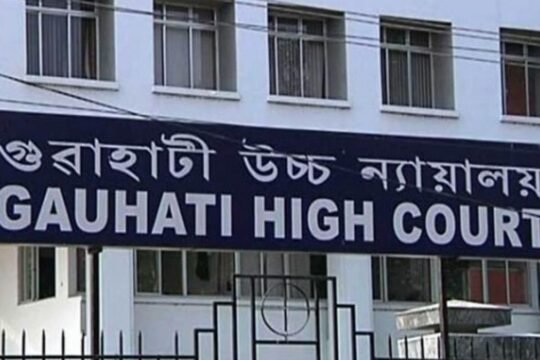
Sonam Raghuvanshi Surrenders in Meghalaya After Supreme Court Cancels Bail in Honeymoon Murder Case
Sonam Raghuvanshi Surrenders Before Meghalaya Court After Supreme Court Cancels Bail in Honeymoon Murder Case
In a significant development in one of India’s most closely watched criminal cases, Sonam Raghuvanshi, the primary accused in the brutal honeymoon murder of her husband Raja Raghuvanshi, surrendered before a trial court in Shillong, Meghalaya, on Tuesday. The surrender came in compliance with a Supreme Court order that cancelled her bail and directed her to surrender within three weeks.
East Khasi Hills district Superintendent of Police Vivek Syiem confirmed that Sonam Raghuvanshi was remanded to judicial custody following her appearance before the court. The 2025 case, which shocked the nation with its allegations of conspiracy, hired killers, and a honeymoon turned deadly, has once again returned to the headlines.
Background of the Meghalaya Honeymoon Murder Case
The case dates back to May 2025, when newlywed couple Sonam Raghuvanshi and Raja Raghuvanshi, both residents of Indore in Madhya Pradesh, travelled to Meghalaya for their honeymoon. The couple went missing while vacationing in the scenic Sohra (Cherrapunji) area on May 23, 2025.
On June 2, 2025, Raja Raghuvanshi’s body was discovered in a deep gorge in the region. What initially appeared to be a tragic accident soon turned into a complex murder investigation. Police alleged that Sonam Raghuvanshi had conspired with her alleged lover, Raj Kushwaha, and hired contract killers to murder her husband during the trip. The motive, according to investigators, was financial gain.
Sonam Raghuvanshi was arrested in June 2025 in connection with the killing. The investigation painted a picture of careful planning, betrayal, and cold-blooded execution during what should have been a joyous celebration of marriage.
Bail Journey: From Trial Court to Supreme Court
The legal battle over Sonam Raghuvanshi’s custody has been long and closely followed. On April 27, a trial court in Meghalaya granted her bail. The Meghalaya government challenged this decision, but on June 29 the Meghalaya High Court upheld the trial court’s order and dismissed the state’s petition seeking cancellation of bail.
Unwilling to accept the high court ruling, the Meghalaya government approached the Supreme Court. On July 23, 2026, a bench of Justices M. M. Sundresh and P. B. Varale set aside the bail granted to Sonam Raghuvanshi. The apex court directed her to surrender within three weeks.
The Supreme Court observed that continued enlargement of the accused at this stage might hinder the ongoing trial. Importantly, the bench also clarified that if the trial does not proceed and conclude within six months, Sonam Raghuvanshi would be at liberty to file a fresh bail application.
This order marked a major setback for the defence and a victory for the prosecution, which had argued that the accused’s presence in custody was necessary for the smooth conduct of the trial.
Family Reaction and Public Sentiment
The Supreme Court’s decision was welcomed by the family of the deceased. Raja Raghuvanshi’s relatives had earlier expressed strong views, with some stating that “Sonam should be jailed immediately.” The family’s reaction reflected the deep pain and sense of justice they have been seeking since the discovery of Raja’s body in the gorge.
The case has drawn widespread public attention because of its sensational elements: a young couple on honeymoon, allegations of an extramarital relationship, hired killers, and a body found in a remote, picturesque location. Media coverage has been extensive, keeping the names Sonam Raghuvanshi and Raja Raghuvanshi in public discourse for over a year.
Latest Development: Surrender and Remand
Following the Supreme Court directive issued on July 23, Sonam Raghuvanshi appeared before the trial court in Shillong and surrendered. Police confirmed that she was remanded to judicial custody. This step brings her back under the direct control of the judicial process as the trial continues.
The East Khasi Hills police have maintained that the investigation is solid and that the conspiracy involving Sonam Raghuvanshi, her alleged lover Raj Kushwaha, and the contract killers is well-documented. The prosecution is expected to press for an expeditious trial in light of the Supreme Court’s observation regarding the six-month timeline.
Legal Implications and What Lies Ahead
The Supreme Court’s order is significant for several reasons. First, it underscores the principle that bail can be cancelled if it is found to interfere with the fair and speedy conduct of a trial. Second, the six-month window given for the conclusion of the trial puts pressure on the prosecution and the trial court to move the case forward efficiently.
If the trial is not completed within six months, Sonam Raghuvanshi retains the right to seek bail again. This creates a clear timeline that both sides will have to respect. Legal experts note that cases involving serious charges such as conspiracy to murder and the use of hired killers often take longer, but the apex court’s directive aims to prevent unnecessary delays.
The defence is expected to continue challenging the evidence and the narrative put forward by the police. Key issues that may arise during the trial include the strength of the conspiracy evidence, the role of Raj Kushwaha, the identification and role of the alleged contract killers, and the financial motive claimed by investigators.
Broader Context of High-Profile Murder Cases in India
The Sonam Raghuvanshi case joins a list of high-profile murder investigations that have captured national attention in recent years. Cases involving marital discord, alleged extramarital affairs, and financial motives often generate intense media scrutiny and public debate. The honeymoon setting of this particular crime has added an extra layer of shock value, making it particularly memorable in public memory.
For the justice system, such cases test the ability of investigative agencies, trial courts, and higher judiciary to balance the rights of the accused with the need for a fair and timely trial. The Supreme Court’s intervention in the bail matter reflects this careful balancing act.
Key Timeline of the Case
- May 23, 2025: Sonam Raghuvanshi and Raja Raghuvanshi go missing in Sohra, Meghalaya.
- June 2, 2025: Raja Raghuvanshi’s body is recovered from a deep gorge.
- June 2025: Sonam Raghuvanshi is arrested.
- April 27 (year of bail grant): Trial court grants bail to Sonam Raghuvanshi.
- June 29: Meghalaya High Court upholds the bail order.
- July 23, 2026: Supreme Court cancels bail and orders surrender within three weeks.
- July 29/30, 2026: Sonam Raghuvanshi surrenders before the trial court in Shillong and is remanded to judicial custody.
Public and Media Interest Continues
Even more than a year after the crime, interest in the Sonam Raghuvanshi case remains high. Every legal development is closely tracked by national media. The latest surrender is expected to keep the story in the news cycle for the coming days as details of the remand and the next court dates emerge.
Readers searching for updates on “Sonam Raghuvanshi,” “Meghalaya honeymoon murder,” or “Raja Raghuvanshi murder case” continue to look for accurate, detailed reporting. This case serves as a reminder of how quickly a celebration can turn into tragedy and how the legal process works to establish accountability.
Conclusion
The surrender of Sonam Raghuvanshi before the Meghalaya trial court marks an important chapter in the honeymoon murder case. After the Supreme Court cancelled her bail on July 23, 2026, she has now returned to judicial custody as directed. The trial is expected to gather pace, with the apex court having set a six-month window after which she may seek bail again if proceedings have not concluded.
As the legal process moves forward, the focus will remain on evidence, the role of co-accused, and the pursuit of justice for Raja Raghuvanshi. The case of Sonam Raghuvanshi continues to be one of the most closely watched criminal matters in the country, combining elements of personal betrayal, alleged conspiracy, and the workings of India’s higher judiciary.
Further updates on the trial dates, remand extensions, and any fresh applications will be reported as they emerge from the Meghalaya courts.