Iran’s Supreme Leader Ayatollah Khamenei Dead: Who Will Be the Next Supreme Leader After US-Israel Strikes?
The death of Iran’s Supreme Leader, Ayatollah Ali Khamenei, marks a pivotal and highly uncertain moment in the history of the Islamic Republic. Confirmed by Iranian state media following a joint U.S.-Israeli military operation on February 28, 2026, Khamenei’s demise—after nearly 37 years in power—has plunged the nation into a leadership vacuum, triggered calls for regime change, and raised fears of internal power struggles or even broader regional conflict.Now questions arise who will be the next leader?
This development follows escalating tensions, including Israel’s reported 12-day war against Iran in June 2025 and ongoing disputes over Iran’s nuclear program, missile capabilities, and support for proxy groups. The strikes, described by U.S. President Donald Trump as a decisive action against threats, have not only eliminated the hardline cleric but also set the stage for one of the most consequential succession processes in modern Iranian history.
Khamenei’s Death and Immediate Aftermath
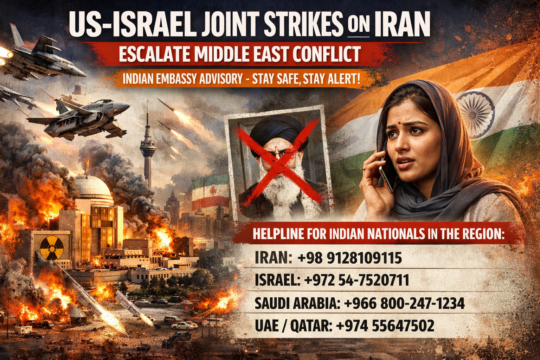
Ayatollah Ali Khamenei, aged 86, was killed in his office in Tehran during predawn airstrikes carried out jointly by the United States and Israel. Iranian state television and the official news agency IRNA confirmed the death, describing it as martyrdom in a “joint attack by the criminal United States and the Zionist regime.” The announcement came hours after President Trump posted on Truth Social, declaring Khamenei—one of history’s “most evil people”—dead and framing the operation as an opportunity for Iranians to reclaim their country.
Iran declared 40 days of national mourning and a period of public holidays. State media reported significant casualties from the broader strikes, with the Red Crescent citing over 200 deaths and hundreds injured across multiple provinces. Iran’s armed forces, including the Islamic Revolutionary Guard Corps (IRGC), vowed “the most devastating” retaliation, and retaliatory missile barrages were launched toward Israel and U.S. assets in the region.
The Supreme Leader’s role in Iran’s system is paramount: he serves as commander-in-chief of the armed forces and IRGC (designated a terrorist organization by the U.S. in 2019), oversees key institutions, and holds veto power over major policies. His abrupt removal creates profound instability at a time when the regime already faces domestic discontent, economic pressures, and external military pressure.
Iran’s Interim Leadership and Constitutional Succession Process
According to Iran’s constitution and reports from IRNA, an interim leadership council has assumed the Supreme Leader’s responsibilities until a permanent replacement is chosen. This council comprises:
- Current President Masoud Pezeshkian
- Head of the Judiciary Gholam-Hossein Mohseni Eje’i
- A jurist from the Guardian Council
This temporary body will handle day-to-day governance and national security matters during the transition.
The permanent successor must be selected by the 88-member Assembly of Experts, a body of Shia religious scholars elected every eight years. The assembly is expected to convene urgently, though the process remains highly secretive and opaque. Qualifications for the Supreme Leader include deep religious scholarship, political acumen, and adherence to the principles of the Islamic Revolution.
This is only the second succession since the 1979 Islamic Revolution. In 1989, following the death of founder Ruhollah Khomeini, Ali Khamenei was chosen despite initial reservations about his religious credentials. The current process is complicated by the ongoing conflict, potential IRGC influence, and external pressures.
Potential Successors: Inside the Regime
No official heir was ever publicly named by Khamenei, leading to speculation about frontrunners:
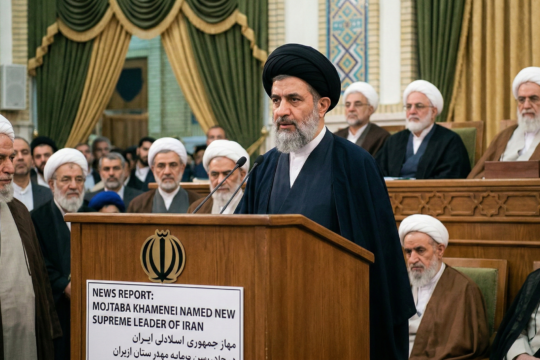
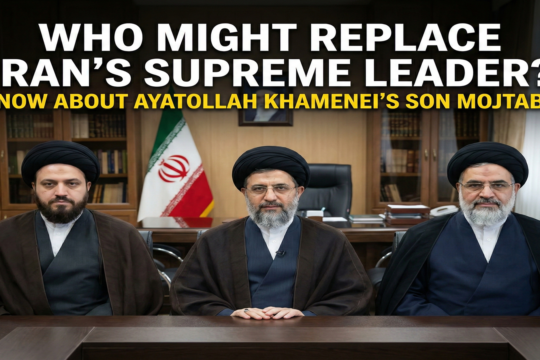
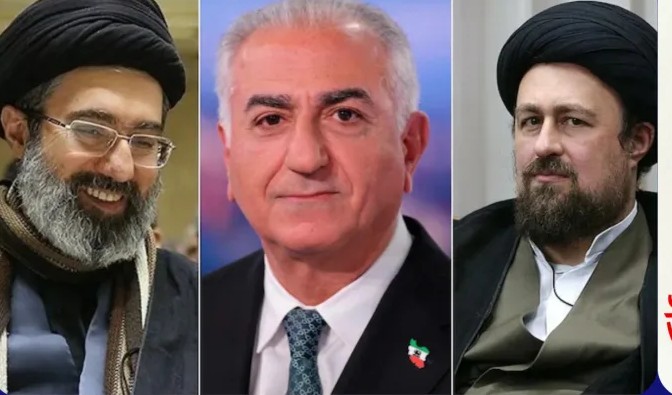
- Mojtaba Khamenei (56), the Supreme Leader’s second son, is widely viewed as a leading candidate. A hardliner aligned with his father’s policies, Mojtaba has wielded significant behind-the-scenes influence, including in security and financial matters. Some reports suggest he was being groomed for the role, though his lack of prominent clerical standing could pose challenges.
- Hassan Khomeini (53), grandson of Revolution founder Ruhollah Khomeini, has gained prominence recently as a more moderate figure. Seen as pragmatic domestically and appealing internationally, he could represent a reformist shift within the clerical establishment.
Other names floated in expert analyses include senior clerics like Alireza Arafi (head of Iran’s seminary system), Mohsen Qomi, Mohsen Araki, or figures tied to the judiciary and Assembly of Experts. The assembly may prioritize continuity and regime stability amid the crisis.
The IRGC’s Role and Power Grab Risks
Experts warn that the IRGC—already a dominant force in Iran’s economy, security, and foreign policy—could attempt to seize or heavily influence power. With Khamenei gone, the Guard may push for a figurehead cleric while consolidating control. Reports indicate pre-delegated missile authority and depleted leadership ranks from strikes heighten risks of factional infighting or a military-led transition.
Opposition Voices: Calls for Democratic Change
In exile, opposition figures have seized the moment to rally support:
- Maryam Rajavi, president-elect of the Paris-based National Council of Resistance of Iran (NCRI), urged Iranians to overthrow the “religious fascism” and establish a democratic republic. The NCRI positions itself as a government-in-waiting with a six-month transitional plan for free elections, gender equality, separation of religion and state, and a non-nuclear Iran. Rajavi appealed to youth and security forces to side with the people and lay down arms.
- Reza Pahlavi, son of Iran’s last Shah, outlined a democratic transition plan via X (formerly Twitter). He described the U.S. action as a “humanitarian intervention” against the regime, not the people, and warned security forces they would “sink with Khamenei’s ship” if they defended the old order. Pahlavi called for unity and cautioned against continued civilian harm.
Both have urged military and security personnel to facilitate a power transfer to democratic governance, highlighting deep divisions between regime loyalists and those seeking fundamental change.
International Reactions and Trump’s Stance
President Trump confirmed Khamenei’s death and hinted at preferred candidates without naming them publicly, telling CBS News he knows “who” but is withholding details. He framed the strikes as necessary to neutralize threats and urged Iranians to act. Israeli Prime Minister Benjamin Netanyahu echoed calls for the Iranian people to seize control, stating the actions create conditions for self-determination.
Global reactions vary: Russia condemned the strikes as aggression, while some Arab states denounced Iranian retaliation. The event has intensified debates over regime change, nuclear risks, and Middle East stability.
What Lies Ahead for Iran?
Iran stands at a crossroads. The Assembly of Experts’ decision could preserve the theocratic system under a hardliner like Mojtaba Khamenei or shift toward moderation. Alternatively, IRGC dominance, popular uprising, or prolonged chaos remain possibilities. With ongoing strikes, retaliations, and economic strain, the path forward is fraught.
The world watches closely: Iran’s future direction—whether continued clerical rule, military takeover, democratic transition, or fragmentation—will reshape regional geopolitics, energy markets, and global security.