Ultimate Guide to Navratri 2026: 9 Sacred Days of Divine Power & Joy
Navratri 2026 is set to light up India and Hindu communities worldwide with nine nights of devotion, colour, dance and spiritual renewal. Sharad Navratri, also called Shardiya Navratri, begins on Sunday, 11 October 2026, and concludes on Monday, 19 October 2026, followed by the triumphant Vijayadashami or Dussehra on Tuesday, 20 October 2026.
This ultimate guide covers everything you need for a powerful and joyful celebration: exact dates, the nine forms of Goddess Durga (Navadurga), traditional colours, rituals, regional traditions and the deep significance of the festival. Whether you are preparing for Ghatasthapana, observing a fast, or joining Garba nights, this comprehensive resource will help you experience Navratri 2026 to the fullest.
Exact Dates of Sharad Navratri 2026
According to the Hindu Panchang followed across India, Sharad Navratri 2026 starts with Ghatasthapana on 11 October and ends with Maha Navami on 19 October.
- 11 October 2026 (Sunday) – Day 1: Ghatasthapana, Maa Shailputri
- 12 October 2026 (Monday) – Day 2: Maa Brahmacharini
- 13 October 2026 (Tuesday) – Day 3: Maa Chandraghanta
- 14 October 2026 (Wednesday) – Day 4: Maa Kushmanda
- 15 October 2026 (Thursday) – Day 5: Maa Skandamata
- 16 October 2026 (Friday) – Day 6: Maa Katyayani
- 17 October 2026 (Saturday) – Day 7: Maa Kalaratri (also linked with Saraswati Puja in many regions)
- 18 October 2026 (Sunday) – Day 8: Maa Mahagauri
- 19 October 2026 (Monday) – Day 9: Durga Ashtami, Maha Navami, Maa Siddhidatri, Sandhi Puja
- 20 October 2026 (Tuesday) – Vijayadashami / Dussehra
Note that this year Ashtami and Navami tithis overlap on 19 October in many parts of India, making the day especially significant for Kanya Puja and Sandhi Puja.
The Powerful Significance of Navratri
Navratri means “nine nights.” It celebrates the victory of Goddess Durga over the buffalo demon Mahishasura after a fierce nine-night battle. The festival symbolises the triumph of good over evil, light over darkness, and knowledge over ignorance.
Devotees worship the nine forms of Durga, known as Navadurga. Each form represents a unique quality: strength, austerity, courage, creation, motherhood, fierce protection, destruction of negativity, purity and the bestowal of siddhis (spiritual powers).
The festival also has deeper layers. In many traditions the first three days focus on Durga (destruction of tamas or inertia), the next three on Lakshmi (cultivation of sattva and prosperity), and the final three on Saraswati (knowledge and enlightenment). Vijayadashami marks the complete victory and the auspicious beginning of new endeavours.
Day-Wise Guide: Goddess, Colour and Rituals
Day 1 – 11 October: Maa Shailputri (Orange)
Daughter of the Himalayas, she rides a bull and holds a trident and lotus. Ghatasthapana (Kalash installation) is performed in the morning muhurat. Offer pure ghee and milk products.
Day 2 – 12 October: Maa Brahmacharini (White)
The goddess of penance and devotion. She walks barefoot carrying a japamala and kamandalu. White symbolises purity and peace.
Day 3 – 13 October: Maa Chandraghanta (Red)
The warrior form with a crescent moon on her forehead. Red represents energy and courage.
Day 4 – 14 October: Maa Kushmanda (Royal Blue)
The creator of the universe with her smile. Blue stands for depth and infinity.
Day 5 – 15 October: Maa Skandamata (Yellow)
Mother of Kartikeya. Yellow radiates positivity and maternal love.
Day 6 – 16 October: Maa Katyayani (Green)
The fierce form who destroys demons. Green signifies growth and harmony.
Day 7 – 17 October: Maa Kalaratri (Grey)
The dark, fierce form that removes fear and ignorance. Grey or black is traditional.
Day 8 – 18 October: Maa Mahagauri (Purple)
Embodiment of purity and peace. Purple reflects spiritual elevation.
Day 9 – 19 October: Maa Siddhidatri (Peacock Green)
Bestower of supernatural powers and wisdom. Peacock green completes the nine-day spectrum.
Many families also perform Kanya Puja on Ashtami or Navami, inviting young girls as living forms of the Goddess and offering them food, gifts and respect.
Regional Celebrations Across India
Navratri is celebrated differently yet unitedly across the country.
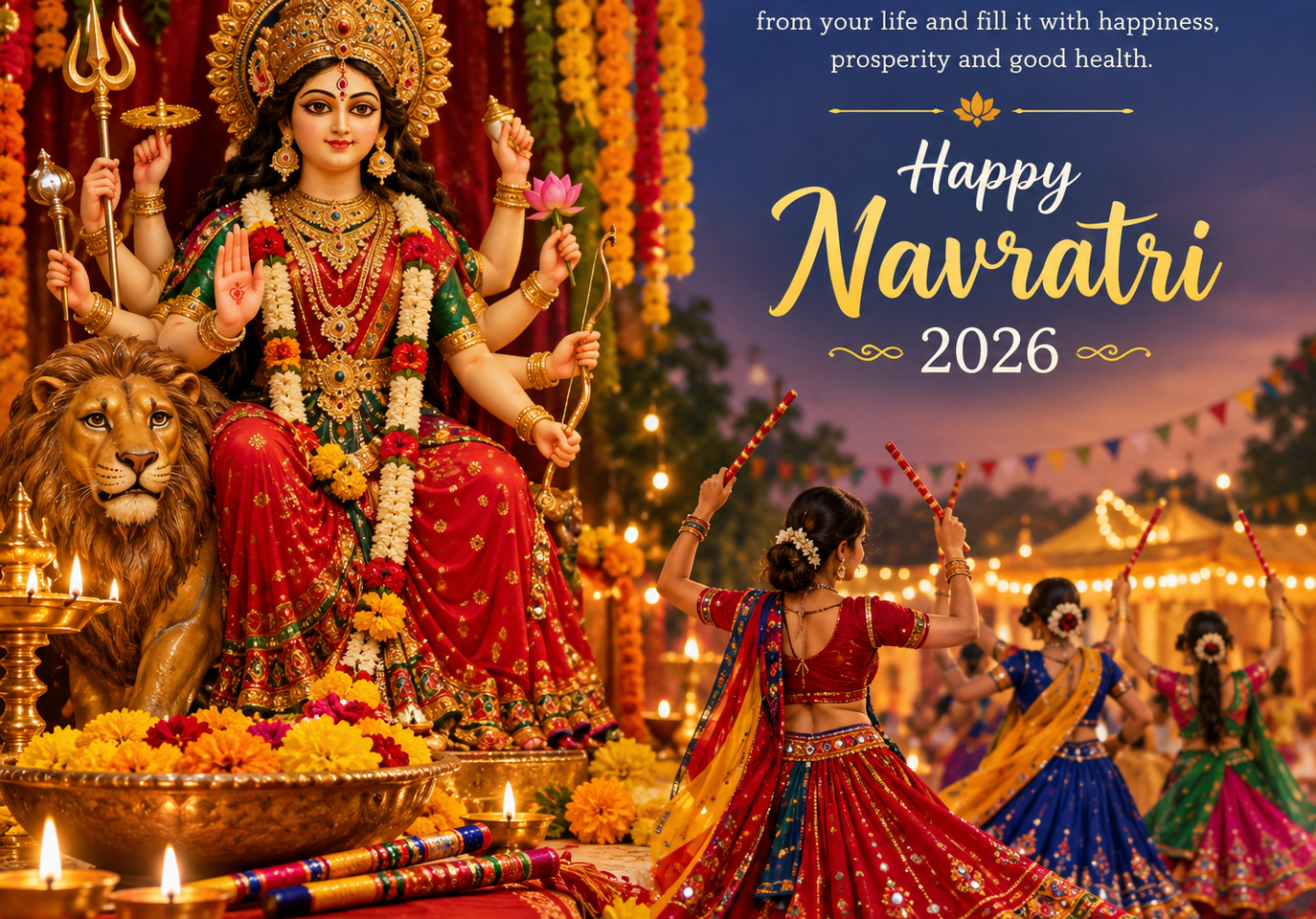
In Gujarat and parts of Maharashtra, the nights come alive with Garba and Dandiya Raas. Circles of dancers move to traditional and contemporary music under colourful lights.
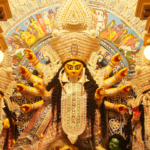
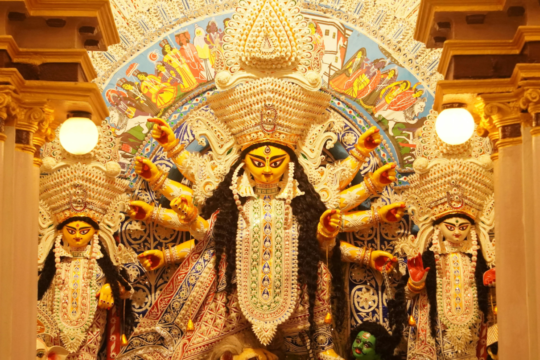
In West Bengal, Odisha and Assam, the festival merges into grand Durga Puja. Beautiful clay idols of Durga with her children are installed in pandals, and the immersion on Vijayadashami is an emotional farewell.
North India stages Ramlila performances that dramatise Lord Rama’s victory over Ravana. Large effigies of Ravana, Meghnad and Kumbhakarna are burnt on Dussehra.
In South India, especially Tamil Nadu, families arrange Golu (doll displays). The final days emphasise Saraswati Puja and Ayudha Puja – the worship of books, instruments and tools. Kerala observes Vidyarambham, the initiation of children into learning.
Telangana celebrates Bathukamma with beautiful floral arrangements.
How to Observe Navratri 2026 Meaningfully
Many devotees keep a fast (vrat). Some avoid grains and consume only fruits, milk, sabudana, kuttu or singhare ka atta. Others follow a simple sattvic vegetarian diet without onion and garlic.
Daily practices include lighting a diya, offering flowers, fruits and bhog to the Goddess, chanting Durga Saptashati or Devi Kavach, and listening to or singing bhajans.
Ghatasthapana on the first day involves placing a pot filled with water, grains and a coconut on a bed of soil where barley or wheat is sown. The growing shoots symbolise prosperity.
On the final day, after the rituals, the Kalash is immersed or respectfully dismantled, marking the conclusion of the sacred period.
Why Navratri 2026 Feels Extra Special
The festival arrives after Pitru Paksha ends on 10 October, creating a seamless transition from ancestral offerings to welcoming the Divine Mother. The overlap of Ashtami and Navami on the same day offers a unique opportunity for concentrated worship.
Beyond rituals, Navratri encourages self-discipline, community bonding and creative expression through music, dance and art. It is a time when homes are cleaned, new clothes are worn in the day’s colour, and positive energy is invited into every corner of life.
As the nine nights unfold, millions will experience the transformative power of devotion. Whether you dance in a Garba circle, sit in quiet meditation before the Goddess, or simply light a lamp with your family, Navratri 2026 invites you to connect with the divine feminine energy that sustains the universe.
Prepare your Kalash, choose your colours, set your intentions, and step into these nine sacred nights with joy and reverence. May Maa Durga bless every seeker with strength, wisdom and victory.
Jai Mata Di!