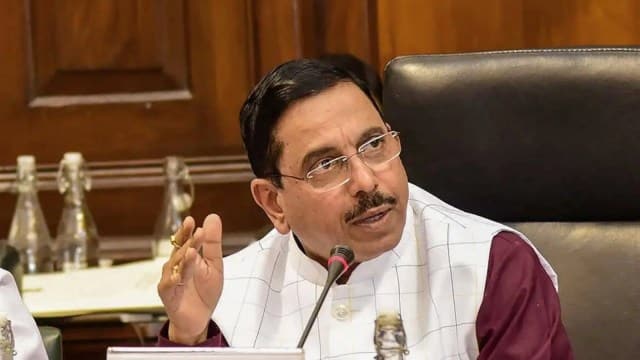
Explosive: Pralhad Joshi Named Education Head After 1 Exit
In a major development that has sent ripples across India’s political and educational landscape, Union Minister Pralhad Joshi has been given the additional charge of the Ministry of Education following the resignation of Dharmendra Pradhan. The decision comes in the wake of widespread student-led protests over the NEET paper leak and alleged irregularities in competitive examinations. President Droupadi Murmu accepted Pradhan’s resignation with immediate effect on the advice of Prime Minister Narendra Modi, and directed that Pralhad Joshi, already a Cabinet Minister, take over the Education portfolio alongside his existing responsibilities.
This cabinet adjustment marks a significant moment in the ongoing national debate surrounding examination integrity, student welfare, and accountability in the education system. Pralhad Joshi, the Lok Sabha Member of Parliament from the Dharwad constituency in Karnataka, will now oversee the Education Ministry while continuing to handle Consumer Affairs, Food and Public Distribution, and New and Renewable Energy.
Background of the NEET Paper Leak Controversy
The NEET paper leak issue has dominated headlines for weeks, triggering massive student protests across the country. Aspirants and their families have demanded greater transparency, accountability, and systemic reforms in the conduct of national-level competitive examinations. The protests, which began over alleged irregularities in the National Eligibility cum Entrance Test (NEET), quickly escalated into a broader movement calling for overhaul of the examination framework.
Students have staged demonstrations at key locations, including Jantar Mantar in New Delhi, highlighting concerns about fairness, security of question papers, and the mental health impact on young aspirants. Tragic incidents, including cases of suicide among NEET aspirants, have further intensified public outrage and pressure on the government. Families of affected students have sought justice, compensation, and concrete steps to prevent such failures in the future.
Against this backdrop, Dharmendra Pradhan, who held the Education portfolio, announced his resignation. He stated that he had submitted his resignation to Prime Minister Narendra Modi in the interest of students and to ensure that the ongoing protests were not exploited by “anti-national forces.” The resignation was accepted under clause (2) of Article 75 of the Constitution of India, with immediate effect.
Official Announcement and Assignment of Charge
According to an official release from Rashtrapati Bhavan, the President of India, acting on the advice of the Prime Minister, accepted the resignation of Shri Dharmendra Pradhan from the Union Council of Ministers. Further, as advised by the Prime Minister, the President directed that Shri Pralhad Joshi, Cabinet Minister, be assigned the charge of the Ministry of Education in addition to his existing portfolio.
Pralhad Joshi brings substantial administrative experience to the role. In his previous tenure, he served as Minister of Coal, Mines, and Parliamentary Affairs. His current responsibilities already span critical areas of public welfare and energy transition. The decision to entrust him with the Education Ministry is being viewed as an attempt to restore confidence among students and stakeholders while maintaining continuity in governance.
Union Minister Pralhad Joshi is expected to navigate the complex challenges of examination reforms, student grievances, and institutional accountability. Education remains one of the most sensitive and high-stakes ministries, directly affecting the aspirations of millions of young Indians every year.
CJP Withdraws Agitation After Talks
In a parallel development, the Cockroach Janta Party (CJP) announced the withdrawal of its 37-day-long agitation at Jantar Mantar. The outfit stated that it was withdrawing the protest “in good faith” after Education Minister Dharmendra Pradhan stepped down and the government provided assurances on other demands.
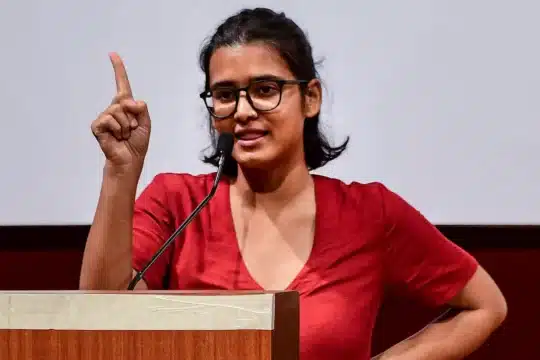
Addressing a press conference at the Constitution Club in the national capital, CJP’s Chief Spokesperson Saurav Das said, “Cockroach Janta Party declares that we withdraw the agitation in good faith, with the understanding that the agreed-upon terms will be executed within the agreed-upon timelines.”
The decision followed the third round of talks with Union Ministers JP Nadda and Jitendra Singh. According to CJP, the Central government has agreed to provide suitable compensation to the families of NEET aspirants who died by suicide and has assured the withdrawal of FIRs lodged against protesters anywhere in India.
Union Minister JP Nadda confirmed that the government had considered and accepted the demands raised by the Cockroach Janta Party during discussions on reforms in the education examination system and related issues. Nadda added that the government would carefully examine the outfit’s five-point charter on examination reforms and take necessary steps after further discussions.
The withdrawal of the agitation is being interpreted as a de-escalation of street protests, though student groups and opposition parties have indicated they will continue to press for systemic changes through parliamentary and public platforms.
Political Reactions and Broader Implications
The resignation of Dharmendra Pradhan and the subsequent assignment of the Education Ministry to Pralhad Joshi have drawn varied political responses. Leaders from the INDIA bloc have stated that they will maintain pressure on the NDA government in Parliament over NEET irregularities and examination reforms. Some opposition voices have described Pradhan’s exit as a “victory of youth and democracy,” while government sources have framed the move as a responsible step taken in the larger interest of students.
Related developments continue to unfold. Reports indicate that the parents of Abhijeet Dipke have expressed relief and want him to return home, reflecting the human cost of the prolonged uncertainty surrounding competitive examinations. Other stories of individual aspirants, including long-standing cases linked to earlier NEET controversies, have resurfaced in public discourse, underscoring the emotional and social dimensions of the crisis.
The episode has once again highlighted the intense competition and pressure associated with entrance examinations in India. NEET, which determines admission to undergraduate medical courses, has long been a flashpoint for debates on equity, security, and mental health. Successive governments have faced demands for better technology, stricter invigilation, and alternative assessment models.
What Lies Ahead for the Education Ministry under Pralhad Joshi
With Pralhad Joshi now holding additional charge of the Education Ministry, attention will turn to the concrete steps the government takes on examination reforms. The five-point charter submitted by CJP, the demands for compensation to bereaved families, and the broader call for transparency are expected to remain high on the agenda.
Experts and educationists have stressed the need for long-term structural changes rather than temporary measures. Suggestions include strengthening the National Testing Agency, improving question paper security protocols, introducing greater digital tracking, and creating robust grievance redressal mechanisms for students. Mental health support for aspirants has also emerged as a critical area requiring policy attention.
Pralhad Joshi’s dual responsibility for Education along with Consumer Affairs, Food and Public Distribution, and New and Renewable Energy will test the government’s capacity for coordinated decision-making. Stakeholders will closely watch how quickly the ministry responds to the assurances given during the talks with student representatives.
National Context and Student Voices
The student protests that began over the NEET paper leak evolved into a larger movement questioning the fairness of high-stakes examinations. From metropolitan centres to smaller towns, young people voiced frustration over repeated controversies and the life-altering consequences of even minor administrative failures. The 37-day agitation at Jantar Mantar became a visible symbol of this discontent.
By accepting the resignation and reassigning the portfolio to Pralhad Joshi, the government has signalled its willingness to address political accountability. Whether this translates into durable reforms will depend on the follow-through in the coming weeks and months. Parliamentary discussions, further consultations with student groups, and possible legislative or administrative measures are likely to shape the next phase of this story.
As Pralhad Joshi assumes the additional charge of the Education Ministry, the focus remains firmly on restoring trust among millions of aspirants and their families. The coming period will reveal how effectively the new arrangement addresses the deep-seated concerns that triggered the nationwide protests and the eventual resignation of the previous Education Minister.
The developments of 25 July 2026 mark a pivotal chapter in India’s ongoing struggle to balance rigorous competitive examination systems with fairness, transparency, and student well-being. All eyes are now on Pralhad Joshi and the Ministry of Education as they navigate this sensitive mandate.