Lakshmi Puja 2026: 5 Auspicious Facts You Must Know Today!
Lakshmi Puja 2026 Date: Devotees across India will celebrate Lakshmi Puja on two major occasions in 2026, according to regional religious traditions. Kojagari Lakshmi Puja, also known as Sharad Lakshmi Puja, will be observed on Sunday, October 25, while Diwali Lakshmi Puja will take place on Sunday, November 8. The festivals hold special significance for devotees who worship Goddess Lakshmi, the Hindu deity associated with wealth, prosperity, happiness and good fortune.
Kojagari Lakshmi Puja is particularly popular in Assam, West Bengal and Odisha, where devotees worship Goddess Lakshmi on the full moon night of Sharad Purnima. Diwali Lakshmi Puja, meanwhile, is celebrated across India as part of the Festival of Lights.
For devotees in Guwahati and other parts of Assam, knowing the Lakshmi Puja 2026 date, auspicious timings, traditional rituals and religious significance can help them prepare for the celebrations.
Here is everything you need to know about the two important Lakshmi Puja occasions in 2026.
Lakshmi Puja 2026: Important Dates and Timings
There are two major occasions for Lakshmi Puja in 2026. The first is Kojagari Lakshmi Puja on October 25, followed by Diwali Lakshmi Puja on November 8.
1. Kojagari Lakshmi Puja 2026
Kojagari Lakshmi Puja will be celebrated on Sunday, October 25, 2026. The festival falls on Sharad Purnima, the full moon day of the Hindu lunar month of Ashwin.
The occasion is especially significant in Assam, West Bengal and Odisha. Devotees worship Goddess Lakshmi in the evening and traditionally remain awake during the night as part of the observance.
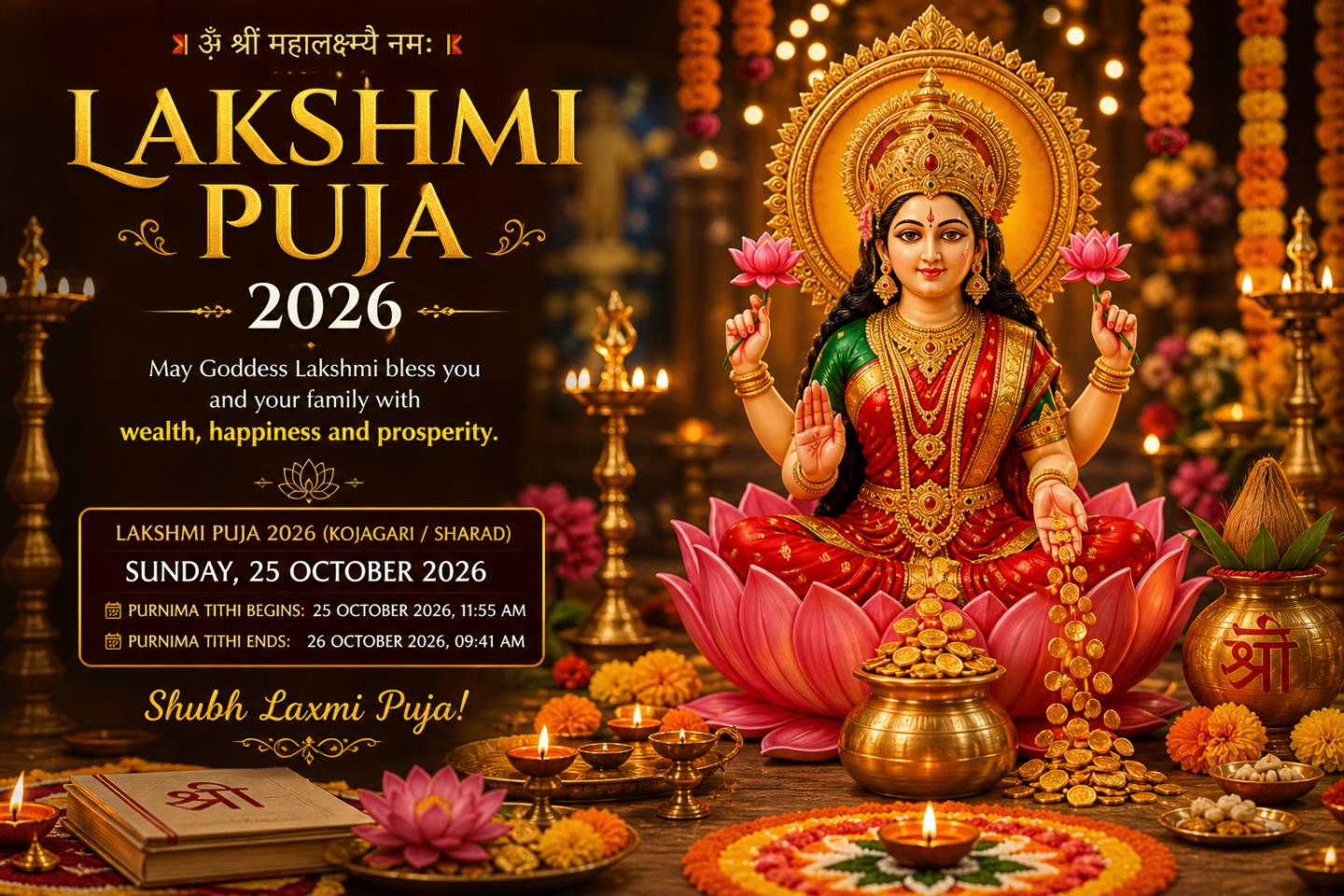
According to the supplied panchang details, the Purnima Tithi begins at 11:55 AM on October 25 and ends at 9:41 AM on October 26.
Kojagari Lakshmi Puja 2026: Key Details
- Date: Sunday, October 25, 2026
- Purnima Tithi Begins: 11:55 AM, October 25
- Purnima Tithi Ends: 9:41 AM, October 26
- Guwahati Evening Puja Window: Approximately 5:00 PM to 6:57 PM
- Night Vigil: Traditionally observed during the night, with worship around midnight according to local customs.
The exact auspicious puja time can differ according to the panchang followed in a particular location. Devotees should check a reliable local panchang before finalising their puja schedule.
2. Diwali Lakshmi Puja 2026
Diwali Lakshmi Puja will be celebrated on Sunday, November 8, 2026. It is one of the most important occasions for worshipping Goddess Lakshmi and is observed by families, businesses and devotees across India.
The worship is associated with prosperity, happiness, financial well-being and new beginnings. Families clean and decorate their homes, light diyas, prepare offerings and perform Lakshmi-Ganesh Puja in the evening.
According to Drik Panchang, the Lakshmi Puja muhurat in Guwahati is scheduled from 5:00 PM to 6:57 PM on November 8, 2026.
Diwali Lakshmi Puja 2026: Key Details
- Date: Sunday, November 8, 2026
- Festival: Diwali or Deepavali
- Guwahati Lakshmi Puja Muhurat: 5:00 PM to 6:57 PM
- Puja Tradition: Worship of Goddess Lakshmi and Lord Ganesha
- Main Observance: Evening prayers, lighting diyas and offering sweets and fruits.
These timings are location-specific. Devotees in other cities should consult the relevant local panchang because sunset and auspicious worship periods vary by location.
Why Is Lakshmi Puja Celebrated Twice in 2026?
One of the most common questions about Lakshmi Puja 2026 is why the festival appears on two different dates.
The answer lies in the different religious occasions associated with the worship of Goddess Lakshmi.
Kojagari Lakshmi Puja is observed on Sharad Purnima, the full moon day traditionally associated with the worship of Goddess Lakshmi in several eastern Indian communities.
Diwali Lakshmi Puja, on the other hand, takes place during the Amavasya, or new moon period, associated with Diwali. It is widely observed as an important occasion for seeking prosperity and good fortune.
Although both festivals involve the worship of Goddess Lakshmi, their customs, religious backgrounds and regional practices are different.
In Assam and West Bengal, Kojagari Lakshmi Puja has a special place in household religious traditions. In many other parts of India, Diwali Lakshmi Puja is the principal annual occasion for worshipping the goddess.
Therefore, devotees should distinguish between Kojagari Lakshmi Puja on October 25 and Diwali Lakshmi Puja on November 8 when planning their celebrations.
Kojagari Lakshmi Puja 2026: Significance and Traditions
Kojagari Lakshmi Puja is celebrated with devotion on Sharad Purnima. The name Kojagari is traditionally associated with the question, “Who is awake?” This reflects the custom of staying awake during the night and engaging in prayer and worship.
According to popular Hindu belief, Goddess Lakshmi blesses devotees who worship her with sincerity and devotion. The occasion is therefore associated with prosperity, good fortune, peace and the well-being of family members.
In Assam, West Bengal and Odisha, families observe the occasion through traditional household rituals. Preparations often begin with cleaning the home, arranging the puja space and collecting flowers, fruits, sweets and other offerings.
The entrance of the house may be decorated with alpona or traditional floor designs made using rice paste. A ghot, or ritual pot, may be placed in the worship area as part of the arrangements.
Devotees may also recite Lakshmi Panchali, offer prayers and prepare traditional sweets.
The celebration is not limited to material prosperity. For many families, it is also an occasion to pray for harmony, good health, peace and stability in their lives.
Lakshmi Puja Rituals to Follow in 2026
Although rituals vary between regions and households, several practices are commonly associated with Lakshmi Puja.
1. Clean and Decorate the House
Cleaning the house is an important part of the preparations for Lakshmi Puja. Devotees traditionally believe that cleanliness and an organised environment reflect respect for the goddess.
Families may decorate their homes with flowers, lights, rangoli or alpona designs.
On Diwali, many households also illuminate their entrances, balconies and courtyards with diyas and decorative lights.
2. Prepare the Puja Area
A clean and peaceful place is selected for worship. An image or idol of Goddess Lakshmi is placed on a decorated platform.
For Diwali Lakshmi Puja, many families also worship Lord Ganesha, who is traditionally associated with wisdom and the removal of obstacles.
The puja arrangements may include flowers, incense, a diya, fruits, sweets, rice and other offerings according to family customs.
3. Establish the Ghot or Kalash
A ghot or kalash is commonly used in traditional Hindu worship. It may be prepared with water, mango leaves and a coconut, depending on local customs.
The kalash is treated as a sacred part of the ritual and is placed near the deity during worship.
The precise arrangement can differ according to regional traditions and the family’s customary method of performing the puja.
4. Offer Flowers, Fruits and Sweets
Devotees offer flowers, fruits, sweets and other items to Goddess Lakshmi as expressions of devotion.
During Kojagari Lakshmi Puja, traditional offerings may include payesh, coconut sweets and chira with coconut. The exact menu varies between families and communities.
On Diwali, households often prepare sweets and other festive foods to share with family members, friends and neighbours.
5. Perform Lakshmi Puja and Aarti
The main worship involves prayers to Goddess Lakshmi. Families may recite traditional prayers, chant mantras and perform aarti.
During Diwali, Lakshmi-Ganesh Puja is a common practice. Many families also pray for prosperity, peace and success in their personal and professional lives.
The puja is generally performed during the auspicious evening period recommended by the local panchang.
6. Light Diyas and Observe the Night Vigil
Lighting diyas is an important part of Diwali celebrations and is also associated with devotional practices during Kojagari Lakshmi Puja.
For Kojagari, the night vigil is particularly significant. Devotees may remain awake, pray and participate in religious activities according to their family traditions.
The practice symbolises devotion and attentiveness to the religious observance.
What Is the Difference Between Kojagari and Diwali Lakshmi Puja?
Although both occasions honour Goddess Lakshmi, there are several differences between them.
Kojagari Lakshmi Puja is observed on Sharad Purnima, the full moon day. It is especially popular in Assam, West Bengal and Odisha. Night-time worship and the tradition of staying awake are important features of the observance.
Diwali Lakshmi Puja is associated with the Amavasya period during Diwali. It is celebrated widely across India and forms an important part of the Festival of Lights.
Diwali celebrations commonly include lighting diyas, decorating homes, exchanging sweets, gathering with family members and performing Lakshmi-Ganesh Puja.
The two occasions therefore have different ritual settings, even though both are dedicated to seeking the blessings of Goddess Lakshmi.
How Will Lakshmi Puja Be Celebrated in Assam in 2026?
In Assam, Kojagari Lakshmi Puja is an important religious occasion for many households. Families traditionally prepare their homes for worship and arrange offerings before the evening puja.
The use of alpona, flowers, a kalash and traditional sweets forms part of the observance in many households. Some families read Lakshmi Panchali or follow other customary prayers.
The festival is also an opportunity for family members to come together and maintain religious traditions passed down through generations.
Diwali Lakshmi Puja will follow a few weeks later, on November 8. Homes and business establishments may be decorated with diyas and lights as families offer prayers for prosperity and success.
For devotees in Guwahati, the supplied timings place the Kojagari evening puja window at approximately 5:00 PM to 6:57 PM on October 25. The Diwali Lakshmi Puja muhurat is also listed as 5:00 PM to 6:57 PM on November 8.
However, devotees should confirm the Kojagari muhurat with a reliable local panchang, as published timings can differ between calendars.
Frequently Asked Questions About Lakshmi Puja 2026
When is Lakshmi Puja in 2026?
Lakshmi Puja will be observed on two major occasions in 2026: Kojagari Lakshmi Puja on Sunday, October 25, and Diwali Lakshmi Puja on Sunday, November 8.
When is Kojagari Lakshmi Puja 2026?
Kojagari Lakshmi Puja will be celebrated on October 25, 2026, which falls on a Sunday.
What is the Kojagari Purnima Tithi timing in 2026?
According to the supplied panchang details, the Purnima Tithi begins at 11:55 AM on October 25 and ends at 9:41 AM on October 26.
What is the Lakshmi Puja muhurat in Guwahati for Diwali 2026?
According to Drik Panchang, the Diwali Lakshmi Puja muhurat in Guwahati is from 5:00 PM to 6:57 PM on November 8, 2026.
Why is Kojagari Lakshmi Puja important?
Kojagari Lakshmi Puja is associated with Sharad Purnima and is observed to seek the blessings of Goddess Lakshmi. Traditional practices include evening worship, offerings, prayer and a night vigil.
What offerings are made during Lakshmi Puja?
Common offerings include flowers, fruits, sweets, rice and other items used in traditional Hindu worship. During Kojagari Lakshmi Puja, some families prepare payesh, coconut sweets and chira with coconut.
Is Lakshmi Puja celebrated on the same date across India?
No. The form of Lakshmi Puja and the date on which it is observed depend on the religious occasion and regional traditions. Kojagari Lakshmi Puja falls on October 25 in 2026, while Diwali Lakshmi Puja falls on November 8.
Conclusion
Lakshmi Puja 2026 will bring two important opportunities for devotees to worship Goddess Lakshmi and pray for prosperity, peace and happiness.
Kojagari Lakshmi Puja will be observed on October 25, with special significance in Assam, West Bengal and Odisha. Diwali Lakshmi Puja will follow on November 8, when families across India will celebrate the Festival of Lights with prayers, diyas and traditional rituals.
Devotees planning their celebrations should check the appropriate local panchang for the most accurate puja timings. By following their family traditions and preparing for the occasions in advance, they can celebrate both festivals with devotion and enthusiasm.