As an unrelenting heatwave continues to bake large parts of North India, the India Meteorological Department (IMD) has finally offered a glimmer of hope. A fresh western disturbance is expected to trigger thunderstorms and rainfall from April 28, bringing much-needed relief from the scorching conditions that have pushed temperatures beyond 45°C in several cities.
The Current Heatwave Scenario
North India is currently in the grip of a severe heat wave crisis. According to IMD data, several areas in Uttar Pradesh, Rajasthan, Delhi, Punjab, and Haryana are experiencing temperatures significantly above normal levels .
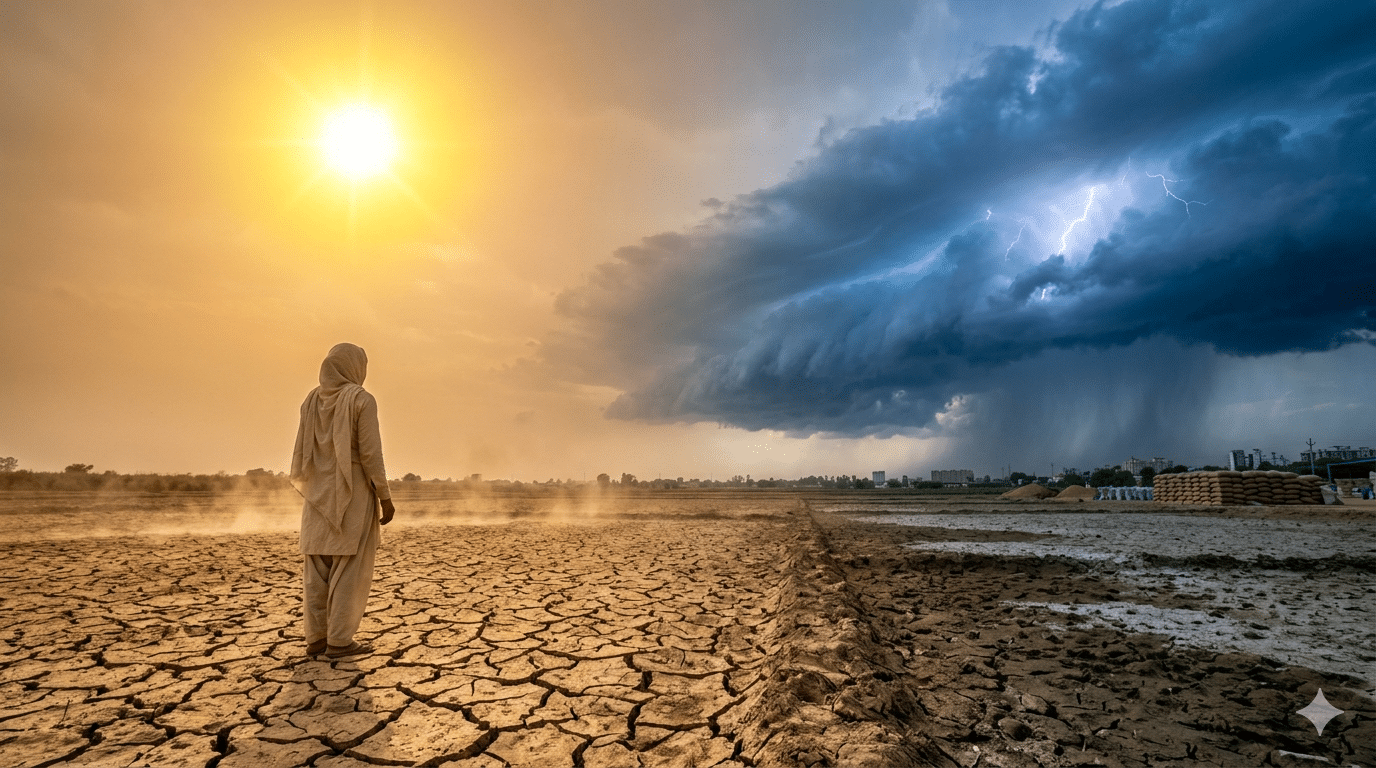
In Uttar Pradesh, the situation has turned particularly harsh. Prayagraj recorded a maximum temperature of 45.2 degrees Celsius, making it one of the hottest spots in the state . The city has been experiencing severe heatwave conditions along with hot winds, forcing residents, especially women, to cover themselves completely even on a hot summer day for protection against the scorching sun .
Banda in Uttar Pradesh recorded a blistering 46.6°C, the highest in the state, while Lucknow’s mercury touched 43 degrees Celsius, well above the seasonal average .
Rajasthan continues to sizzle under extreme temperatures as well. Barmer and Jaisalmer recorded around 46 degrees Celsius, with several other cities crossing the 44-degree mark . The desert state remains one of the worst-affected regions in the ongoing heatwave spell.
Delhi’s Heatwave Ordeal
The national capital continues to reel under intense heatwave conditions. Delhi recorded a maximum temperature of 42.1°C on Sunday, which was 3.1 degrees above normal, while the Ridge area saw the highest at 43.5°C . The IMD has issued a ‘yellow alert’ for Monday, with temperatures expected to touch around 44 degrees Celsius.
On Saturday, Delhi recorded a maximum temperature of 44.5 degrees Celsius, the highest so far this season, raising concerns over public health and safety . Authorities have urged residents to stay hydrated and avoid direct sun exposure between noon and 3 p.m.
Punjab and Haryana Feeling the Heat
Neighboring states Punjab and Haryana are also bearing the brunt of the ongoing heatwave. Bathinda in Punjab recorded 43.7°C, while Narnaul in Haryana touched 44.2°C, making them the hottest places in their respective states . Day temperatures in the region are sharply above normal by up to 5.1 degrees Celsius at many places.
The heat is causing significant hardship for farmers arriving at grain markets to sell wheat, as well as labourers working in the open . Warm night conditions continue to prevail in isolated pockets of Haryana, offering little respite even after sunset.
Why Is India Facing Such Extreme Heat?
Meteorologists point to multiple factors behind this intense heatwave. A massive high-pressure system has trapped hot air over the northern plains, creating a literal ‘pressure cooker’ effect . This phenomenon is exacerbated by the absence of moisture, allowing solar radiation to bake the earth without any natural cooling from clouds.
“The lack of pre-monsoon showers has left the soil bone-dry and unable to absorb the rising heat. In this state, the atmosphere becomes a feedback loop where the hot ground further warms the air above it,” explains a weather expert .
Relief on the Horizon: Western Disturbance to Bring Rain
After days of relentless heat, a series of back-to-back western disturbances is set to bring much-needed relief to North India starting April 28 . These weather systems, which originate in the Mediterranean region and travel eastward, will bring moisture and instability to parts of north India.
The IMD has confirmed that a western disturbance will affect parts of north and western India from April 28, bringing thunderstorms, lightning, and strong winds . Light rain is likely in some places, along with winds of 30-40 kmph on April 28, which may increase to 40-50 kmph on April 29.
Which Areas Will See Rainfall?
The weather department has indicated that thunderstorm activity could continue until at least May 2. The system will primarily impact northwest India, increasing cloud cover and rainfall in the region. While some parts of eastern Uttar Pradesh may remain dry initially, weather activity is expected to pick up later.
Thunderstorms are likely across both eastern and western Uttar Pradesh and nearby areas of north India till May 2. Punjab, Haryana, Delhi, and parts of Rajasthan will also receive rainfall activity during this period .
As clouds and rain increase after April 28, the heatwave is expected to ease significantly. The IMD has projected a temperature drop of around 3 to 5 degrees Celsius, which, while not signaling an immediate end to summer heat, would offer substantial relief from the current scorching conditions .
Power Demand Hits Record High
The intense heatwave has led to a surge in electricity consumption across the country. India’s peak power demand reached a record 256.11 GW on Saturday, driven by increased use of cooling appliances like air conditioners and coolers, according to power ministry data . This surpassed the previous record of 252.07 GW set just a day earlier on Friday.
In response to the challenging conditions, Delhi Chief Minister Rekha Gupta announced several measures to tackle the heat, including cool roofs, misting systems at bus stops, ORS for schoolchildren, support for construction workers, and care for animals and birds . She also instructed power companies to ensure no power cuts, especially for essential services like hospitals, water plants, and mobile towers.
Heatwave Precautions and Advisories
As the heatwave continues to grip large parts of the country before the expected relief arrives, the IMD has released detailed guidelines for citizens . These include:
- Avoiding prolonged exposure to direct sunlight, especially during peak afternoon hours (noon to 3 p.m.)
- Staying adequately hydrated by drinking water even when not thirsty
- Wearing light-coloured, loose cotton clothing
- Avoiding strenuous outdoor activities during high-temperature periods
- Using protective items such as hats, umbrellas, and sunglasses when stepping out
Special care has been advised for vulnerable groups such as children, the elderly, and individuals with pre-existing health conditions. Early awareness and preventive action are critical in reducing heat-related illnesses such as heat exhaustion and heat stroke.
Outlook for the Coming Days
While heatwave conditions will continue in isolated areas until April 27, the weather is expected to improve significantly from April 28 onward. The combination of strong winds, cloud cover, and rain is expected to substantially alter local weather patterns .
Weather experts indicate that isolated dust storms and light rainfall activity could begin as early as the evening of April 27, with widespread dust storms and thunderstorms likely between April 28 and April 30 across several northern states.
If the forecast holds, the coming days could mark a turning point in north India’s weather, offering a temporary but welcome break from the heatwave. For millions battling extreme temperatures across Delhi, Punjab, Haryana, Uttar Pradesh, and Rajasthan, the arrival of rain-bearing systems could bring not just cooler air, but also a sense of relief from the relentless summer fury.