China Dominates Asian Games 2026 Medal Tally with Record 169 Golds as Japan Finishes Second
China has delivered one of the most dominant performances in the history of multi-sport events by topping the Asian Games 2026 medal table with a staggering 169 gold medals. The final rankings from the Aichi-Nagoya Games, which concluded on 4 October 2026, confirm China’s supremacy across the continent once again. Japan, competing on home soil, finished a distant second with 83 golds, while South Korea, India, Uzbekistan and Iran completed the top six.
The Asian Games 2026 medal tally tells a clear story of Chinese excellence. With 169 gold, 89 silver and 83 bronze for a total of 341 medals, China left no doubt about its status as Asia’s sporting superpower. Japan’s home advantage produced 83 gold, 95 silver and 91 bronze (269 total), yet the gap at the top remained enormous. South Korea secured third place with 39 gold, 43 silver and 68 bronze (150 total). India matched Uzbekistan on gold medals with 21 each but finished higher on the overall table thanks to more silvers and bronzes, ending with 85 medals. Uzbekistan collected 70 medals, while Iran closed the top six with 52.
This result marks another chapter in China’s long-running dominance of the Asian Games. The team’s depth across nearly every sport—from swimming and athletics to table tennis, badminton, gymnastics and combat sports—proved decisive. Chinese athletes converted opportunities with ruthless efficiency, particularly in the pool and on the track, where multiple world-class performances stacked gold after gold. The 169 gold medals represent one of the highest tallies ever recorded at an Asian Games, underlining the scale of preparation and resources invested by Chinese sport.
Japan’s second-place finish carries mixed emotions for the hosts. Competing in front of passionate home crowds across Aichi Prefecture and Nagoya, Japanese athletes delivered their strongest overall medal haul in recent memory. The 95 silver medals highlight how often Japan came agonisingly close to gold. Strong showings in judo, wrestling, gymnastics and swimming kept the home team competitive throughout the 16 days of competition. Yet the inability to challenge China for the top spot will leave organisers and fans reflecting on the gulf that still exists at the very highest level of Asian sport.
South Korea’s third position continues a consistent pattern of podium finishes at continental level. The 39 gold medals reflect particular strength in archery, taekwondo, shooting and certain combat disciplines. While the total of 150 medals is solid, Korean officials will note that the gap to Japan has widened compared with previous editions. The bronze medal count of 68 suggests a broad base of athletes reaching the podium, even if conversion to gold proved harder in several high-profile events.
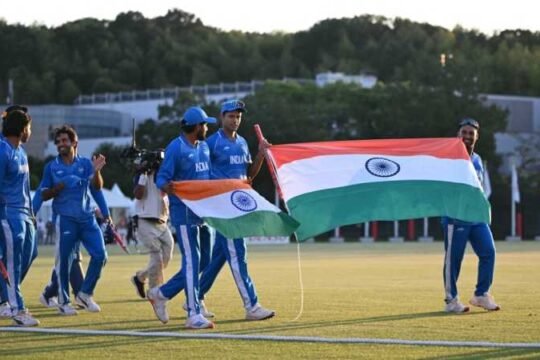
India’s fourth-place finish stands out as one of the most significant stories of the Asian Games 2026. Matching Uzbekistan’s 21 gold medals and finishing with 85 medals overall represents a clear step forward for Indian sport. Consistent performances across shooting, wrestling, badminton, athletics and boxing produced a balanced medal haul of 21 gold, 27 silver and 37 bronze. The result will be celebrated as validation of recent investments in high-performance programmes and the growing professionalism of Indian athletes on the continental stage. For a nation of India’s size and sporting ambition, fourth place at the Asian Games carries both prestige and the promise of further progress toward Olympic targets.
Uzbekistan’s fifth position with 21 gold medals demonstrates the continued rise of Central Asian sport. The 25 silver and 24 bronze medals show competitive depth, particularly in wrestling, boxing and judo—disciplines that have traditionally delivered for Uzbek athletes. The total of 70 medals confirms Uzbekistan as a consistent top-six force and a nation that punches above its weight relative to population and resources.
Iran’s sixth-place finish with 19 gold, 18 silver and 15 bronze (52 total) maintains the country’s reputation for excellence in wrestling, weightlifting and combat sports. Iranian athletes once again converted high-pressure opportunities into podium finishes, securing a respectable place among Asia’s elite despite intense competition from higher-ranked nations.
Beyond the headline numbers, the Asian Games 2026 medal table reveals broader trends. China’s dominance is not limited to a handful of signature sports; the gold medals were spread across a wide range of disciplines, reflecting systematic talent identification and year-round high-level competition. Japan’s silver-heavy tally suggests a team capable of challenging for gold more often but still refining the final edge required at the highest level. India’s balanced distribution of medals across gold, silver and bronze points to improving depth rather than reliance on a few star performers.
The host nation’s organisation of the Aichi-Nagoya Games received widespread praise for smooth logistics, enthusiastic crowds and high-quality venues. Athletes and officials from across Asia noted the professional delivery of the event, which provided a fitting stage for the intense competition that produced these final rankings. For Japan, the second-place finish on home soil will be remembered as a strong performance even if the ultimate prize remained out of reach.
Looking ahead, the Asian Games 2026 results will influence national sporting strategies for the remainder of the Olympic cycle. China’s 169 gold medals set a new benchmark that other nations must now confront. Japan will analyse the silver medals that could have been gold and seek to close the gap before the next continental competition. India will treat fourth place as both achievement and motivation, aiming to convert more opportunities into podium finishes and climb higher in future editions. South Korea, Uzbekistan and Iran will continue refining programmes that have already secured them regular places among Asia’s leading sporting nations.
The final Asian Games 2026 medal tally stands as a definitive ranking of continental sporting power in 2026. China occupies the summit by a commanding margin. Japan claims the silver position with pride on home territory. South Korea, India, Uzbekistan and Iran complete a top six that reflects both established hierarchies and emerging ambition. For fans, athletes and administrators across Asia, these numbers will shape conversations, funding decisions and training programmes for years to come.
China’s record-breaking 169 gold medals at the Asian Games 2026 will be remembered as the defining achievement of the Aichi-Nagoya Games. The full table—China 341, Japan 269, South Korea 150, India 85, Uzbekistan 70, Iran 52—captures the competitive reality of Asian sport at this moment in time. As the flags were lowered and the athletes departed, the message from the medal podium was unmistakable: China remains the undisputed leader of Asian multi-sport competition.