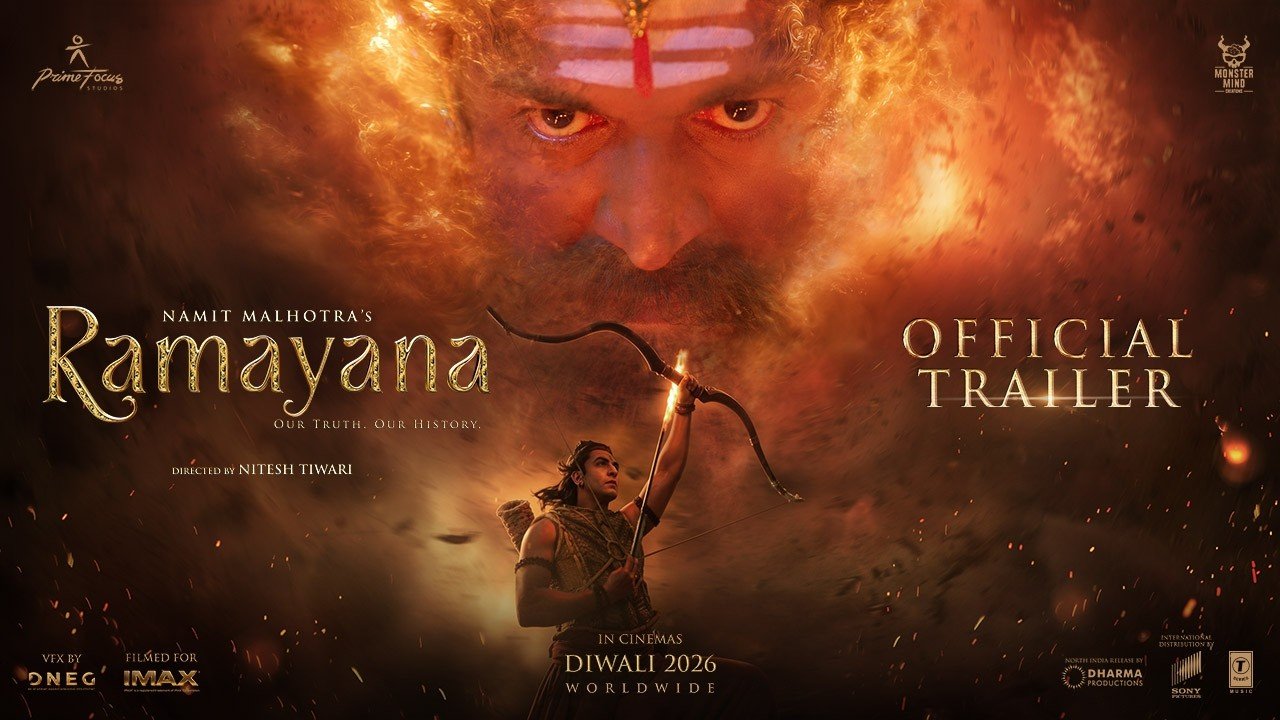
Ramayana Movie Review & Box Office: Ranbir Kapoor, Yash Epic Opens Strong with 65 Cr Day 1
The long-awaited Ramayana movie has finally arrived, and Indian cinema may never look the same again. Nitesh Tiwari’s ambitious two-part adaptation of Valmiki’s timeless epic, titled Ramayana: Part 1 (also known as Ramayana: Rise of a Legend), released worldwide on November 5, 2026. Starring Ranbir Kapoor as Lord Rama, Sai Pallavi as Sita, and Kannada superstar Yash as Ravana, the film has opened to largely positive reviews and a robust Day 1 box office performance that has already set the stage for a major Diwali weekend run.
Produced by Namit Malhotra’s Prime Focus Studios in collaboration with Yash’s Monster Mind Creations and the Oscar-winning visual effects house DNEG, the Ramayana movie is one of the most expensive Indian films ever made, with a reported combined budget of around ₹4,000 crore for both parts. Sony Pictures is handling worldwide distribution outside India, while Dharma Productions is looking after the Hindi-speaking market. The film has been released in Hindi, Tamil, Telugu, Kannada, and Malayalam, with premium formats including IMAX available across territories.
Strong Opening Day Numbers for the Ramayana Movie
Trade trackers report that the Ramayana movie collected approximately ₹64.85 crore net in India on its opening day across more than 25,000 shows, translating to a domestic gross of about ₹77.50 crore. Hindi led the charts with roughly ₹47.50 crore, followed by a solid contribution from the Kannada version (around ₹7.25 crore), reflecting Yash’s massive South Indian fan base. Telugu added about ₹6 crore, with Tamil and Malayalam making up the rest.
Overseas numbers added another significant chunk, with early estimates putting the worldwide gross near ₹127–130 crore on Day 1. These figures place the Ramayana movie ahead of several recent big openers such as Pathaan and Animal on opening day, though it trails the absolute highest records set by films like Jawan and certain recent blockbusters. Occupancy started moderate in the morning and built through the evening and night shows, a positive sign for the long weekend ahead. Advance bookings had already indicated strong interest, with pre-sales crossing ₹50 crore gross before release.
Critical Response: Spectacle, Performances, and Scale
Early critical response to the Ramayana movie has been largely favourable, with most reviewers praising the unprecedented scale, visual effects, and standout performances. Yash’s portrayal of Ravana has emerged as a consistent highlight. Critics note that he brings menace, charisma, and unexpected depth to the character, making the antagonist far more compelling than a one-dimensional villain. Many observers have said Ravana often outshines Rama on screen in Part 1, a deliberate creative choice that humanises the Lankan king through his devotion to Shiva and complex backstory.
Ranbir Kapoor’s Rama has been described as graceful, restrained, and emotionally grounded. Reviewers appreciate his quiet authority and the way he portrays the prince’s internal conflict between duty and personal desire. Sai Pallavi’s Sita has earned praise for bringing dignity and agency to the role, particularly in the forest sequences. Ravi Dubey as Lakshmana provides solid support and occasional levity, while the supporting ensemble—including Arun Govil as Dasharatha, Lara Dutta as Kaikeyi, and others—adds weight to the royal and mythological world. Sunny Deol’s Hanuman is teased in a mid-credits sequence, setting up his larger role in the sequel.
The technical aspects have drawn near-universal acclaim. DNEG’s visual effects create vast, immersive worlds of Ayodhya, the forests, and Lanka. Production design, costumes, and action sequences (supervised by Guy Norris and Terry Notary) deliver the kind of spectacle rarely seen in Indian cinema. Comparisons to the Lord of the Rings trilogy have already surfaced for the sheer ambition of the world-building.
Music has been another major talking point. For the first time, Oscar winners Hans Zimmer and A.R. Rahman collaborated on a film score. Their work blends sweeping orchestral grandeur with Indian classical and devotional elements. Tracks such as “Jai Jai Ram” and others have already found resonance with audiences. Rahman has called the project the biggest film of his career, noting the years of development and the unique East-West creative exchange.
Not every review has been glowing. Some critics pointed to the 195-minute runtime feeling stretched in places, occasional pacing issues in the first half, and moments where the CGI, while spectacular, can feel overwhelming. A few felt the emotional core occasionally takes a back seat to the visual excess. Overall, however, the consensus positions the Ramayana movie as an ambitious, largely successful cinematic event that treats the source material with respect while aiming for global appeal.
The Larger Ambition Behind the Ramayana Movie
Director Nitesh Tiwari (Dangal, Chhichhore) and producer Namit Malhotra have spoken extensively about their desire to create a definitive modern telling of the epic for both Indian and international audiences. The story in Part 1 covers Rama’s early life, marriage to Sita, exile, and the events leading up to Sita’s abduction. Part 2, now confirmed for Diwali 2028 rather than the originally planned 2027, will focus on the search for Sita, the alliance with the vanaras, and the climactic war in Lanka.
The decision to release both parts across five Indian languages on the same day, along with an English version for overseas markets, underscores the film’s global ambitions. The Academy Museum premiere in Los Angeles and the worldwide simultaneous rollout signal that the makers want the Ramayana movie to travel far beyond traditional Indian cinema audiences.
Cultural Significance and Audience Reception
For millions of viewers, the Ramayana is more than a story—it is living cultural memory. Bringing it to the screen on this scale carries enormous responsibility. Early audience reactions on social media and outside theatres have been enthusiastic, with many calling the experience “magical,” “immersive,” and “a proud moment for Indian cinema.” Fans have particularly celebrated Yash’s magnetic presence and the film’s ability to balance devotion with spectacle.
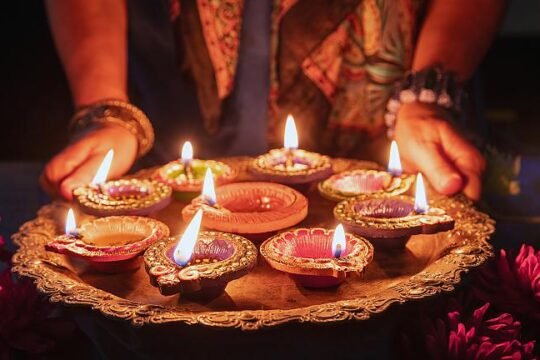
The timing of the release, just ahead of Diwali, adds emotional resonance. Diwali itself commemorates Rama’s return to Ayodhya after defeating Ravana—the very climax the second film will eventually deliver.
What Comes Next
As the Ramayana movie continues its theatrical run, the industry will watch closely how word-of-mouth builds over the weekend and beyond. Strong holds and positive reviews could push it into the rarefied space of multi-hundred-crore grossers. The mid-credits tease of Sunny Deol’s Hanuman and the confirmation of Part 2 for 2028 have already generated fresh excitement.
Whether it ultimately rewrites box-office records or not, the Ramayana movie has already achieved something significant: it has placed one of the world’s oldest and most influential epics on the largest cinematic canvas India has ever attempted, with top-tier international technical talent and a star cast that spans the country’s film industries. For audiences seeking grand storytelling, breathtaking visuals, and a fresh yet respectful take on a beloved classic, the Ramayana movie delivers a theatrical experience that feels both ancient and urgently modern.
The era of Ram on the big screen has begun. Yeh Ram ke Yug ka Aarambh hai.