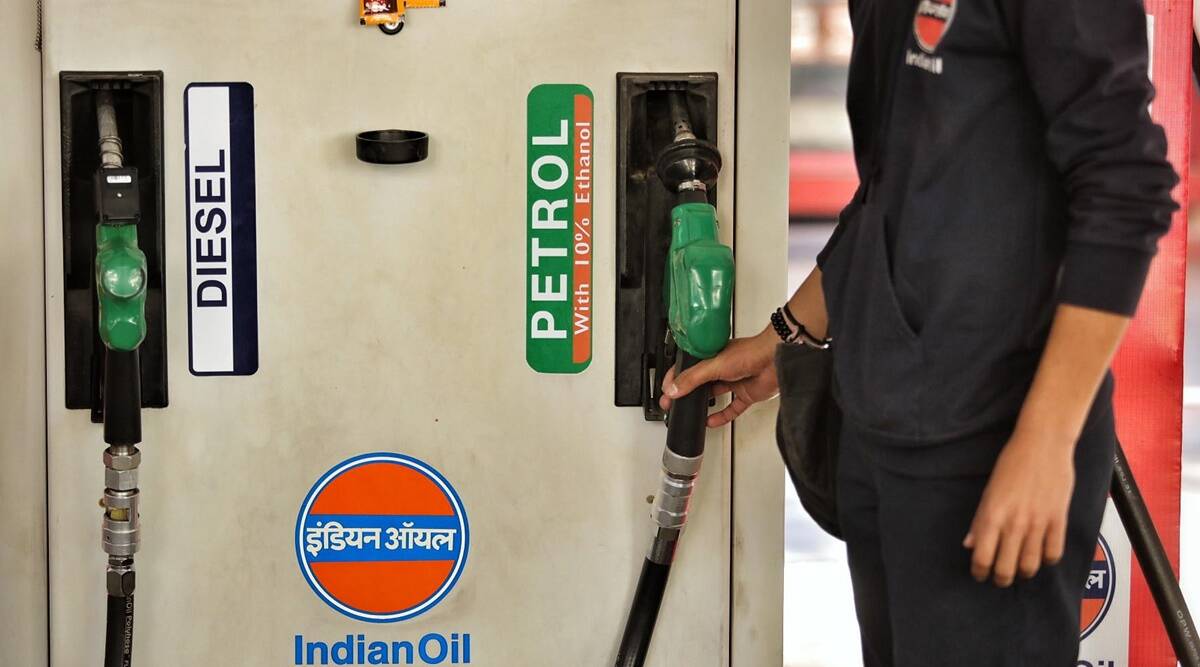
Petrol Price Hike Today: Petrol and Diesel Prices Increased by Up to 96 Paise on May 19, 2026 Across India – Latest Updates
Petrol Price Hike Today: Second Increase in Five Days as Fuel Prices Surge Across India
In a significant development for Indian consumers, petrol price and diesel prices were hiked for the second time in just five days on Tuesday, May 19, 2026. Oil marketing companies increased retail fuel prices by approximately 90 paise per litre nationwide, reflecting mounting pressure from elevated global crude oil rates amid geopolitical tensions in West Asia.
This latest petrol price hike comes close on the heels of a ₹3 per litre increase implemented on May 15, 2026, after a gap of nearly four years. Cumulatively, petrol and diesel prices have risen by about ₹3.90 per litre in a short span, impacting household budgets, transportation costs, and overall inflation.
Latest Petrol and Diesel Prices in Major Metro Cities (Effective May 19, 2026)
Here are the updated petrol price today and diesel prices in key cities:
- New Delhi: Petrol at ₹98.64 per litre (up 87 paise), Diesel at ₹91.58 per litre (up 91 paise)
- Mumbai: Petrol at ₹107.49–₹107.59 per litre (up 81 paise), Diesel at ₹94.02–₹94.08 per litre (up 88 paise)
- Kolkata: Petrol at ₹109.70 per litre (up 96 paise – steepest hike), Diesel at ₹96.07 per litre (up 94 paise)
- Chennai: Petrol at ₹104.49 per litre (up 82 paise), Diesel at ₹96.11 per litre (up 86 paise)
The steepest increase in petrol price was recorded in Kolkata, highlighting regional variations due to local taxes and logistics. Premium variants also saw corresponding hikes: Indian Oil’s XG diesel now at ₹96.90 per litre in Delhi, while XP95 high-octane petrol stands at ₹105.76 per litre.
Private fuel retailers have already been charging higher rates. In Bengaluru, Shell stations are selling petrol at ₹119.85 per litre and diesel at ₹123.52 per litre following earlier increases.
Why Are Petrol and Diesel Prices Rising? Global Crude Oil Context
The petrol price hike today is directly linked to surging international crude oil benchmarks. India’s crude oil basket averaged $106.69 per barrel until May 15, 2026. On May 19 morning, Brent crude futures (July contract) were trading at $109.34 per barrel, up 0.156%. Escalating tensions in West Asia continue to keep global energy markets volatile, putting pressure on India’s import bill.
Oil marketing companies (OMCs) had been absorbing losses, but the recent hikes aim to ease margin pressure. On May 18, the government noted that combined losses on LPG, petrol, and diesel had reduced by ₹250 crore to ₹750 crore following the previous adjustment. No immediate bailout package is under consideration.
Impact on Consumers and Economy
Repeated petrol price increases will have a cascading effect. Transportation costs are expected to rise, influencing prices of essential commodities. India’s retail inflation (CPI) already edged up to 3.48% in April 2026 from 3.40% in March, while wholesale price inflation (WPI) jumped to 8.3% — a 42-month high — largely driven by fuel and energy costs.
Prime Minister Narendra Modi last week appealed to citizens for fuel conservation, promoting work-from-home where possible, and reducing non-essential travel to ease pressure on foreign exchange reserves and the current account deficit, which risks widening for a third consecutive year.
Several state governments have issued directives to limit official travel, minimize physical meetings, and reduce office attendance, signaling a broader push towards austerity in energy consumption.
CNG Prices Also Hiked in Delhi
Adding to the burden, CNG prices in Delhi were raised for the second time in 48 hours due to higher input costs. This further affects daily commuters relying on public and private transport.
LPG Prices and Ongoing Subsidies
Domestic LPG prices were increased by ₹60 per 14.2-kg cylinder in March 2026, yet oil companies continue to incur substantial losses of ₹674 per cylinder. Subsidized cooking gas remains below market cost, contributing to the overall under-recovery for OMCs.
Private Players’ Aggressive Pricing
Private retailers like Nayara Energy and Shell have been more proactive. Nayara raised petrol by ₹5 and diesel by ₹3 per litre in March, while Shell implemented sharper increases from April 1. This competitive landscape reflects divergent strategies in a high-crude-price environment.
Historical Context and Future Outlook
The May 15 hike ended a four-year pause in direct petrol price revisions at pumps. Earlier adjustments were largely muted through excise duty cuts and state-level interventions during periods of global volatility. The current cycle indicates a return to more frequent market-aligned pricing as global benchmarks remain elevated above $100 per barrel.
Industry experts describe the latest hikes as “calibrated” — sufficient to provide relief to oil companies without triggering sharp inflationary shocks. However, analysts warn of secondary effects on logistics, agriculture (diesel-dependent), and manufacturing sectors.
What Should Consumers Do?
- Track daily petrol price today updates on official OMC websites and apps.
- Opt for fuel-efficient driving habits and carpooling.
- Consider public transport or CNG vehicles where viable.
- Monitor state-specific variations, as taxes (VAT, excise) significantly influence final pump prices.
Experts suggest that sustained high global crude prices could lead to further revisions if Brent remains above $105–110 levels. Geopolitical developments in West Asia will be key to watch in the coming weeks.
Broader Implications for India’s Energy Security
India, one of the world’s largest crude importers, remains vulnerable to international price swings. The current scenario underscores the need for accelerated diversification — greater focus on renewables, strategic petroleum reserves, and domestic exploration.
The government’s emphasis on conservation reflects a pragmatic approach amid strained fiscal space. With WPI at multi-year highs, policymakers will need to balance support for OMCs with controlling retail inflation that affects common citizens the most.
This petrol price hike on May 19, 2026, serves as a reminder of the interconnected nature of global energy markets and domestic economic realities. Consumers are advised to plan fuel purchases judiciously and adopt efficiency measures to mitigate the impact.