Cabinet Committee on Economic Affairs Approves Major Boost for Farmers, Industry & Infrastructure: Sugarcane FRP Hiked, Cotton Mission Launched, Semiconductor & Railway Projects Cleared
Cabinet Committee on Economic Affairs Delivers Major Push to Agriculture, Technology, and Infrastructure
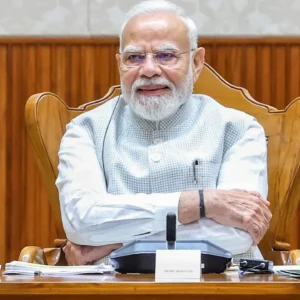
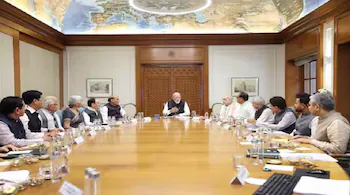
New Delhi, May 6, 2026: In a significant move to strengthen India’s agricultural economy, boost technological self-reliance, and expand critical infrastructure, the Cabinet Committee on Economic Affairs (CCEA), chaired by Prime Minister Narendra Modi, approved a slew of ambitious projects on Tuesday. Union Minister Ashwini Vaishnaw briefed the media on the decisions, which are expected to benefit millions of farmers, create skilled jobs, enhance industrial competitiveness, and improve connectivity across multiple states.
These approvals underscore the government’s commitment to Atmanirbhar Bharat, farmer welfare, and long-term economic growth under the vision of Viksit Bharat.
Sugarcane FRP Hiked to Rs 365 per Quintal: Big Relief for Sugarcane Farmers
One of the key decisions focuses on protecting the interests of sugarcane growers. The Cabinet Committee on Economic Affairs has fixed the Fair and Remunerative Price (FRP) of sugarcane for the Sugar Season 2026-27 (October-September) at Rs 365 per quintal for a basic recovery rate of 10.25 per cent.
This represents an increase of Rs 10 per quintal (approximately 2.81%) over the previous season’s rate of Rs 355 per quintal. The government has structured the pricing with incentives for better recovery: a premium of Rs 3.56 per quintal for every 0.1 per cent increase in recovery above 10.25 per cent, and a corresponding reduction for lower recovery rates.
To safeguard farmers supplying to mills with lower efficiency, the CCEA decided there will be no deduction if recovery falls below 9.5 per cent. In such cases, farmers will receive a minimum of Rs 338.3 per quintal. The FRP is reportedly over 100.5% higher than the estimated production cost of Rs 182 per quintal, potentially channeling more than Rs 1 lakh crore to farmers.
This decision is expected to benefit nearly one crore sugarcane farmers and associated workers in the sugar industry across major producing states like Uttar Pradesh, Maharashtra, Karnataka, and others. By linking price to recovery rates, it encourages mills to improve efficiency while ensuring fair returns for farmers regardless of mill performance.
Experts view this as a balanced approach that supports rural incomes, reduces farmer distress, and promotes sustainable sugarcane cultivation amid challenges like water scarcity and climate variability.
Rs 5,659 Crore Mission for Cotton Productivity: Revitalizing India’s Cotton Sector
The Cabinet Committee on Economic Affairs also gave the green light to the Mission for Cotton Productivity with an outlay of Rs 5,659.22 crore for the period 2026-27 to 2030-31. This initiative aims to tackle declining productivity, quality issues, and supply chain bottlenecks in one of India’s most important cash crops.
India, a major global cotton producer, faces challenges from pest attacks, stagnant yields, and competition in international markets. The mission aligns perfectly with the government’s 5F vision — Farm to Fibre to Factory to Fashion to Foreign — which seeks to integrate the entire textile value chain.
Key Focus Areas of the Mission:
- Development and promotion of high-yielding variety (HYV) seeds resistant to diseases and pests.
- Large-scale adoption of advanced crop production technologies through state governments, Krishi Vigyan Kendras (KVKs), and State Agricultural Universities (SAUs).
- Ensuring supply of least-contaminant cotton to the textile industry.
- Boosting high-quality cotton exports.
By addressing these, the mission is poised to increase farmer incomes, reduce import dependence for quality cotton, and strengthen India’s position in the global textile market, which employs millions and contributes significantly to exports.
Semiconductor Push: Two New Projects in Gujarat Under India Semiconductor Mission
In a boost to India’s semiconductor ambitions, the CCEA approved two projects under the India Semiconductor Mission (ISM) with a cumulative investment of around Rs 3,936 crore in Gujarat. These include the country’s first commercial Mini/Micro-LED display facility based on Gallium Nitride (GaN) technology and a semiconductor packaging facility.
The projects are expected to generate employment for 2,230 skilled professionals. Gujarat continues to emerge as a hub for electronics and semiconductor manufacturing, benefiting from its infrastructure, policy support, and proximity to ports.
This approval advances India’s goal of becoming a global semiconductor player, reducing dependence on imports, and supporting sectors like consumer electronics, automotive, and defense.
Indian Railways Expansion: 901 Km Multitracking Projects Approved
The Cabinet Committee on Economic Affairs cleared three multitracking railway projects spanning 19 districts across Madhya Pradesh, Rajasthan, Uttar Pradesh, Karnataka, Andhra Pradesh, and Telangana. These projects will add approximately 901 km to the existing network at an estimated cost of Rs 23,437 crore, with completion targeted by 2030-31.
Specific projects include:
- Nagda – Mathura 3rd and 4th line
- Guntakal – Wadi 3rd and 4th line
- Burhwal – Sitapur 3rd and 4th line
These enhancements will significantly increase line capacity, reduce congestion, improve mobility, and enhance operational efficiency. Better rail infrastructure will facilitate faster movement of goods and passengers, supporting economic growth in these regions and decongesting key routes.
Strengthening Judiciary: Supreme Court Judges Increased to 37
In a move to address the growing caseload, the Cabinet approved the introduction of the Supreme Court (Number of Judges) Amendment Bill, 2026 in Parliament. This will increase the number of Supreme Court judges by 4, from the current 33 to 37 (excluding the Chief Justice of India).
With over 92,000 cases pending, this expansion aims to ensure faster dispensation of justice, particularly for constitutional matters and appeals from across the country.
Ship Repair Facility at Vadinar, Gujarat: Maritime Infrastructure Boost
Another notable approval is the development of a state-of-the-art Ship Repair Facility at Vadinar, Gujarat, with a total investment of Rs 1,570 crore. The project will be implemented jointly by Deendayal Port Authority (DPA) and Cochin Shipyard Limited (CSL).
Features include a 650-metre jetty, two large floating dry docks, workshops, and supporting infrastructure. Vadinar’s natural deep draft and strategic location near major ports like Mundra and Kandla make it ideal for repairing large commercial and foreign-flagged vessels.
This facility will expand India’s ship repair ecosystem, create jobs, attract foreign vessels, and reduce turnaround times, contributing to the maritime blue economy.
Broader Impact and Government Vision
These decisions by the Cabinet Committee on Economic Affairs reflect a holistic strategy: protecting farmers through remunerative prices and productivity missions, advancing technological self-reliance via semiconductors, modernizing infrastructure through railways and ports, and strengthening institutions like the Supreme Court.
Prime Minister Narendra Modi’s government continues to emphasize inclusive growth, where agricultural support, industrial advancement, and infrastructure development go hand-in-hand. These projects are expected to generate substantial employment — both direct and indirect — stimulate rural and regional economies, and position India as a stronger player in global value chains.
As India progresses towards its development goals, such proactive policy interventions by the CCEA will play a crucial role in realizing the vision of a prosperous, self-reliant nation.