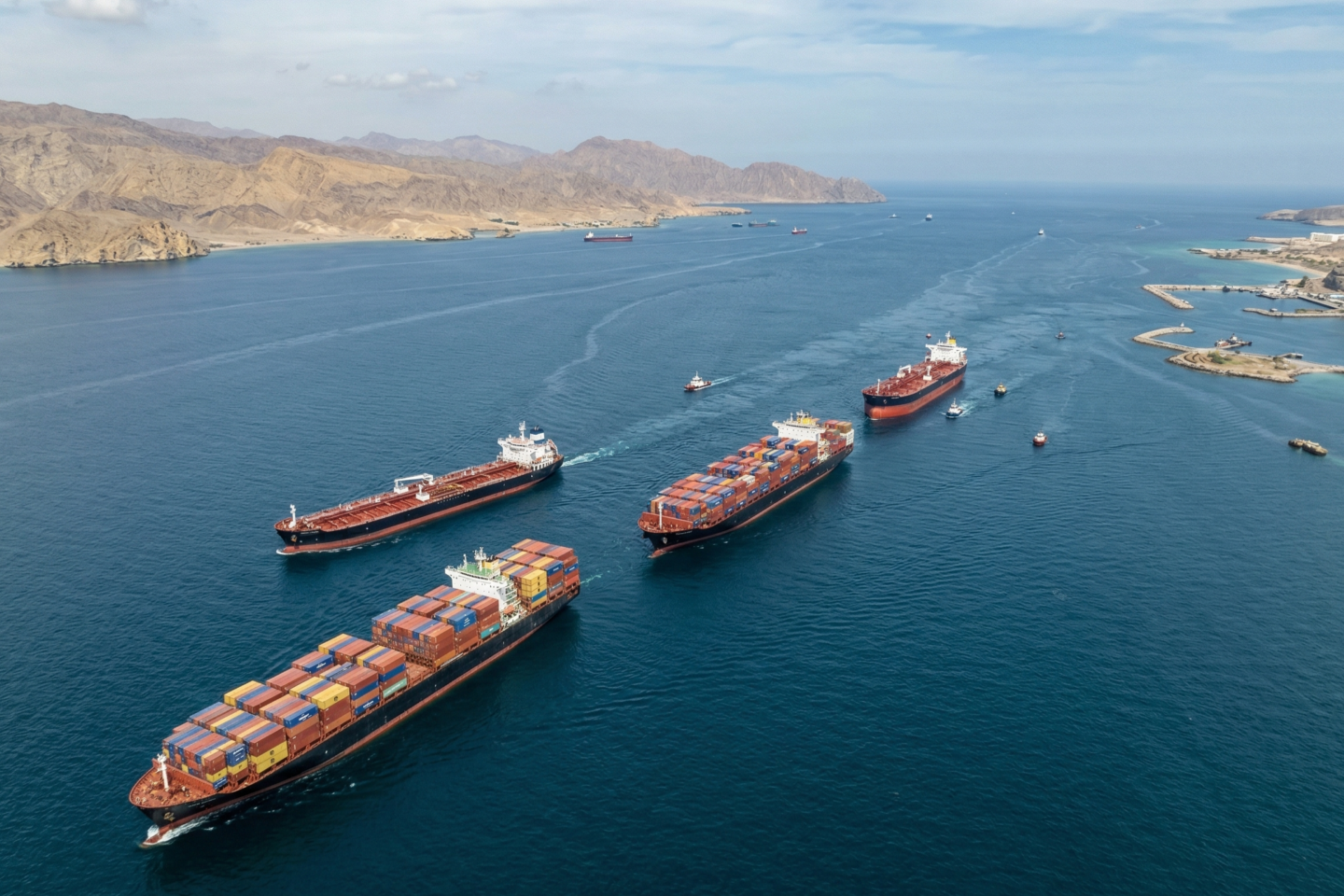
Muscat, Oman – In what maritime analysts are calling a potential breakthrough for global trade, a handful of large commercial vessels appear to have quietly carved out a new passage through the tense waters of the Strait of Hormuz, sidestepping both the conventional international shipping lane and a recently enforced Iranian-controlled corridor.
Data from Automatic Identification Systems (AIS) and remote sensing, reviewed by digital analysis teams, shows that at least four ships—including oil supertankers and a gas carrier—have successfully transited via a route hugging Oman’s coastline. The move comes as global energy markets remain on edge, given that nearly one-fifth of the world’s oil passes through the Strait of Hormuz.
The newly observed path stays entirely within Oman’s territorial sea limits, effectively avoiding the high-risk areas where Iranian naval forces have been active. The development is being closely watched by energy-dependent nations like India, which has already felt the pinch from recent disruptions.
How the Vessels Navigated the Choke Point | Strait of Hormuz
According to the tracking data, two Very Large Crude Carriers (VLCCs)—the Marshall Islands-flagged Habrut and Dhalkut—along with the Panama-flagged LNG carrier Sohar, entered Omani waters near the Emirati city of Ras Al Khaimah. Once they approached the strategic Musandam Peninsula, the ships turned off their position-emitting transponders, a common practice to avoid detection in sensitive zones.
By April 3, they were spotted roughly 350 kilometers off the coast of Muscat, having apparently cleared the most dangerous part of the Strait of Hormuz.
Maritime analysis firm TankerTrackers reports that the Dhalkut was carrying around 2 million barrels of Saudi crude, while the Habrut held a similar volume of Emirati oil. The Sohar left the UAE’s Al Hamriyah port on March 21 and had its AIS status listed as “partially laden,” though its exact cargo remains unclear.
Following the same path was an Indian-flagged cargo vessel, identified as MSV Quba MNV 2183. It set sail from Dubai on March 31 and was last located in open seas roughly 40 kilometers from the Omani port of Dibba. Whether the Indian ship is carrying cargo or its final destination is still unknown.
Why This Route Matters Now
Tensions in the Strait of Hormuz have been at a boiling point since late February, when the US and Israel launched coordinated airstrikes on Iranian targets. In response, Tehran began attacking commercial ships with missiles and drones and established a new, longer shipping route under its direct control. That Iranian-managed lane passes through the country’s territorial waters and a narrow channel between Qeshm and Larak islands, where the Islamic Revolutionary Guard Corps (IRCC) reportedly boards vessels and imposes a toll of $1 per barrel of crude.
The emergence of an Omani territorial alternative suggests that some ship operators and cargo owners are willing to take calculated risks to break free from Tehran’s grip.
Interestingly, the passage of these four vessels coincides with reports of large fires at the IRGC’s primary naval base on Qeshm Island. Analysts have suggested the blazes, which damaged at least four warehouses, may have been caused by airstrikes—though no official confirmation has been made.
What This Means for Global Shipping
While four ships do not yet represent a full reopening of the Strait of Hormuz, the successful use of this Omani coastal corridor could offer a blueprint for other vessels looking to move oil and goods without seeking Iranian permission. For now, it remains a quiet test case—but one that may signal the first crack in what has become a dangerous bottleneck for world energy supplies.