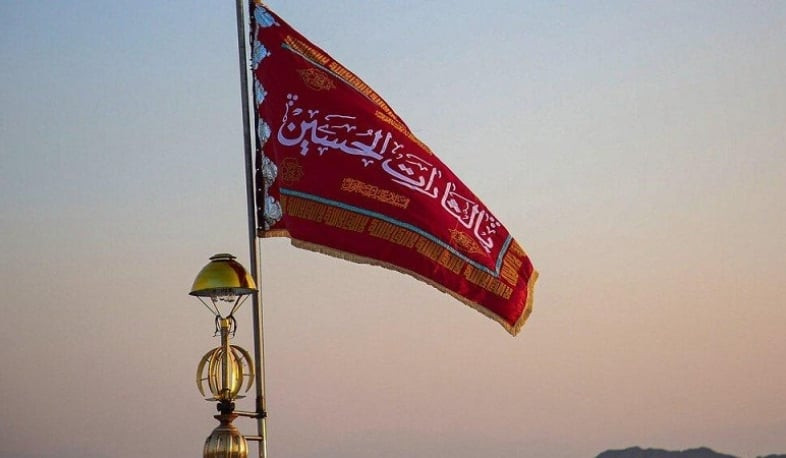
Iran Raises Red Flag of Revenge: Symbolic Act Signals Vengeance After Supreme Leader Ayatollah Khamenei Killed in Historic US-Israel Airstrike
March 2, 2026 – In a dramatic and deeply symbolic development that has intensified fears of wider regional war, Iran has raised a vivid red “flag of revenge” over the dome of the Jamkaran Mosque in the holy city of Qom. This powerful gesture comes directly in response to the confirmed killing of Iran’s Supreme Leader, Ayatollah Ali Khamenei, during a massive joint airstrike by the United States and Israel on Saturday, February 28, 2026.
The event marks one of the most seismic moments in the history of the Islamic Republic since its founding in 1979. Khamenei, who had ruled with an iron fist for nearly 37 years, was killed in a precision strike on his Tehran residence/office complex, part of a broader campaign targeting high-level Iranian leadership and military infrastructure. Iranian state media, including IRIB and IRNA, officially confirmed his “martyrdom” early on March 1, triggering nationwide 40 days of mourning and a surge of public outrage.
Crowds of supporters, clerics, and Revolutionary Guards affiliates gathered at the Jamkaran Mosque – a site of profound eschatological importance in Twelver Shia Islam – to hoist the red banner. According to Shia tradition, the red flag symbolizes unavenged bloodshed, martyrdom, and a religious obligation to pursue justice and retribution against perceived oppressors. It is not merely a sign of mourning but a solemn declaration: the flag will remain raised until the injustice is avenged and the blood debt is repaid.
This act has been widely interpreted as Iran’s official signal of intent for severe retaliation against the United States and Israel. Revolutionary Guards commanders have already vowed “crushing responses,” while missile and drone launches toward Israeli targets and US bases in the Gulf began almost immediately after the confirmation of Khamenei’s death.
The Jamkaran Mosque: Why This Location Carries Extra Weight
The Jamkaran Mosque, located just outside Qom – Iran’s theological epicenter – holds unique status in Shia belief. It is closely linked to the Twelfth Imam, Muhammad al-Mahdi (the Hidden Imam or Mahdi), who Shia Muslims believe remains in occultation and will one day return to fill the world with justice. Pilgrims flock here for special prayers, and the site gained even greater prominence during Khamenei’s long tenure as he emphasized devotion to the Mahdi as part of Iran’s ideological framework.
Raising the red flag here is no coincidence. It frames Khamenei’s killing not just as a political assassination but as an attack on the very spiritual foundation of the Islamic Republic. The symbolism ties the supreme leader’s martyrdom to the cosmic struggle against tyranny, echoing the martyrdom of Imam Hussein at Karbala in 680 CE – the foundational event in Shia identity where red evokes the blood of the innocent slain by oppressors.
In recent history, similar red flags have appeared at mosques after major losses, such as the 2020 US drone strike that killed Qasem Soleimani or other high-profile assassinations. But its elevation at Jamkaran after the supreme leader’s death elevates the stakes dramatically, signaling that ordinary mourning has transformed into a call for holy vengeance.
Timeline of the Fateful Strike: February 28, 2026
The joint US-Israel operation unfolded in the early hours of Saturday, February 28. Israeli Air Force jets, supported by US intelligence, surveillance, and reportedly refueling assets, launched a coordinated barrage across Tehran and other sites.
- Pre-dawn strikes targeted command centers, IRGC facilities, and suspected nuclear-related sites.
- A precision missile or bomb salvo hit Khamenei’s location in central Tehran, where the 86-year-old leader was reportedly present.
- US President Donald Trump announced the success on Truth Social shortly after, calling it “justice served” against decades of Iranian threats.
- Iranian defenses scrambled, but the strikes achieved their objective with minimal reported losses on the attacking side.
By late Saturday, rumors swirled; by early Sunday, March 1, Iranian state TV broadcast the confirmation: “The Supreme Leader has reached martyrdom.” The government declared 40 days of national mourning, public holidays, mass rallies, and black banners across cities.
Casualties from the broader strikes reportedly include over 200 people, with collateral damage claims – including civilian deaths – fueling Iranian propaganda narratives of “Zionist-American barbarism.”
What the Red Flag Truly Signifies in Shia Tradition
Raising a red flag above a mosque, especially one as revered as Jamkaran, is rooted in centuries of Shia symbolism:
- Blood and Martyrdom – Red represents the spilled blood of innocents, particularly Imam Hussein’s at Karbala.
- Call to Vengeance – It publicly declares that revenge is religiously mandated until justice is restored.
- Temporary Until Avenged – The flag stays up as long as the wrong remains unaddressed, serving as a constant reminder and mobilizer.
Supporters at the mosque chanted slogans vowing revenge, with some reports indicating similar flags appearing at other mosques in Mashhad and Isfahan. This collective ritual strengthens regime cohesion during crisis, rallying hardliners and the faithful against external enemies.
Immediate Aftermath and Escalation Risks
Iran responded swiftly:
- Missile and drone barrages targeted Israel, US bases in Bahrain, Kuwait, Qatar, and other Gulf sites.
- Explosions rocked Tel Aviv and other areas, though many were intercepted.
- Oil prices spiked amid fears of Strait of Hormuz disruptions.
The US and Israel continued strikes into March 1-2, hitting military and leadership targets. Trump warned Iran against further escalation while offering vague talks with new leadership.
Inside Iran, a three-member interim council (including President Masoud Pezeshkian equivalents, judiciary head, and Assembly of Experts figure) assumed control per constitutional Article 111. Foreign Minister Abbas Araghchi suggested a new supreme leader could be chosen in days by the Assembly of Experts.
The power vacuum raises questions: Will hardliners consolidate? Could moderates push for de-escalation? Or will IRGC dominance lead to prolonged conflict?
Global Reactions and Broader Implications
- Russia and China condemned the strikes as aggression.
- European nations urged restraint amid refugee and energy concerns.
- Gulf states braced for fallout while quietly supporting the weakening of Iran.
- Protests and celebrations erupted worldwide – mourning in Shia communities, cheers among Iranian dissidents and in Israel/US.
Economically, markets reacted with volatility: oil surged, gold rose as safe haven.
The killing shatters the post-1979 order. Khamenei built Iran’s regional influence through proxies (Hezbollah, Houthis, Hamas), nuclear defiance, and anti-Western rhetoric. His death could fracture that network or galvanize it under new leadership.
Looking Ahead: A Dangerous New Chapter?
The red flag over Jamkaran Mosque stands as both mourning banner and war signal. As Iran enters 40 days of ritual grief, the world watches whether symbolism turns into sustained warfare. Retaliation vows, proxy activations, and potential nuclear escalations loom large.
This moment – Iran Raises Red Flag of Revenge – may define the Middle East for years. Stay tuned for updates as events unfold rapidly.