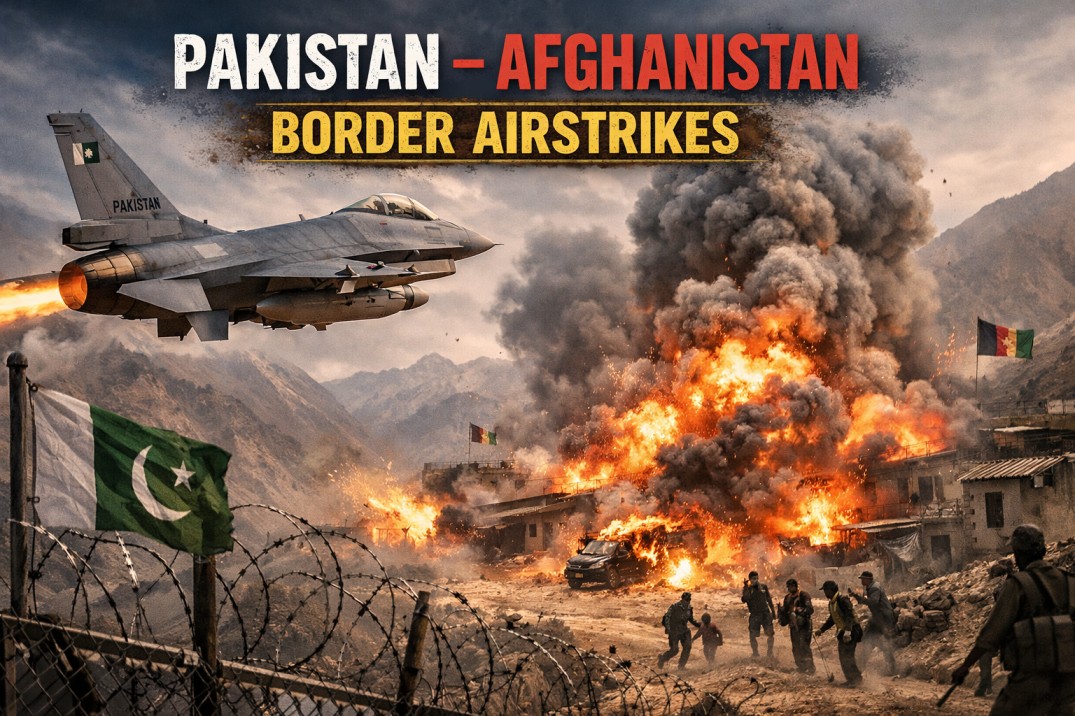
Pakistan Afghanistan Border Airstrikes February 2026: Pakistan Targets TTP Hideouts in Retaliation to Suicide Attacks – Latest Updates
Pakistan carried out airstrikes in Afghanistan on the early hours of Sunday, February 22, 2026, targeting alleged militant hideouts of the Tehrik-e-Taliban Pakistan (TTP) and its affiliates along the porous Pakistan-Afghanistan border. This operation marks a significant escalation in the long-standing tensions between Islamabad and the Taliban-led government in Kabul, amid a surge in militant attacks inside Pakistan attributed to groups operating from Afghan territory.
The Pakistani military described the strikes as “intelligence-based, selective operations” aimed at seven terrorist camps and hideouts belonging to the TTP (often referred to by Pakistani authorities as Fitna al-Khawarij) and linked groups, including an affiliate of the Islamic State-Khorasan Province (ISKP). Pakistan’s Information Minister Attaullah Tarar announced on X (formerly Twitter) that the actions were a direct response to recent suicide bombings, including high-profile incidents in Islamabad, Bajaur, and Bannu districts of Khyber Pakhtunkhwa province.
Details of the Pakistan Afghanistan Border Airstrikes and Conflicting Claims
According to Pakistan’s Ministry of Information and Broadcasting, the strikes were precise and based on “conclusive evidence” linking the perpetrators of recent attacks to Afghanistan-based leadership and handlers. The operation reportedly resulted in the elimination of dozens of TTP fighters, though exact figures were not independently verified immediately.
Videos purportedly showing the airstrikes and explosions have circulated widely on social media platforms, amplifying public attention to the incident.
On the Afghan side, officials and local sources strongly contested Pakistan’s narrative. Afghan government spokesperson Zabihullah Mujahid condemned the strikes, stating that they targeted civilian areas in the border provinces of Paktika (including Barmal and Urgun districts) and Nangarhar (such as Khogyani, Behsud, and Ghani Khel). Reports from Afghan media outlets, including Tolo News and Amu TV, claimed that a religious seminary (madrasa) in Barmal district was hit, leading to significant civilian casualties. Afghan sources reported at least 17 civilians killed, with dozens more injured—including women and children—describing the strikes as an unprovoked violation of sovereignty.
The Taliban vowed a “measured and appropriate response,” heightening fears of further retaliation and potential breakdown of the fragile ceasefire brokered in late 2025 following intense clashes.
Retaliation for Recent Suicide Attacks: The Trigger
The airstrikes came less than 24 hours after a suicide bombing in Bannu district, Khyber Pakhtunkhwa, on Saturday, February 21, 2026. In that incident, a suicide bomber rammed an explosives-laden vehicle into a security convoy, killing two Pakistani soldiers—including a lieutenant colonel—and wounding others. Pakistani authorities identified the attacker as an Afghan national and linked the assault to TTP militants.
This was part of a broader wave of violence during the holy month of Ramadan:
- February 6, 2026: A suicide bombing at the Khadija Tul Kubra Shia mosque in Islamabad’s Tarlai Kalan area killed at least 31 worshippers and injured over 170 during noon prayers.
- Mid-February 2026: A vehicle-borne suicide attack in Bajaur district killed 11 soldiers and a child, followed by gunfire; TTP claimed responsibility for similar incidents.
- Other attacks in Bannu and surrounding areas, with Pakistani officials pointing to Afghan-based TTP handlers.
Pakistan has repeatedly accused the Afghan Taliban of providing sanctuary to TTP fighters since their return to power in 2021, enabling cross-border planning and execution of attacks. Kabul denies these allegations and counters by accusing Pakistan of supporting ISKP and other groups against the Taliban regime.
Historical Background on TTP and Durand Line Tensions
The Tehrik-e-Taliban Pakistan (TTP) was founded in December 2007 under the leadership of Baitullah Mehsud as an umbrella organization uniting various militant factions in Pakistan’s former Federally Administered Tribal Areas (FATA). It emerged as a reaction to Pakistani military operations against al-Qaeda and other foreign fighters following the 2001 U.S.-led invasion of Afghanistan.
Designated as a terrorist organization internationally, the TTP’s core objective remains the overthrow of the Pakistani government and the establishment of an Islamic emirate governed by its strict interpretation of Sharia law. The group has carried out numerous high-profile attacks, including suicide bombings, assaults on security forces, and sectarian violence.
Relations between Pakistan and Afghanistan deteriorated sharply after the Afghan Taliban’s 2021 takeover. Pakistan alleges that TTP militants enjoy safe havens in Afghanistan, using the country as a launchpad for operations. The Afghan Taliban, while ideologically aligned in some ways, has refused to dismantle TTP networks, leading to repeated diplomatic friction.
Tensions peaked in 2025 along the Durand Line (the disputed 2,640-km border). Key events included:
- Early 2025: Sporadic clashes and accusations of cross-border support for militants.
- October 2025: A powerful explosion in eastern Kabul (blamed by Afghans on Pakistan), followed by Taliban attacks on Pakistani border outposts. The Taliban claimed 58 Pakistani soldiers killed (Pakistan reported 23). Further exchanges on October 14 killed at least 15 Afghan civilians and 6 Pakistani paramilitary personnel.
- Early November 2025: Pakistani strikes in Spin Boldak and other areas.
- Late 2025: A Qatar-mediated ceasefire on October 19 temporarily halted major hostilities, but failed talks in Istanbul prevented a lasting agreement.
The February 2026 airstrikes threaten to unravel this fragile truce, with both sides exchanging accusations of harboring terrorists and violating sovereignty.
Broader Implications for Regional Security
This latest escalation underscores the complex security dynamics in South Asia. Pakistan faces a multi-front insurgency: TTP in the northwest, Baloch separatists in the southwest, and occasional ISKP threats. The surge in attacks—particularly during Ramadan—has strained military resources and public morale.
For Afghanistan, under Taliban rule, the strikes represent yet another sovereignty infringement, potentially fueling internal hardliners and complicating efforts to gain international legitimacy.
Analysts warn that continued cross-border operations could spiral into wider conflict, drawing in regional powers. The porous Durand Line remains a hotspot for militancy, smuggling, and refugee flows, with no formal recognition by Afghanistan.
International observers, including the United Nations, have called for restraint and dialogue. Past airstrikes (e.g., in 2022) resulted in civilian deaths and further strained ties without decisively weakening militant groups.
As videos go viral and casualty figures emerge, the incident highlights the urgent need for de-escalation mechanisms. Pakistan insists its actions are defensive and targeted, while Afghanistan demands accountability for alleged civilian harm.
The coming days will be critical: Will the Taliban retaliate militarily? Can mediators prevent a full-scale border war? The Pakistan-Afghanistan Border Airstrikes serve as a stark reminder of unresolved grievances dating back decades.