Sivasagar Sets World Record: 15,555 Women Perform Dihanam at Historic Jerenga Pathar for 42 Minutes – A Cultural Milestone in Assam
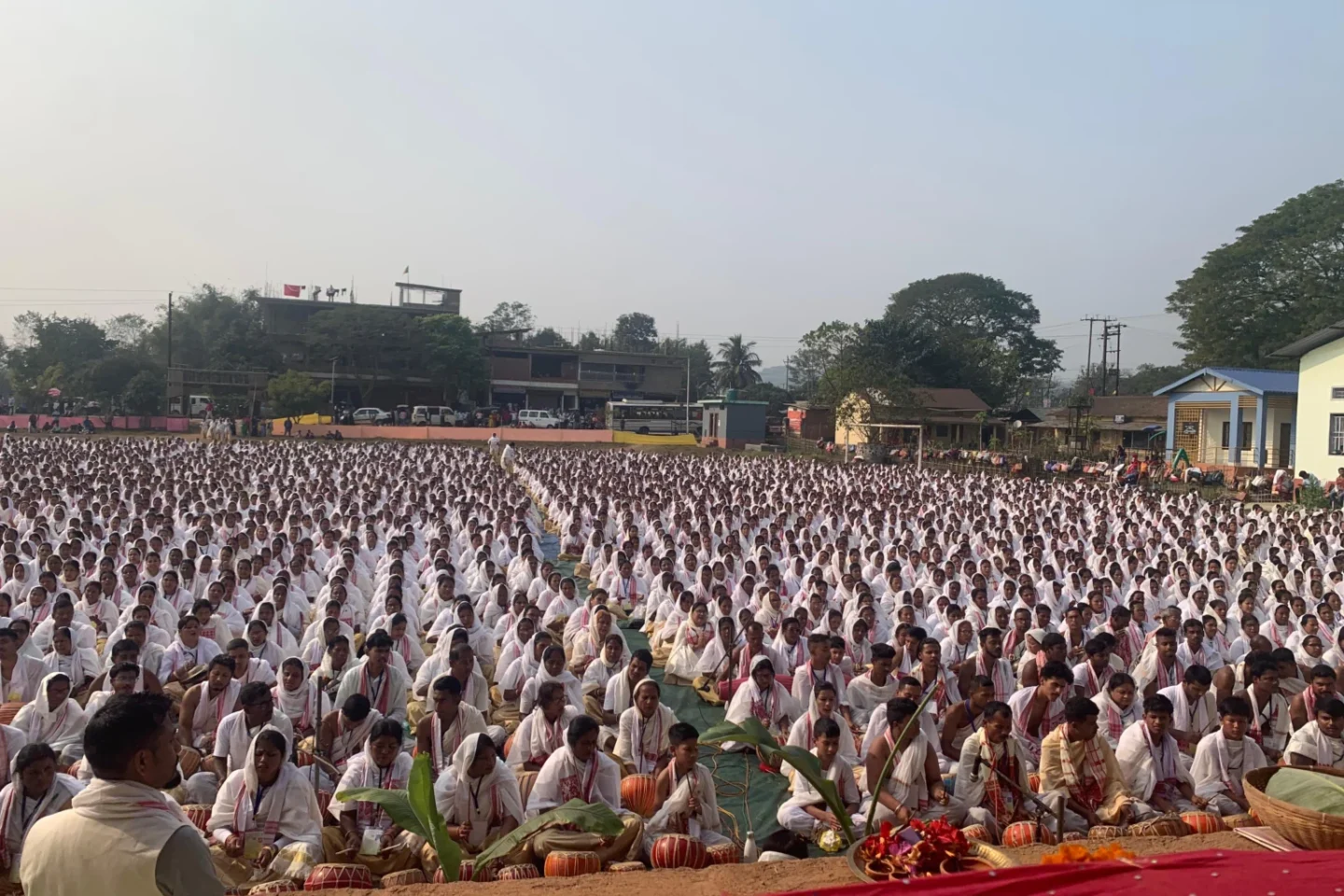
Sivasagar, the historic heart of the mighty Ahom kingdom, once again echoed with divine fervor as it transformed into a spiritual haven—Vaikuntha Dham—on February 2, 2026. In a breathtaking display of devotion, unity, and cultural pride, 15,555 women came together at the iconic Jerenga Pathar to perform Dihanam (also known as Diha Naam), a sacred congregational devotional singing rooted in Assam’s Vaishnavite tradition. This massive gathering not only filled the air with the holy Hari Naam but also etched Sivasagar’s name into global record books by setting a new world record.
The event, which lasted for an uninterrupted 42 minutes, has been officially recognized by the World Wide Book of Records as a remarkable feat of collective cultural performance. Representatives from the record body, including Indian coordinator Sindhuja V N (also referred to as Sindhuja VB) and Vinita N B R, were present to confer the certification, praising the participants for their dedication and harmony.
Historic Significance of Jerenga Pathar and Sati Joymoti
Jerenga Pathar holds profound historical and emotional significance for the people of Assam. It is the very site associated with Sati Joymoti, the legendary wife of Ahom prince Gadadhar Singha (later King Gadadhar Singha). In the 17th century, Joymoti endured unimaginable torture and ultimately sacrificed her life to protect her husband from the clutches of the tyrannical ruler Laluksola Phukan. Her unwavering devotion, loyalty, and supreme sacrifice have made her an eternal symbol of pativrata (devoted wife) in Assamese folklore and history.
The choice of this sacred ground for the Dihanam performance was deeply symbolic. Organizers aimed to honor Joymoti’s legacy while reviving and showcasing Assam’s rich Vaishnavite devotional heritage, popularized by saints like Srimanta Sankardeva and Madhavdeva. The event turned the field into a sea of devotion, with rhythmic clanging of cymbals (tal), khol beats, and synchronized chanting creating an electrifying spiritual atmosphere.
Organized by Ratnagarbha Tejaswini Foundation
The record-breaking event was spearheaded by the Ratnagarbha Tejaswini Foundation, under the visionary leadership of renowned Dihanam exponent Amiya Neog Kalita, who holds the prestigious “Guru” title in this traditional art form. Kalita’s tireless efforts brought together women devotees (known as namatis) from across Assam, turning what could have been a routine cultural programme into a historic milestone.
The programme received valuable support from the North East Zone Cultural Centre (NEZCC), an autonomous body under the Ministry of Culture, Government of India. This collaboration underscored the event’s importance in preserving and promoting Northeast India’s intangible cultural heritage.
Inauguration and Inspirational Address
The ceremony commenced with the traditional Banti Prajwalan (lighting of the ceremonial lamp) by Dr. Pitambar Dev Goswami, the revered Satradhikar of Auniati Satra—one of the most prominent satras (Vaishnavite monasteries) in Assam. In his address, Dr. Goswami paid heartfelt tribute to Sati Joymoti, describing her sacrifice as a timeless example of human values, devotion, and strength.
He elaborated on the concept of pativrata, stating that every woman embodies this ideal by selflessly serving her family. “A pativrata woman becomes a mother while nurturing her husband and children, a devoted servant in his duties, a celestial companion like Rambha during moments of rest, and a wise minister in times of adversity,” he said. He urged all women to embrace the spirit of sacrifice to preserve societal values and moral fabric.
Awards and Recognitions
The event also served as a platform to honor stalwarts of Assamese culture, art, and social service. Amiya Neog Kalita, alongside dignitaries including Dr. Prasanna Gogoi (Director of NEZCC and recipient of Sangeet Natak Akademi award), presented several prestigious titles and awards:
- Dr. Pitambar Dev Goswami – Conferred the Satra Pradeep title
- Bodan Moliya (Jorhat) – Posthumously awarded Dihanam Ratna
- Achyut Chutia (Sivasagar) – Ganabandhu Award
- Juri Dutta – Udyogi Award
- Phanidhar Gogoi – Bhaona Badya Sampada Mahiruh title
- Man Rajguru – Bhagavat Acharya Award
- Bishwajit Gogoi – Loka Badya Mahiruh title
- Ranumi Bora – Dihanam Jyoti Award
- Shrimanta Dutta – Janhitaishee Award
- Partha Pratim Bora – Samaj Seva Award
- Dimu Lohit Sandikai – Bhagavat Acharya Award
- Tulsi Rajkhowa (Majuli) – Satra Sewak title
- Diganta Saikia (Tiyak) – Satriya Sanskriti Sadhak Award
- Dr. Dipen Das (Guwahati) – Loka Sanskriti Sadhak Award
- Madhurima Baruah (Jorhat) – Loka Shilpi Award
- Dr. Rajashree Bora (Nagaon) – Sahitya Saurabh Award
- Debojit Bora (Dhemaji) – Janhitaishee Award
- Arun Bonia (Narayanpur) – Samaj Sewak Award
These recognitions celebrated contributions to satriya culture, folk music, literature, and community service, reinforcing the event’s role in nurturing Assam’s artistic ecosystem.
A Triumph of Women’s Empowerment and Cultural Pride
This world record is more than just a numerical achievement—it’s a powerful statement of women’s collective strength, cultural resilience, and spiritual unity. Dressed in traditional Mekhela Chador, the participants created a vibrant tapestry of faith, echoing the timeless teachings of Sankardeva’s Bhakti movement.
Sindhuja V N, in her remarks to the media, expressed immense pride: “I am thrilled to witness this cultural milestone. Their 42-minute performance of Assamese devotional song is now officially recorded in the World Wide Book of Records.”
Events like this highlight why Assam continues to shine as a beacon of living traditions in India. From the Ahom era’s grandeur to modern-day devotional extravaganzas, Sivasagar remains a custodian of heritage that inspires generations.
This record-breaking Dihanam at Jerenga Pathar not only celebrates Assam’s Vaishnavite legacy but also empowers women, preserves endangered art forms, and puts Northeast India on the global cultural map. As the chants of “Hari Naam” lingered long after the event concluded, one thing was clear: Assam’s spiritual and cultural flame burns brighter than ever.