India Attends Trump’s Board of Peace Inaugural Meeting as Observer: Strategic Shift in Gaza Diplomacy and India-US Ties
The Gaza conflict has triggered a significant shift in international diplomacy, positioning India at the heart of emerging global dynamics through its engagement with U.S. President Donald Trump’s Board of Peace initiative. This development underscores India’s evolving role in West Asia peace efforts, particularly amid ongoing Gaza reconstruction and ceasefire implementation.
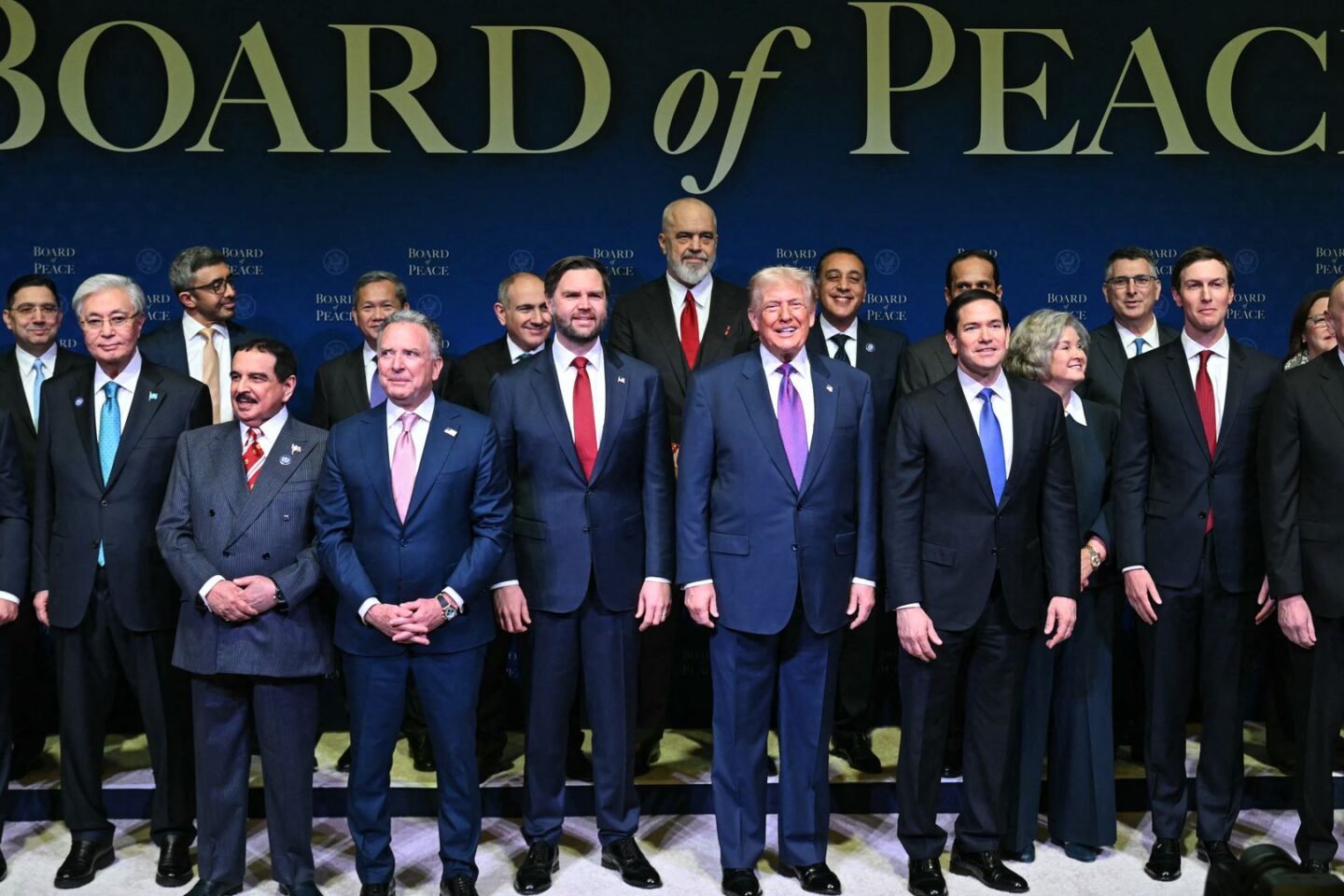
In a move that has captured global attention, India made a notable appearance at the inaugural meeting of the Board of Peace, an initiative spearheaded by U.S. President Donald Trump to address the aftermath of the prolonged Gaza conflict. Held on Thursday, February 19, 2026, in Washington, D.C., at the Donald J. Trump Institute of Peace (formerly the U.S. Institute of Peace), the gathering brought together representatives from around 47-50 countries. While India did not join as a full member, its participation as an observer signals a cautious yet strategic recalibration in New Delhi’s foreign policy approach toward the Israel-Palestine issue and broader West Asia stability.
The Board of Peace was formally established as part of Trump’s Comprehensive 20-Point Plan to End the Gaza Conflict, a roadmap endorsed by United Nations Security Council Resolution 2803 in late 2025. This resolution welcomed the board’s role in overseeing Gaza’s transition from conflict to reconstruction, including the deployment of an International Stabilization Force and coordination with the National Committee for the Administration of Gaza (NCAG). Announced initially in September 2025 and further solidified at the World Economic Forum in Davos in January 2026, the initiative aims to mobilize international resources for Gaza’s rebuilding, estimated to require tens of billions of dollars after years of devastation.
President Trump, who chairs the Board of Peace, used the meeting to project optimism, declaring that the “war in Gaza is over” despite reports of sporadic ceasefire violations. He emphasized the board’s potential as a dynamic alternative mechanism for global peacekeeping, though he rejected claims that it seeks to supplant the United Nations. Critics, including some Western allies who have stayed away, view it as an attempt to create a parallel international structure more aligned with U.S. priorities.
India’s involvement comes after initial reluctance. When the board was announced in Davos, India was notably absent, leading many analysts to conclude that New Delhi was hesitant to align closely with Trump’s unilateral approach. Trump had personally invited Prime Minister Narendra Modi via letter to join, but India maintained distance alongside several Western European nations, questioning the initiative’s broad international legitimacy.
The turning point appears linked to recent bilateral developments between India and the United States, particularly the announcement of a significant India-U.S. trade agreement. Diplomatic sources indicate that this economic milestone prompted New Delhi to reassess its position. Last week, Ministry of External Affairs spokesperson Randhir Jaiswal affirmed that India supports long-term peace efforts in West Asia, including Gaza, in principle and is actively considering participation in relevant mechanisms.
At the Washington meeting, India was represented by Namgya C. Khampa, Chargé d’Affaires at the Indian Embassy in the United States. Khampa’s attendance as an observer allowed India to engage without formal commitment, observing discussions on reconstruction funding, stabilization forces, and disarmament processes.
A key highlight of the meeting was the financial commitments announced. Nine member countries pledged nearly $7 billion collectively for Gaza’s reconstruction and the broader peace process. President Trump followed with a major U.S. commitment of $10 billion to the Board of Peace, describing it as a modest sum “compared to the cost of war.” Details on fund utilization remain limited, with questions lingering about allocation transparency, project oversight, and coordination with existing UN and humanitarian channels.
The board currently has 27 full members, including Pakistan—a point of interest given regional dynamics. Other participants span the Middle East, Asia, Europe, and Latin America, though notable absences include several key U.S. allies skeptical of the initiative’s scope and implications. Some countries have also committed troops and police for the proposed International Stabilization Force, potentially up to 20,000 personnel, commanded by the U.S. with contributions from nations like Albania, Indonesia, Kazakhstan, Kosovo, and Morocco.
Diplomatic analysts interpret India‘s observer role as a calculated step to strengthen bilateral ties with the U.S. post-trade deal while preserving strategic autonomy. India has traditionally maintained balanced relations in West Asia—strong ties with Israel in defense and technology, alongside historical support for Palestinian statehood and relations with Arab states. By attending without full membership, New Delhi avoids alienating partners while signaling openness to constructive peace efforts.
This move aligns with India‘s broader foreign policy under Prime Minister Modi, emphasizing multi-alignment, economic diplomacy, and active participation in global forums. Engagement with the Board of Peace could position India to influence reconstruction priorities, such as infrastructure, humanitarian aid, and economic revival in Gaza, potentially opening avenues for Indian expertise in development projects.
The Gaza conflict’s backdrop remains complex. A fragile ceasefire brokered in late 2025 holds, but challenges persist: full Hamas disarmament, Israeli withdrawal timelines, governance structures, and refugee returns. Trump’s plan envisions Gaza as a prosperous “riviera” through demilitarization, international administration, and massive investment, but implementation faces hurdles including local acceptance and regional buy-in.
India‘s participation has sparked speculation in diplomatic circles about a “new equation” in international diplomacy. Some view it as evidence of Trump’s influence in reshaping alliances, drawing in emerging powers like India to bolster legitimacy. Others see it as pragmatic diplomacy—India leveraging U.S. proximity to advance interests in energy security, counter-terrorism, and global south representation.
Critics argue the Board of Peace risks fragmenting international efforts, with its U.S.-centric leadership and exclusion of Palestinian representatives raising concerns about inclusivity. Supporters counter that traditional UN processes have stalled, necessitating innovative mechanisms for urgent reconstruction.
As funds begin flowing and stabilization efforts advance, India‘s observer status may evolve. Future meetings could see deeper involvement if alignments strengthen. For now, New Delhi’s step reflects diplomatic nuance—engaging a Trump-led initiative without full endorsement, balancing relations across divides.
This development highlights shifting global power dynamics, where initiatives like the Board of Peace challenge established institutions while offering pathways for reconstruction. India‘s role underscores its rising stature: no longer peripheral, but central to conversations shaping West Asia’s future.
With billions pledged and diplomatic doors opening, the Board of Peace—and India‘s cautious embrace—could mark a pivotal chapter in ending cycles of conflict in Gaza and fostering lasting regional stability. As events unfold, the world watches whether this Trump-driven framework delivers on promises or faces the pitfalls of parallel diplomacy.