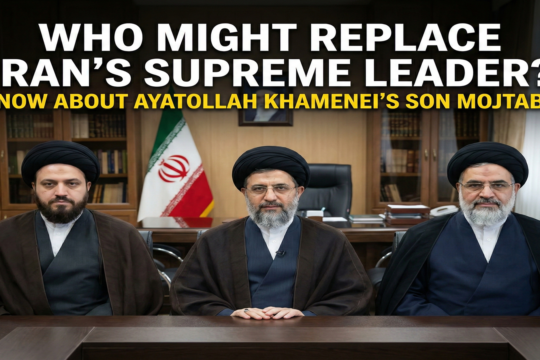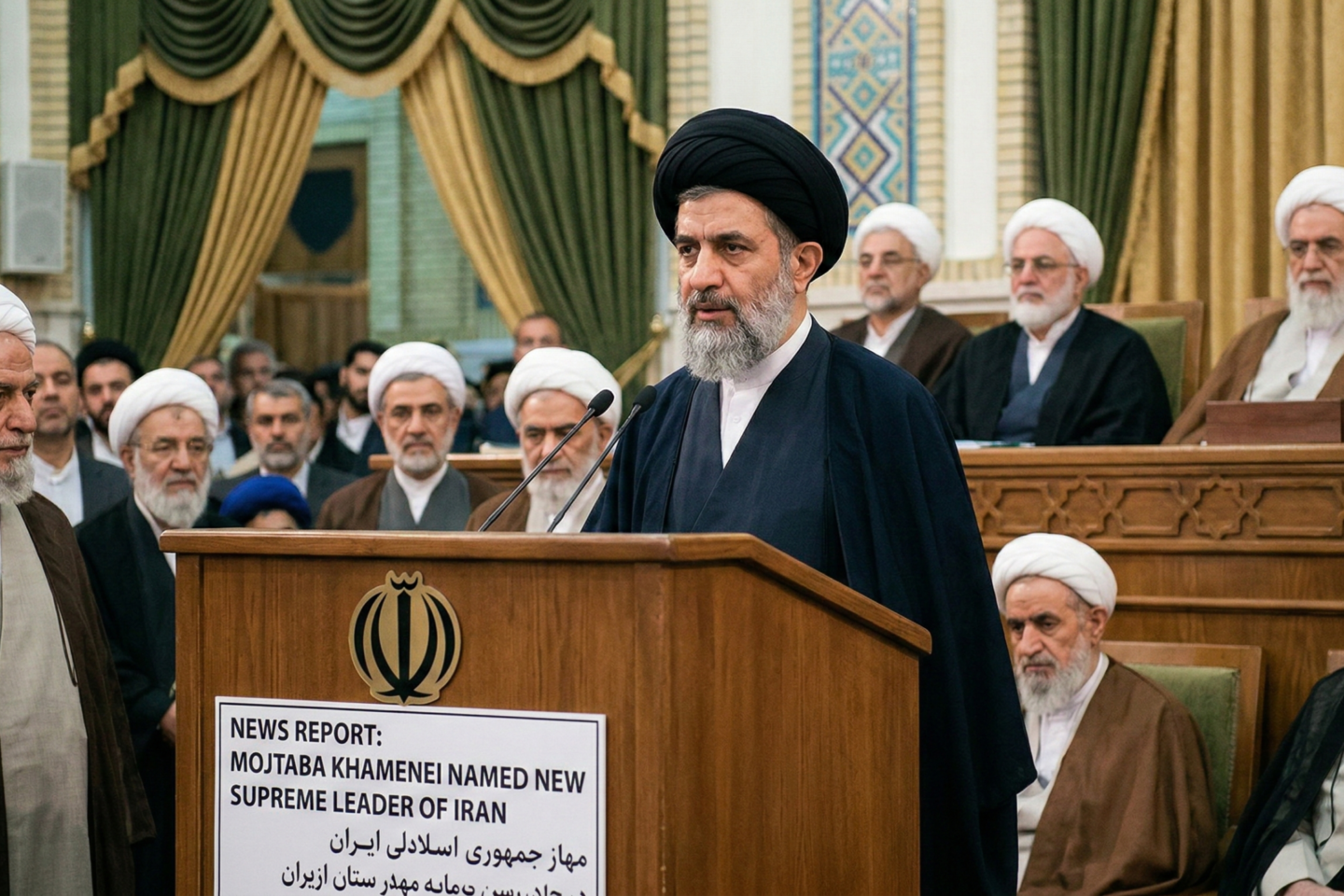
TEHRAN, March 1 — In a historic and potentially volatile shift of power, Mojtaba Khamenei, the 56-year-old son of the late Supreme Leader Ayatollah Ali Khamenei, has emerged as the leading candidate to become Iran’s next ruler. Following the confirmation of Ayatollah Khamenei’s death in a joint US-Israeli military operation, the spotlight has turned to the opaque succession mechanisms of the Islamic Republic, with Mojtaba’s name surging to the forefront despite significant religious and constitutional hurdles .
While officially never holding a formal senior government post, Mojtaba Khamenei has long been described by analysts as the “kingmaker” and a powerful figure operating within the shadows of Iran’s political and security circles. His reported management of access to his father’s inner circle and his deep, entrenched influence over appointments within the Islamic Revolutionary Guard Corps (IRGC) position him as the continuity candidate capable of preserving the revolutionary legacy .
The Power Behind the Throne
For years, Mojtaba has been more than just the second son of the Supreme Leader. According to regional analysts and reports from intelligence sources, he has been a central figure in managing sensitive intelligence dossiers and acting as a key liaison between the clerical establishment and the IRGC . His role within the Beit-e Rahbari (Office of the Leader) effectively made him the gatekeeper to his father, filtering information and managing the vast bureaucracy of the Supreme Leader’s network .
His deep-seated ties with the IRGC are viewed as his strongest asset. As the most powerful military and economic entity in Iran, the IRGC’s backing is considered essential for any candidate. “Mojtaba’s leadership will likely reinforce Iran’s hardline stance and limit any potential compromise with Western powers,” notes a analysis published following the succession announcement. Observers believe his rise effectively consolidates power within the Khamenei family and cements the IRGC’s role in shaping national policy, potentially intensifying regional strategies and influencing the trajectory of Iran’s nuclear and defense programs.
The Constitutional and Religious Hurdles
Despite his political maneuvering, Mojtaba Khamenei’s path to the leadership is fraught with complications. Under Iran’s constitution, the next Supreme Leader must be selected by the 88-member Assembly of Experts—a body of senior clerics elected to manage the succession . The candidate must be a high-ranking cleric with significant political competence and religious standing.
This is where Mojtaba faces his greatest challenge. Unlike the usual profile of a Supreme Leader, he is not considered a high-ranking cleric and has never held an official governmental role, which critics argue violates the constitutional requirement for political competence . Furthermore, the idea of a father-to-son succession is deeply controversial within Shia Islam, which reserves hereditary rule for the 12 divinely appointed Imams. The 1979 Islamic Revolution itself was partly a rejection of the hereditary monarchy of the Shah. Ayatollah Khomeini was succeeded by Khamenei instead of his own son, Ahmad, specifically to avoid the appearance of dynastic succession . In a 2023 speech, the late leader himself reportedly stated that “dictatorship and hereditary government are not Islamic,” a statement that now casts a long shadow over his son’s ambitions .
A Military Takeover?
The political landscape in Tehran has been thrown into chaos following the strikes that killed Khamenei. While the Assembly of Experts is technically responsible for selecting the new leader, the speed of the decision remains uncertain. According to reports from ABC News and CNN, the US Central Intelligence Agency (CIA) had assessed prior to the attack that the most likely outcome of Khamenei’s sudden death would be a consolidation of power by hardline figures within the IRGC, effectively resulting in a military-backed leadership .
If Mojtaba Khamenei ascends with the explicit backing of the IRGC, it could signal a new, more dangerous era. Analysts suggest that his leadership might lack the clerical weight of his father but could compensate with aggressive regional policies. “The elevation of a leader with such deep ties to the IRGC could result in an even more dangerous military battle unlike anything ever seen before in the Middle East,” warns a recent analysis .
The Opposition and International Reaction
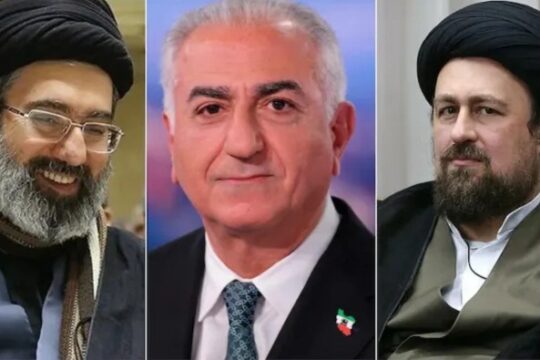
The news of Mojtaba’s potential ascent has already sparked sharp reactions. Exiled opposition groups, including the National Council of Resistance of Iran (NCRI) and Crown Prince Reza Pahlavi, have condemned the idea of dynastic succession, calling for the populace to rise up against the concept of clerical inheritance .
Meanwhile, international powers are watching with bated breath. US President Donald Trump, who authorized the strikes, has hinted that he is aware of who is currently in charge in Tehran but has not publicly endorsed any candidate . The coming days will be critical as the Assembly of Experts convenes—if they can do so safely amidst the ongoing security chaos—to determine whether the Islamic Republic will entrust its future to a man who has spent decades preparing for it in the shadows, or whether it will balk at the prospect of creating a clerical dynasty.
Frequently Asked Questions (FAQ)
Q: Who is Mojtaba Khamenei?
A: Mojtaba Khamenei is the second son of the late Iranian Supreme Leader, Ayatollah Ali Khamenei. He is 56 years old and, despite holding no official government position, has long been considered a powerful behind-the-scenes figure with strong ties to the Islamic Revolutionary Guard Corps (IRGC) .
Q: Is Mojtaba Khamenei the new Supreme Leader of Iran?
A: While he has emerged as the leading candidate following his father’s death, the succession has not been officially confirmed. The final decision rests with the Assembly of Experts, an 88-member body of clerics that must vote to appoint the next leader .
Q: Can the son of a Supreme Leader inherit the position?
A: It is highly controversial. Iran’s system was founded on the rejection of monarchy, and religious tradition discourages hereditary rule. Ayatollah Khamenei himself reportedly opposed the idea of dynastic succession . However, the current political crisis and Mojtaba’s strong ties to the security apparatus make him a formidable contender.
Q: Why is the IRGC’s support important?
A: The Islamic Revolutionary Guard Corps (IRGC) is Iran’s most powerful military and economic force. Their backing is crucial for the survival and authority of any political leader in Iran. Mojtaba Khamenei’s deep, long-standing relationship with the IRGC gives him a significant advantage over other clerical candidates .
Q: What would Mojtaba Khamenei’s leadership mean for Iran’s nuclear program?
A: Analysts suggest his leadership would reinforce hardline policies. Backed by the IRGC, he is expected to take a uncompromising stance against the West, potentially accelerating strategic defense programs and intensifying regional conflicts rather than seeking diplomatic compromises .