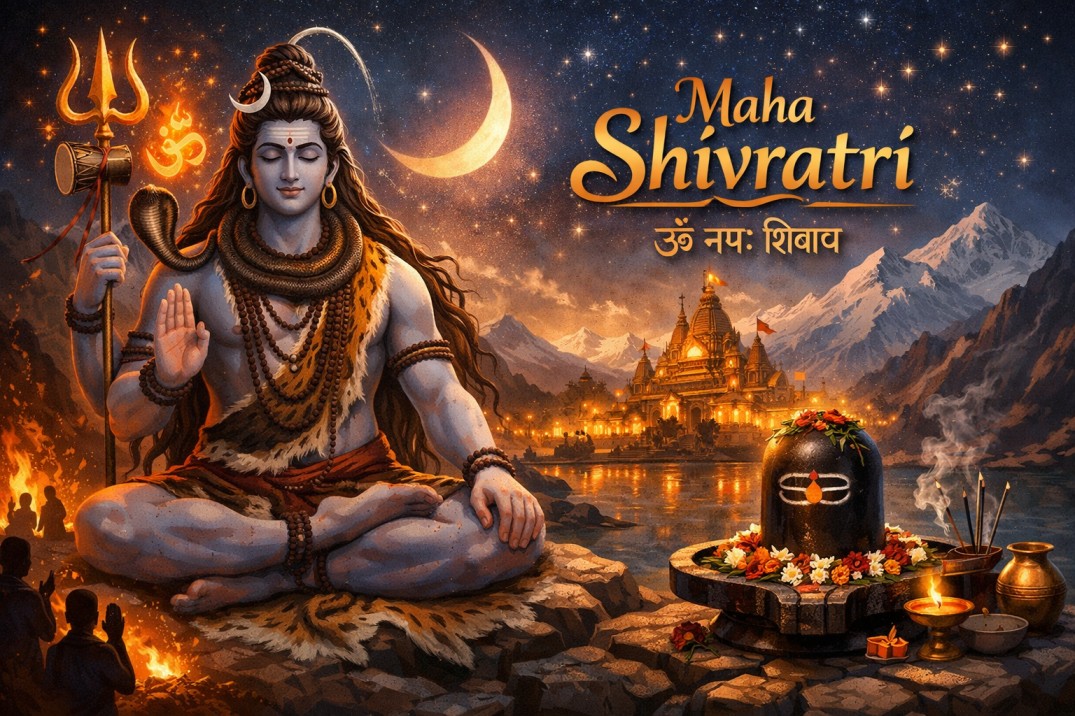
Maha Shivaratri, known as the “Great Night of Shiva,” stands as one of the most profound and spiritually charged festivals in Hinduism. Celebrated annually on the Krishna Chaturdashi (the 14th day of the waning moon phase) in the Hindu lunar month of Phalguna (typically falling between February and March in the Gregorian calendar), this sacred night holds deep significance for millions of devotees worldwide. In 2026, Maha Shivaratri falls on Sunday, February 15, with key puja timings including the Nishita Kaal (midnight) period around 11:43 PM to 12:35 AM (extending into February 16 in some panchangs), making it a time when the divine energy of Lord Shiva is believed to be especially accessible.
This festival transcends mere ritualistic observance. It embodies themes of overcoming darkness and ignorance, the triumph of light and consciousness, and the eternal cosmic balance between creation, preservation, and destruction. Devotees mark the occasion through rigorous fasting, night-long vigils (jagran), mantra recitation, meditation, and elaborate worship of the Shiva Lingam, seeking purification, spiritual awakening, and ultimate liberation (moksha).
Spiritual and Philosophical Significance Maha Shivaratri
At its core, Maha Shivaratri celebrates Lord Shiva in his most transcendent form—as the destroyer of ignorance, the embodiment of pure consciousness (Shiva Tattva), and the supreme yogi who resides in stillness amid chaos. The “great night” symbolizes the dissolution of ego, illusions, and material attachments, allowing the inner self to awaken to higher reality.
Many spiritual traditions, including those articulated by modern teachers like Sadhguru, describe this night as when the Shiva principle—normally hovering slightly above the material plane—descends and touches the earth element, creating a rare window for profound meditation and energy alignment. Staying awake through the night aligns the practitioner’s energies with this cosmic descent, facilitating inner transformation.
The festival also represents the harmonious union of masculine and feminine energies: Shiva as pure consciousness (Purusha) and Parvati as dynamic energy (Prakriti or Shakti). Their divine marriage symbolizes balance in the universe and within the individual.
Key Legends and Mythological Stories
Several ancient legends from Puranic texts like the Shiva Purana, Linga Purana, and others explain why this particular night is revered.
1. The Divine Marriage of Shiva and Parvati
One of the most cherished stories recounts how Goddess Parvati, an incarnation of Sati, performed intense penance to win Shiva’s heart after her self-immolation in her previous life. Shiva, in deep meditation and detachment following Sati’s death, remained unmoved. Parvati’s unwavering devotion, supported by advice from sages, eventually softened Shiva. Their wedding is said to have occurred on the night of Maha Shivaratri, symbolizing the reunion of consciousness and energy, essential for cosmic harmony. This legend emphasizes devotion (bhakti) as a path to divine union.
2. Shiva Drinking the Halahala Poison (Samudra Manthan)
During the churning of the cosmic ocean (Samudra Manthan) by gods (devas) and demons (asuras) to obtain amrita (nectar of immortality), a deadly poison called Halahala emerged, threatening to destroy all creation. Terrified, the beings sought Lord Shiva’s refuge. In an act of supreme compassion and selflessness, Shiva gathered the poison in his palm and swallowed it, holding it in his throat rather than letting it descend into his stomach. Goddess Parvati, in alarm, pressed his throat to prevent the poison from spreading further—earning Shiva the name Neelkantha (the blue-throated one). This event is often linked to Maha Shivaratri, highlighting Shiva’s role as protector and his willingness to absorb negativity for universal welfare.
3. The Hunter’s Story (Linga Worship and Unintentional Devotion)
A poignant tale from the scriptures tells of a hunter who, unaware of the day’s sanctity, climbed a Bilva tree to hunt at night. Leaves fell onto a Shiva Lingam below, and his tears of remorse (upon realizing he had harmed creatures) inadvertently performed abhishekam. Despite his sins, his sincere (if unintentional) offering on this night granted him liberation, illustrating that true devotion—free of pretense—transcends ritual perfection.
4. The Cosmic Tandava and Lingodbhava
Some traditions commemorate Shiva’s performance of the Tandava, his cosmic dance representing the cycles of creation, preservation, and destruction. Another links the festival to the appearance of the infinite Jyotirlinga (fiery pillar) before Brahma and Vishnu, proving Shiva’s supremacy as the formless infinite.
These stories collectively portray Shiva as both fierce destroyer and compassionate savior, encouraging devotees to emulate qualities of detachment, selflessness, and unwavering focus.
Rituals and Observances
Maha Shivaratri observances emphasize austerity, introspection, and devotion rather than exuberant celebration.
Fasting (Vrat)
Devotees typically observe a strict fast, avoiding grains, salt, and tamasic foods. Many consume only fruits, milk, nuts, or water (phalahar), while some undertake nirjala (without water) or complete abstinence. The fast begins after the previous day’s meal and breaks after sunrise the next day (parana). Rules include mental purity, avoiding anger, and focusing on Shiva.
Puja Vidhi at Home or Temple
- Wake early, bathe, and wear clean clothes (preferably white or light colors).
- Set up a clean altar with a Shiva Lingam or picture.
- Perform abhishekam: bathe the Lingam with water, milk, curd, honey, ghee, sugar, and Gangajal.
- Offer Bilva (Bel) leaves (tri-foliate, symbolizing the three gunas or eyes), Dhatura, akshat, flowers, sandalwood paste, vermilion, and incense.
- Chant mantras like Om Namah Shivaya (Panchakshari mantra), Mahamrityunjaya Mantra (“Om Tryambakam Yajamahe…”), Shiva Tandava Stotram, or Shiva Chalisa.
- Perform four pahar (watches) of night-long vigil with meditation, bhajans, and stories.
- End with aarti and distribute prasad.
Night-Long Vigil (Jagran)
Staying awake symbolizes conquering tamas (inertia/darkness). Devotees sing bhajans, meditate, or visit temples for special midnight abhishekam.
Regional Celebrations and Modern Observances
In India, grand celebrations occur at Jyotirlinga temples like Mahakaleshwar (Ujjain), Kashi Vishwanath (Varanasi), Kedarnath, and Somnath. Kashmir’s Shivratri (Herath) involves unique rituals over days. In Nepal, it’s a national holiday with temple fairs. Globally, diaspora communities organize events with meditation sessions, Rudrabhishek, and cultural programs.
Modern celebrations blend tradition with inclusivity—online live streams, virtual pujas, and eco-friendly practices (using minimal water for abhishekam).
Conclusion: A Night of Inner Awakening
Maha Shivaratri invites reflection on life’s impermanence and the pursuit of higher consciousness. By embracing simplicity, devotion, and inner stillness, devotees align with Shiva’s essence—the destroyer of illusions and bestower of eternal peace.
In a world of constant distraction, this great night reminds us that true liberation arises not from external pursuits but from awakening the divine within. As the mantra echoes—”Om Namah Shivaya”—may every heart find the blue-throated grace that saves, transforms, and liberates.