Assam Congress Crisis: 7 MLAs Set to Resign Ahead of 2026 Assembly Elections – Major Blow to Party
Minority Strongholds Slip Away from Assam Congress
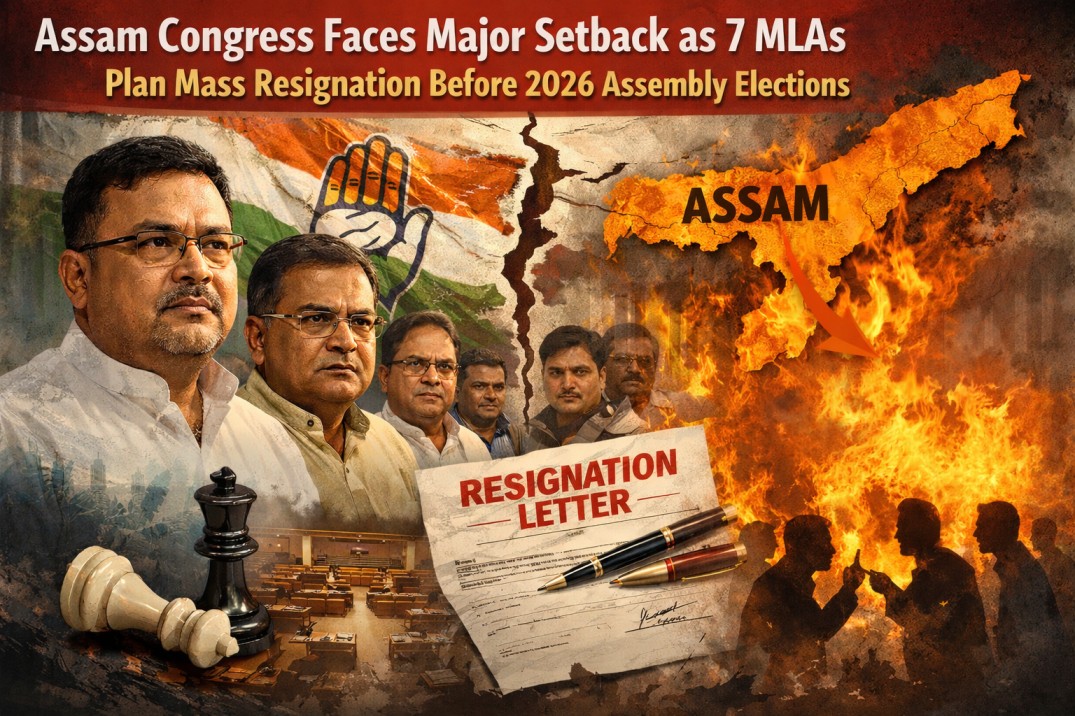
As the 2026 Assam Assembly elections approach rapidly, the Assam Congress is facing a severe internal crisis marked by a series of high-profile resignations and defections. In a major blow to the party, seven MLAs from the Indian National Congress are reportedly set to quit the party en masse ahead of the polls, signaling deepening discontent and organizational weaknesses within the Assam Pradesh Congress Committee (APCC).
This wave of exits comes at a critical time when the Congress is struggling to mount a strong challenge against the ruling Bharatiya Janata Party (BJP)-led government under Chief Minister Himanta Biswa Sarma. The resignations highlight ongoing internal challenges, factionalism, and dissatisfaction with leadership, further eroding the party’s prospects in the upcoming Assam Assembly elections 2026.
Key MLAs Set to Quit Congress
The list of departing legislators includes prominent names from various constituencies, many representing minority and rural-dominated areas where the Congress has traditionally held influence:
- Kamalakhya Dey Purkayastha, the sitting MLA from North Karimganj, is among those planning to leave the Congress. North Karimganj has been a Congress stronghold, and his exit could significantly impact the party’s vote share in the Barak Valley region.
- Shashikant Das, MLA from Raha in Nagaon district, will also tender his resignation. Raha is a key assembly segment with a mix of communities, and Das’s departure adds to the party’s woes in central Assam.
- Basanta Das, the MLA from Mangaldoi, is a notable figure who previously served as a Cabinet Minister during the tenure of former Chief Minister Tarun Gogoi. His long association with the Congress and ministerial experience make his potential exit particularly damaging, as it underscores disillusionment even among veteran leaders.
- Shermann Ali, representing Baghbar constituency, is set to quit. Baghbar, located in Barpeta district, has a substantial minority population, and Ali’s resignation could signal shifting loyalties in Muslim-majority areas.
- Abdur Rashid Mondal, the MLA from West Goalpara, will leave the party. Goalpara West is another segment with demographic dynamics favoring parties with strong minority outreach.
- Siddique Ahmed, MLA from South Karimganj, is also on the verge of resigning. This constituency borders Bangladesh and has strategic electoral importance.
- Abdur Rahim Ahmed, the MLA from Barpeta, rounds out the group of seven. Barpeta is a politically sensitive area, and Ahmed’s exit further weakens the Congress’s position in western Assam.
These seven MLAs are expected to formally announce their resignations together or in quick succession, potentially followed by switches to other parties, including the ruling BJP or regional outfits. Such mass defections are not uncommon in Assam politics ahead of elections, as seen in past cycles where leaders realign based on ticket prospects, development promises, or internal grievances.
Broader Context of Congress Crisis in Assam
The resignations of these MLAs are part of a larger pattern of turmoil within the Assam Congress. The party has been grappling with leadership issues, electoral setbacks, and accusations of inefficiency at the top. Recent developments include the resignation of former APCC president Bhupen Kumar Borah, who cited leadership incompetency, particularly under current figures like Gaurav Gogoi, and other internal rifts.
In recent months, the Congress has witnessed multiple exits at various levels:
- Mass resignations in districts like Karbi Anglong, where over 150 leaders and workers quit, citing better developmental prospects under the BJP.
- Senior leaders like Dr. Sanju Boruah resigning over alleged controversies involving prominent MPs.
- Speculation around other MLAs and functionaries contemplating similar moves.
These events reflect mounting internal challenges, including factionalism between old guards and newer leadership, disagreements over alliance strategies with regional parties like Raijor Dal or AIUDF, and perceived neglect by the central high command. The Congress’s performance in recent Lok Sabha and by-elections has been underwhelming in Assam, further fueling discontent among grassroots workers and elected representatives.
Observers note that the BJP, under the dynamic leadership of Himanta Biswa Sarma, has aggressively consolidated power through welfare schemes, infrastructure development, and targeted outreach in minority and tribal areas—precisely the vote banks the Congress once dominated. Statements from CM Sarma in the past, predicting that only a few Muslim MLAs would remain in the Congress by 2026, appear prophetic given the current exodus.
Implications for 2026 Assam Assembly Elections
The Assam Assembly elections 2026, scheduled for early next year (likely March-April), will elect 126 members to the Legislative Assembly. The BJP, which stormed to power in 2016 and retained it in 2021 with a comfortable majority, is aiming for a third term. The Congress, once the dominant force in Assam for decades under leaders like Tarun Gogoi and Hiteswar Saikia, has been reduced to the opposition with limited seats.
The loss of seven MLAs could reduce the Congress’s current strength in the 126-member house (where it holds around 29 seats post-2021, with some fluctuations due to by-elections and defections). This would not only weaken its numerical position but also its bargaining power in any pre-poll alliance with anti-BJP forces.
Key issues likely to dominate the 2026 polls include:
- Flood control and erosion management
- Unemployment and youth employment
- Illegal immigration and NRC/CAA implementation
- Economic development in rural and tea garden areas
- Minority welfare and communal harmony
The Congress’s ability to capitalize on anti-incumbency—if any—against the BJP will be severely hampered if defections continue. Analysts suggest that many of these resigning MLAs may join the BJP, which has a history of welcoming disgruntled Congress leaders, thereby strengthening the saffron party’s position further.
What Lies Ahead for Assam Congress?
The party high command, led by figures like Mallikarjun Kharge, Rahul Gandhi, and Priyanka Gandhi Vadra, faces an uphill task in stemming the tide. Efforts to rebuild include outreach programs, youth engagement, and attempts at opposition unity. However, repeated resignations indicate that internal reforms are urgently needed.
For voters in Assam, this political churn underscores the fluid nature of alliances and loyalties in the state. As the election date nears, more developments are expected, including possible ticket distributions, alliance announcements, and further defections.
This ongoing crisis in the Assam Congress serves as a stark reminder of the challenges opposition parties face in countering a well-entrenched ruling dispensation. Whether the party can recover and present a united front remains to be seen, but the current trajectory points to a tough battle ahead in the 2026 Assam Assembly elections.