Children’s Day 2026: 7 Powerful Ways to Celebrate Bal Diwas with Joy & Purpose
India gears up for one of its most heartwarming national observances. Children’s Day 2026 falls on Saturday, 14 November, marking the 137th birth anniversary of Pandit Jawaharlal Nehru, affectionately known as Chacha Nehru. Across schools, homes, and communities, the day will once again highlight the rights, education, health, and pure joy of childhood. This year’s celebrations carry special resonance because the date lands on a weekend, giving families extra room to create lasting memories while schools plan special programmes around the occasion.
Children’s Day, also called Bal Diwas, is far more than a school holiday or a day of sweets and performances. It is a national reminder that every child deserves safety, quality education, nutrition, protection from exploitation, and the freedom to play and dream. In 2026 the focus remains sharp: turn awareness into action so that the next generation grows healthier, happier, and better equipped for the future.
Why 14 November? The Deep Connection with Chacha Nehru
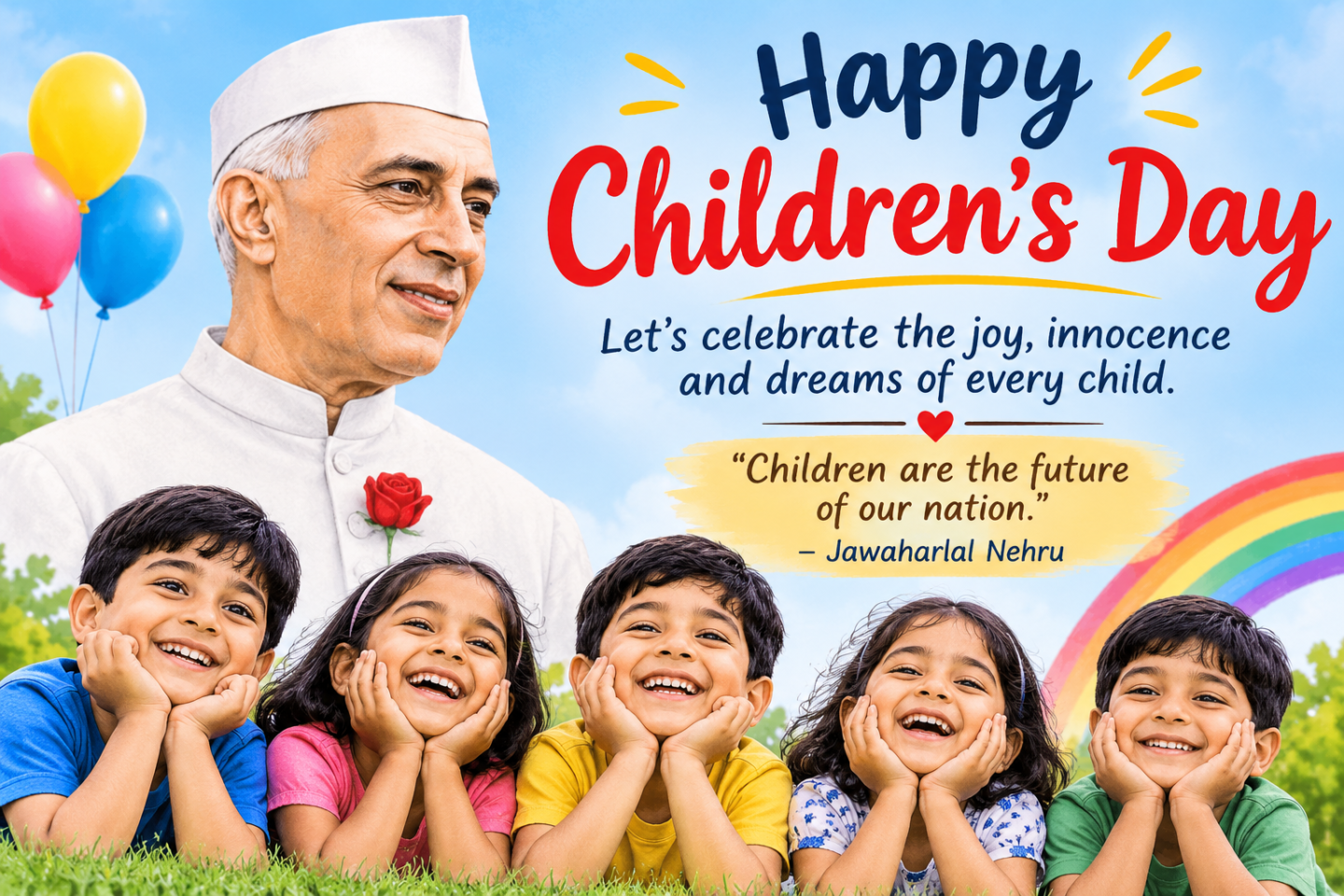
Jawaharlal Nehru was born on 14 November 1889 in Allahabad (now Prayagraj). He became independent India’s first Prime Minister and served until his death in 1964. Children loved him, and he returned that affection openly. They called him Chacha Nehru. He believed children were not only the future of the nation but also a present responsibility. He repeatedly stressed education, creativity, play, and happiness as the foundations of strong citizens.
Although Universal Children’s Day is observed globally on 20 November (established by the United Nations in 1954), India shifted its national focus after Nehru’s death. In 1964 the government decided that 14 November would be Children’s Day in his honour. Celebrations linked to his birthday had already begun in the 1950s; by 1957 the date was formally recognised. The decision turned a personal birthday into a national platform for child welfare.
In 2026 the day therefore carries double meaning: it is both Nehru’s 137th birth anniversary and a call to protect and nurture every Indian child.
The Real Significance of Children’s Day 2026
Children’s Day is not merely ceremonial. It shines a light on critical issues:
- Right to free and compulsory education under the Right to Education Act
- Protection from child labour, trafficking, and abuse
- Access to nutrition and healthcare through schemes such as ICDS
- Equal opportunities for girls and children from marginalised communities
- Mental well-being in an increasingly digital world
Recent years have shown rising concerns about excessive screen time. Indian children under five often exceed recommended daily limits. Children’s Day 2026 offers a perfect moment to promote screen-free play, books, outdoor activity, and family bonding. Schools and parents are encouraged to prioritise hands-on experiences over passive consumption.
The day also reminds adults of their duty. A child who feels valued, heard, and safe is more likely to grow into a confident, compassionate adult. Celebrations that include discussions on rights, storytelling about Nehru’s vision, and simple acts of kindness reinforce this message far better than gifts alone.
How Schools and Communities Will Celebrate in 2026
Because 14 November 2026 is a Saturday, many schools will either hold special events on Friday or organise weekend programmes. Typical activities include:
- Cultural programmes where teachers perform for students (a beloved tradition that reverses the usual roles)
- Fancy-dress competitions, often featuring Nehru or historical figures
- Drawing, essay, and quiz contests on child rights or national heroes
- Sports events, magic shows, and storytelling sessions
- Distribution of sweets, chocolates, and greeting cards
- Special assemblies that remember Chacha Nehru and discuss the importance of education
In several states, education departments announce school holiday status closer to the date. Some government schools remain open for celebrations while others grant a holiday. Private schools frequently organise full-day fairs and picnics. In Tamil Nadu, for example, large-scale distribution of cakes and greeting cards to government-school students has become a recent tradition, reflecting the scale of official involvement.
Outside schools, families plan park visits, museum trips, movie outings, or simple home celebrations with home-cooked treats and shared reading time. NGOs and child-welfare organisations use the day for awareness campaigns, health camps, and enrolment drives.
7 Powerful, Joyful Ways to Make Children’s Day 2026 Truly Meaningful
- Prioritise Presence Over Presents
Spend uninterrupted time with children. Put phones away. Play board games, read stories, or simply talk. The gift of attention is more powerful than any toy. - Organise a Screen-Free Challenge
Declare a digital detox for the day or weekend. Replace screens with books, outdoor games, art materials, or cooking together. This directly addresses the growing concern of excessive screen time. - Teach One Child-Rights Concept
Use simple language to explain the right to education, the right to play, or the right to be protected. A short discussion or story can plant lifelong awareness. - Create a Memory of Nehru
Share age-appropriate stories about Chacha Nehru’s affection for children. Place a red rose (his favourite flower) near a photograph or drawing and talk about why the day exists. - Encourage Creativity and Expression
Host a mini art exhibition, poetry reading, or science demonstration at home or in school. Let children lead. Their confidence grows when their ideas are taken seriously. - Perform an Act of Kindness Together
Donate books, clothes, or stationery to a local children’s home or underprivileged school. Involve children in the packing and delivery so they experience generosity firsthand. - Plan for the Year Ahead
Use the day to set one positive family or classroom goal related to children—more outdoor play, reduced junk food, or weekly reading time. Write it down and revisit it later.
These seven approaches combine celebration with purpose. They turn a single day into a catalyst for better habits and deeper understanding.
Challenges That Still Demand Attention
While celebrations bring joy, hard realities persist. Millions of children still face barriers to quality education, especially in rural and remote areas. Malnutrition, inadequate healthcare, and digital divides continue to affect outcomes. Child labour and online safety risks remain serious concerns. Children’s Day 2026 should not end with sweets and speeches. It should renew commitment to stronger implementation of existing laws and schemes, better funding for early childhood care, and community-level monitoring of child welfare.
Parents, teachers, and policymakers share responsibility. Schools can integrate child-rights education throughout the year rather than limiting it to one day. Families can model healthy digital habits and emotional availability. Media and influencers can amplify positive stories of children overcoming obstacles instead of focusing only on problems.
Looking Forward: Building a Child-Friendly India
The ultimate measure of Children’s Day success is not the number of programmes held but the improvement in children’s daily lives. When more children complete school, when fewer go to bed hungry, when every child feels safe to speak and play, the spirit of Bal Diwas will have been honoured.
In 2026, as the nation marks 137 years since Nehru’s birth, the message remains clear and urgent: children are the present as much as the future. Investing in their health, education, protection, and happiness is the most powerful investment a society can make.
Whether you are a parent planning a special weekend, a teacher organising a school event, or a citizen simply wishing to contribute, take one concrete step this Children’s Day. Read a book with a child. Plant a tree in their name. Support a local education initiative. Speak up for a child’s rights when you see injustice.
Joy multiplies when it is shared with purpose. Let Children’s Day 2026 be remembered not only for laughter and colour but for the quiet decisions that make childhood safer, brighter, and more full of possibility for every Indian child.
Happy Children’s Day 2026. May every child feel seen, valued, and loved.