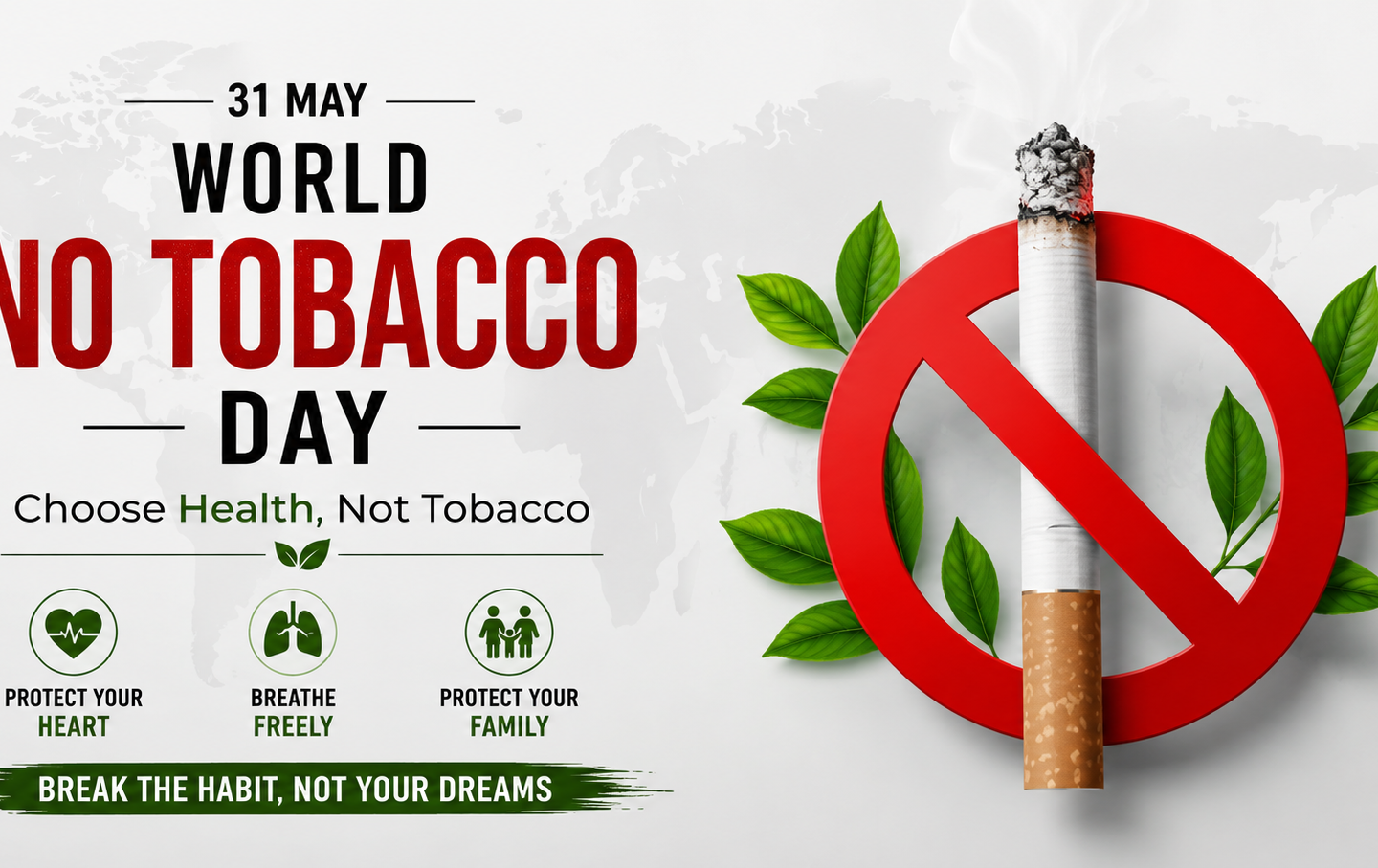
World No Tobacco Day 2026: Unmasking the Appeal – Countering Nicotine and Tobacco Addiction for a Healthier Future
On May 31, 2026, the world observes World No Tobacco Day 2026, an annual global campaign led by the World Health Organization (WHO) to highlight the devastating impacts of tobacco use and mobilize efforts against the tobacco epidemic. This year’s theme, “Unmasking the Appeal – Countering Nicotine and Tobacco Addiction,” directly targets the sophisticated marketing strategies employed by the tobacco industry to attract new users, especially youth, through appealing flavors, sleek designs, and misleading claims about reduced harm.
As we mark this important day in 2026, awareness around tobacco’s hidden dangers has never been more critical. Tobacco kills over 8 million people annually worldwide, including 1.3 million non-smokers exposed to second-hand smoke. In India alone, tobacco-related deaths approach 1.5 million each year, making it a pressing public health issue.
This comprehensive guide explores the history, significance, statistics, health risks, quitting benefits, and actionable steps for World No Tobacco Day 2026, optimized to help readers understand and act on this vital cause.
History and Significance of World No Tobacco Day
The origins of World No Tobacco Day trace back to 1987 when WHO Member States passed resolutions to combat the growing tobacco epidemic. Initially observed as a “world no-smoking day” on April 7, 1988, it evolved into an annual event on May 31 starting in 1988. The day aims to inform the public about tobacco dangers, expose industry practices, and encourage policy changes for healthier societies.
Over the decades, each World No Tobacco Day has focused on specific themes, from protecting children to environmental impacts. The 2026 theme builds on previous efforts by “unmasking” how the industry uses synthetic nicotine, nicotine salts, flavored products, and digital marketing to create addiction, particularly among adolescents.
The significance lies in its power to drive change. Tobacco use contributes to cancers, cardiovascular diseases, respiratory illnesses, and economic burdens. By raising awareness, World No Tobacco Day 2026 encourages governments, communities, and individuals to support stronger regulations, such as flavor bans, plain packaging, and youth protection measures.
In India, the day aligns with national initiatives under the Cigarettes and Other Tobacco Products Act (COTPA) and the National Tobacco Control Programme. Events like awareness programs in schools, rallies, and the launch of tools like the Tobacco-Free Educational Institutions app highlight local action.
2026 Theme: Unmasking the Appeal – Countering Nicotine and Tobacco Addiction
The 2026 theme focuses on exposing industry tactics designed to sustain addiction and recruit new users. Tobacco companies market products with appealing flavors (menthol, fruit, candy), vibrant packaging, and claims of being “safer” alternatives like e-cigarettes or nicotine pouches. These strategies target young people, who are nine times more likely to vape than adults in some regions.
Nicotine, the primary addictive substance, alters brain chemistry, especially in developing adolescent brains, leading to lifelong dependency. The campaign calls for policies that limit marketing, enforce age restrictions, and educate on the true risks of “innovative” nicotine products.
World No Tobacco Day 2026 urges everyone to:
- Expose manipulative advertising.
- Support smoke-free environments.
- Promote cessation support services.
- Advocate for comprehensive tobacco control laws.
Alarming Global and India Tobacco Statistics
Tobacco use remains a leading preventable cause of death. Globally:
- Approximately 1.3 billion people use tobacco.
- Prevalence has declined from 34% to 22% between 2000 and 2022 in monitored countries, yet population growth keeps absolute numbers high.
- Over 8 million deaths yearly, with millions more suffering from related diseases.
In India:
- Around 28% of adults use tobacco in some form.
- It causes nearly 1.5 million deaths annually, impacting heart, lung, and cancer health significantly.
- Youth initiation is concerning, with millions of adolescents exposed through accessible products.
Smokeless tobacco like gutka and khaini is particularly prevalent in regions like Assam and Northeast India, adding to oral cancer burdens.
These statistics underscore why World No Tobacco Day campaigns are essential for reversing trends through education and policy.
Devastating Health Risks of Tobacco Use
Tobacco harms nearly every organ. Key risks include:
Cancer: Smoking causes lung, mouth, throat, esophagus, bladder, pancreas, and cervical cancers. Smokeless tobacco links strongly to oral cancers.
Cardiovascular Diseases: Increases risks of heart attacks, strokes, and hypertension by damaging blood vessels and promoting clots.
Respiratory Issues: Leads to COPD, emphysema, chronic bronchitis, and worsened asthma. Second-hand smoke poses similar risks to non-smokers.
Other Effects: Reduced fertility, pregnancy complications, weakened immune system, premature aging, and higher susceptibility to infections.
Nicotine addiction makes quitting difficult, but the 2026 theme emphasizes countering these appeals with facts. Long-term users face compounded risks, with tobacco killing up to half its users.
Environmental damage from tobacco farming, production, and waste (cigarette butts) further harms ecosystems, linking health and sustainability.
Benefits of Quitting Tobacco: A Timeline of Recovery
Quitting brings rapid and long-term benefits, regardless of age or duration of use. Here’s a breakdown:
- 20 Minutes After Quitting: Heart rate and blood pressure drop.
- 12 Hours: Carbon monoxide levels normalize.
- 2-12 Weeks: Circulation and lung function improve.
- 1 Year: Heart disease risk halves.
- 5 Years: Stroke and several cancer risks reduce significantly.
- 10 Years: Lung cancer risk drops by about half.
- 15 Years: Heart disease risk matches non-smokers.
Additional benefits include better taste/smell, increased energy, improved mental health, financial savings, and positive role modeling for family. Quitting before 40 can reclaim nearly all lost life expectancy (up to 10 years on average).
Support options include nicotine replacement therapy, counseling, quitlines, and apps. In India, national quitlines and community programs aid efforts.
How to Participate in World No Tobacco Day 2026
Individuals can:
- Pledge to quit or support a quitter.
- Share educational content on social media using #WorldNoTobaccoDay2026.
- Organize or join local events, seminars, or clean-up drives for cigarette waste.
- Advocate for policy changes in schools and workplaces.
Schools and institutions are launching tobacco-free initiatives. Families can create smoke-free homes to protect children.
Governments and NGOs promote awareness through media campaigns, health camps, and enforcement of advertising bans.
Challenges and Future Outlook
Despite progress, challenges persist: industry interference, rising e-cigarette use among youth, and varying enforcement of laws. The 2026 campaign calls for stronger global and national policies, including higher taxes, comprehensive bans, and public education.
Sustained efforts can further reduce prevalence, saving millions of lives and reducing healthcare costs.
Conclusion: Commit to a Tobacco-Free Future Today
World No Tobacco Day 2026 under the theme “Unmasking the Appeal – Countering Nicotine and Tobacco Addiction” serves as a powerful reminder of collective responsibility. By understanding risks, supporting quitters, and demanding accountability from the industry, we can protect current and future generations.
On this May 31, 2026, take action—whether quitting, educating others, or advocating for change. Your steps contribute to a healthier, tobacco-free world.