Annamalai Opposes CBSE Three Language Policy for Class 9: Former Tamil Nadu BJP Chief Demands Immediate Rollback of May 2026 Notification
Annamalai Opposes CBSE Three Language Policy: Major Pushback from Former Tamil Nadu BJP President
In a significant development that has sparked discussions across political and educational circles, senior BJP functionary and former Tamil Nadu BJP president K. Annamalai has strongly opposed the Central Board of Secondary Education (CBSE)’s revised notification making a third language compulsory for Class IX students from the current academic year 2026-27.
Annamalai opposes CBSE three language policy implementation, urging the Union Ministry of Education to immediately withdraw the May 15, 2026 circular and revert to the original timeline of 2029-30. His public stance has raised eyebrows, especially as it comes from a prominent BJP leader in a state where language politics has historically been sensitive.
Background of the CBSE Three Language Policy
The CBSE’s move aligns with the National Education Policy (NEP) 2020 and the National Curriculum Framework for School Education 2023, which promote multilingualism to help students connect with India’s rich linguistic and cultural heritage. The policy mandates that students study three languages — R1, R2, and R3 — with at least two being Indian languages.
In April 2026, CBSE had announced that the three-language requirement would begin from Class VI, giving schools and students adequate preparation time. The notification clearly stated that the compulsory third language for Class IX would only come into effect from the 2029-30 academic year. This gradual approach was welcomed by many, including K. Annamalai himself, who praised the initiative for fostering early understanding of diverse Indian literatures and cultures.
However, the fresh circular issued on May 15, 2026, surprised many by advancing the Class IX implementation date to July 1, 2026. This sudden shift is at the heart of the current controversy.
Annamalai’s Strong Reaction and Key Arguments
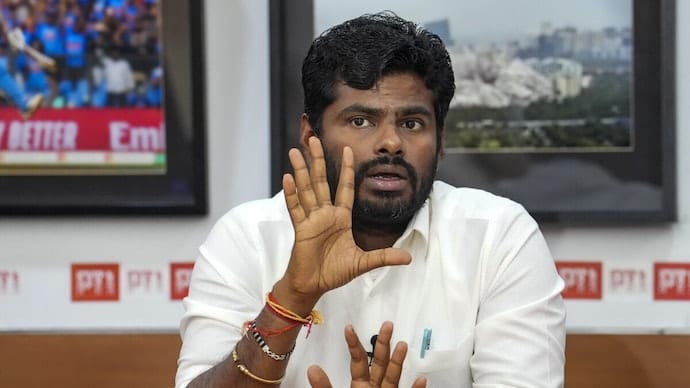
On May 26, 2026, K. Annamalai took to social media to express his concerns. He stated that the abrupt change has caused significant anxiety among parents, particularly in Tamil Nadu. Many Class IX students had already selected their languages in Class VI based on the earlier roadmap. Forcing them to adopt a new third language within weeks is seen as impractical and burdensome.
“Expecting a Class IX student to learn a new language in such a short time will only put pressure on children and affect their overall learning outcomes,” Annamalai said. He emphasized that the mid-session implementation could lead to unnecessary mental stress and adversely impact academic performance.
Annamalai welcomed the original April 2026 announcement but firmly opposed the revised timeline. He has formally requested the Union Ministry of Education to roll back the latest notification and honor the previously committed 2029-30 schedule.
This marks a rare instance of a senior BJP leader publicly disagreeing with a Union government-aligned educational decision, highlighting the complexities of implementing national policies at the state level, especially in Tamil Nadu.
Why Tamil Nadu is Particularly Concerned
Tamil Nadu has a long history of resistance to Hindi imposition and strong attachment to Tamil as the primary language. The state follows a two-language formula (Tamil and English) in most government schools. Although CBSE schools have more flexibility, many Tamil Nadu parents and students prefer English as one of the languages alongside Tamil.
Parents argue that students entering Class IX are already dealing with increased academic pressure from subjects like Mathematics, Science, and Social Studies. Adding a new language midway through the academic year could overwhelm them. Schools also face challenges in arranging teachers, restructuring timetables, and providing additional resources on such short notice.
The policy requires at least two Indian languages. For many Tamil Nadu students who have chosen a foreign language (like French or German) as their second language, the sudden mandate creates confusion and logistical issues.
Political Context Behind Annamalai’s Stance
K. Annamalai, a former IPS officer turned politician, has built a strong image as a vocal and principled leader in Tamil Nadu. He did not contest the recent 2026 Tamil Nadu Assembly elections after informing the party leadership of his preference to sit out. Despite speculation about internal differences, particularly regarding the BJP’s alliance with AIADMK, he actively campaigned for the party and its allies.
His current criticism of the CBSE notification is being seen as an attempt to address genuine grassroots concerns in Tamil Nadu while maintaining loyalty to the broader ideological goals of the BJP and NEP 2020. By acknowledging the merits of multilingual education but opposing the rushed implementation, Annamalai appears to strike a balanced yet firm position.
Implications for Students and Schools
The three-language policy, if implemented as per the May 15 circular, would affect thousands of CBSE-affiliated schools across India, with a notable impact in southern states. Key concerns include:
- Academic Stress: Class IX is a crucial year as students prepare for board exams in Class X. Additional language learning could reduce time for core subjects.
- Teacher Shortage: Many schools may not have qualified teachers for additional Indian languages at short notice.
- Equity Issues: Students from non-Hindi speaking regions may feel disadvantaged if the policy indirectly pushes certain languages.
- Parental Anxiety: Especially in Tamil Nadu, where families have already planned language streams for the entire secondary education.
Education experts suggest that while the spirit of NEP 2020 is progressive — promoting cognitive benefits of multilingualism, cultural preservation, and better employability — the execution timeline needs careful calibration.
Benefits of the Three Language Formula in NEP 2020
Proponents of the policy highlight several advantages:
- Cognitive Development: Learning multiple languages enhances brain function, memory, and problem-solving skills.
- Cultural Integration: Exposure to diverse Indian languages fosters national unity and appreciation of regional literatures.
- Global Competitiveness: Multilingual individuals often have better career opportunities in a connected world.
- Preservation of Heritage: Encouraging Indian languages helps counter the dominance of English and foreign languages in elite education.
K. Annamalai himself had appreciated these aspects in his earlier comments on the April notification.
What Should the Union Ministry of Education Do?
Annamalai’s appeal for rollback has gained traction among parents and educators. Possible ways forward include:
- Reverting to the 2029-30 timeline for Class IX compulsory implementation.
- Providing clear guidelines and support material for schools.
- Conducting consultations with state governments, especially in linguistically sensitive regions.
- Offering flexibility in language choices and phased teacher training programs.
The Ministry’s response will be closely watched as it balances national education goals with regional realities.
Broader Debate on Language Policy in India
India’s language policy has always been a delicate issue since independence. The three-language formula was first proposed in the 1960s but faced uneven implementation across states. NEP 2020 has revived this with renewed emphasis, aiming for a more uniform yet flexible approach.
In Tamil Nadu, the DMK and other Dravidian parties have traditionally opposed any perceived imposition. The BJP’s efforts to expand its footprint in the state require careful navigation of these sentiments. Annamalai’s public position may help the party connect better with concerned parents while reinforcing its commitment to federalism and practical governance.
Reactions from Parents, Schools, and Experts
Parents in Tamil Nadu have expressed relief that a senior leader has taken up their cause. Many CBSE school principals have also privately admitted implementation challenges for the 2026-27 session. Educationists recommend a minimum two-year preparation period for such structural changes.
On the other hand, supporters of early implementation argue that delaying it further may defeat the purpose of NEP 2020’s vision for foundational multilingual education.
Future Political and Educational Ramifications
Annamalai’s decision to speak out may influence internal BJP discussions on education policy rollout. It also keeps him relevant in Tamil Nadu politics despite not contesting the recent assembly elections. He has promised to reveal more about his future plans after the election results, adding another layer of interest to his current intervention.
For CBSE students nationwide, clarity from the Union Ministry is urgently needed to avoid confusion as the new academic session progresses.
Conclusion: Need for Balanced Implementation
The controversy surrounding the CBSE three language policy underscores the challenges of implementing ambitious national education reforms in a diverse country like India. While the goals of NEP 2020 are laudable, sensitivity to regional contexts, adequate preparation time, and stakeholder consultation remain crucial for success.
K. Annamalai’s firm opposition to the rushed Class IX implementation highlights these concerns effectively. As the Union Ministry of Education reviews the situation, parents and students across Tamil Nadu and other states hope for a pragmatic decision that prioritizes children’s well-being over hasty deadlines.
The coming days will be critical in determining whether the May 15, 2026 notification stands or gets withdrawn as demanded by Annamalai and many concerned parents.