100 Killed in Deadly Storms and Heavy Rain Across Uttar Pradesh: CM Yogi Adityanath Orders Swift Relief and Compensation
Uttar Pradesh Storms: Tragedy Strikes as Unseasonal Weather Claims Over 100 Lives
In a devastating turn of events, Uttar Pradesh was battered by powerful storms, heavy rain, dust clouds, and lightning strikes on May 13, 2026, resulting in the tragic loss of approximately 100 lives across multiple districts. This sudden weather shift has left families shattered, infrastructure damaged, and communities reeling from the impacts of strong winds that uprooted trees, toppled electric poles, and destroyed homes.
The state’s Relief Commissioner’s office and various district administrations have confirmed the rising toll, with Prayagraj recording the highest number of fatalities. As rescue operations continue and damage assessments are underway, Chief Minister Yogi Adityanath has taken swift cognisance of the situation, emphasizing rapid relief measures.
This article provides a detailed account of the Uttar Pradesh storms, district-wise breakdown of casualties, personal stories of survival and loss, government response, and broader implications for disaster preparedness in the region.
Sudden Weather Shift Triggers Widespread Devastation in Uttar Pradesh
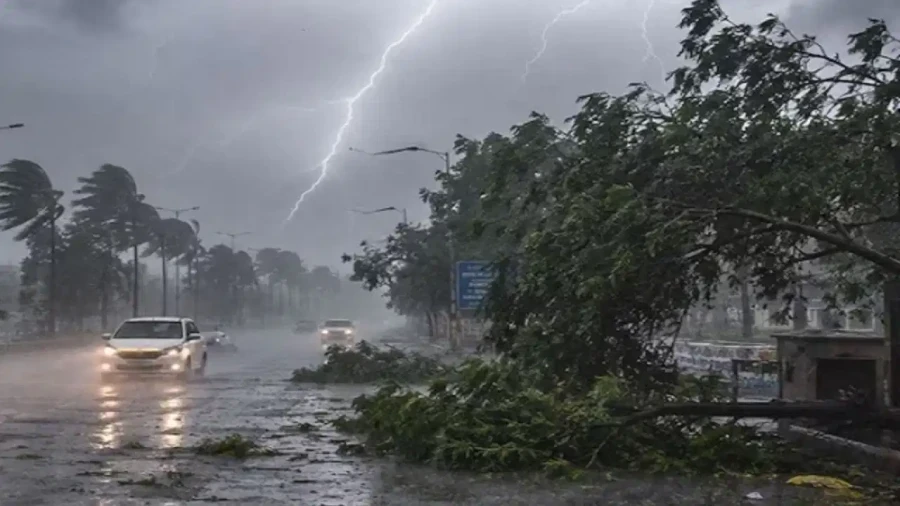
The weather in Uttar Pradesh changed dramatically last evening. Dark clouds of dust engulfed large parts of the state, followed by high-speed winds, heavy rainfall, and intense lightning. Many residents were caught off-guard, seeking shelter under trees, flyovers, and makeshift structures—only for these to become hazards themselves.
Strong gusts ripped apart hoardings, tin sheds, and rooftops. Trees and electric poles were uprooted, blocking major roads and crushing vehicles underneath. In several areas, rescuers had to use their bare hands to dig through debris and rescue trapped individuals. Power outages and communication disruptions added to the chaos.
Videos circulating widely on social media captured the ferocity of the Uttar Pradesh storms. One particularly harrowing clip from Bamiyana village in Bareilly shows a man being lifted into the air along with a tin shed and thrown nearly 50 feet away into a field. The victim, identified as Nanhe Miyan, suffered fractures in his hands and legs. In his own words to NDTV, “I was holding a rope when the winds sent me and the metal structure flying. I don’t know where I fell. I was at least 50 feet away.”
Such incidents highlight the unpredictable and violent nature of these unseasonal thunderstorms, which experts often link to changing climate patterns and western disturbances affecting northern India.
District-Wise Breakdown of Deaths and Injuries in Uttar Pradesh Storms
According to official reports compiled from various districts, the death toll in the Uttar Pradesh storms stands at around 100, with many more injured. Here is a detailed district-wise summary:
- Prayagraj: 21 deaths – the highest in the state. The area around this major pilgrimage city was among the worst affected.
- Bhadohi (Sant Ravidas Nagar): 18 deaths. Several incidents involved people falling into the Ganga after a pontoon bridge was damaged in Rampur area, disrupting connectivity.
- Mirzapur: 15 deaths. Another pontoon bridge in Gaura Pramanpur was damaged, cutting off access to about 20 villages.
- Fatehpur: 10 deaths, with eight in Khaga tehsil (including five women). One additional death due to wall collapse in Sadar tehsil.
- Unnao and Badaun: 6 deaths each.
- Pratapgarh and Bareilly: 4 deaths each.
- Sitapur, Raebareli, and Chandauli: 2 deaths each.
- Kanpur Dehat, Hardoi, and Sambhal: 2 deaths each.
- Single deaths reported in Kaushambi, Shahjahanpur, Sonbhadra, Lakhimpur, and others like Deoria (lightning strikes).
Additional reports mention lightning strikes claiming lives in Deoria and wall/shed collapses in Pratapgarh and Kanpur Dehat. The total number of injured exceeds 50-70 across districts, with significant livestock losses and damage to over 100-200 houses.
These figures are based on initial assessments and may rise as more reports come in. Divisional commissioners and district magistrates have been instructed to verify incidents sensitively and ensure no genuine cases are missed.
Heart-Wrenching Incidents: Lightning, Wall Collapses, and Bridge Damage
Beyond the raw numbers, individual tragedies paint a grim picture of the Uttar Pradesh storms’ impact:
In Fatehpur’s Khaga tehsil, five women were among the eight fatalities. A woman in Sadar tehsil died when a wall collapsed on her. In Pratapgarh, four lives were lost due to similar collapses and lightning. Lightning strikes also claimed two lives in Deoria.
Pontoon bridges, critical for riverine connectivity, were severely damaged in Bhadohi and Mirzapur. In Bhadohi’s Rampur, several people reportedly fell into the Ganga. These incidents not only caused immediate casualties but also isolated communities, hindering rescue efforts.
Roads across the state remain blocked by fallen trees, and many vehicles were crushed. Rescue teams worked tirelessly through the night, often without heavy equipment in initial hours.
CM Yogi Adityanath’s Proactive Response to Uttar Pradesh Crisis
Chief Minister Yogi Adityanath has expressed deep condolences to the bereaved families and directed immediate action. Key measures include:
- Disbursal of financial assistance (typically Rs 4 lakh ex-gratia per deceased as per state norms) within 24 hours.
- Regular updates on damages from all districts every three hours.
- Sensitivity in verification processes to ensure quick and transparent relief.
- Instructions to divisional commissioners and district magistrates for on-ground assessments and priority rescue operations.
The Relief Commissioner’s office has confirmed that the CM has taken cognisance of deaths, injuries, livestock losses, and house damages. This swift governmental response aims to provide immediate succour to affected families in Uttar Pradesh.
Local administrations have been activated, with Home Guard and other forces assisting in clearing debris and restoring connectivity.
Broader Impacts: Agriculture, Infrastructure, and Economy
The Uttar Pradesh storms have far-reaching consequences. Standing crops, particularly in rural districts like Fatehpur, Mirzapur, and Bhadohi, have suffered damage. Livestock losses add to the economic burden on farmers.
Power infrastructure took a heavy hit, with numerous electric poles uprooted, leading to prolonged outages. Restoration work is underway, but full normalcy may take days in remote areas.
Transportation networks were disrupted, with roads blocked and potential impacts on rail services. In urban centers, fallen hoardings and trees posed risks to pedestrians and commuters.
This event underscores the vulnerability of Uttar Pradesh—India’s most populous state—to extreme weather. With a large rural population dependent on agriculture, such unseasonal events can exacerbate livelihood challenges.
Why Such Severe Storms in Uttar Pradesh? Meteorological Insights
Unseasonal thunderstorms in May are not unheard of but appear more intense in recent years. Western disturbances, combined with local convection and rising temperatures, often trigger dust storms followed by rain and lightning.
The India Meteorological Department (IMD) had likely issued alerts, but the suddenness and localized intensity caught many unprepared. Climate change is believed to contribute to more frequent and severe weather extremes in the Indo-Gangetic plains.
Safety Tips and Preparedness for Future Storms in Uttar Pradesh
Residents are advised to:
- Avoid open fields, trees, and water bodies during thunderstorms.
- Seek sturdy shelter indoors and unplug electrical appliances.
- Stay updated via official weather apps and local alerts.
- Reinforce weak structures, especially tin roofs and boundary walls.
District administrations should enhance early warning systems, particularly in vulnerable riverine and rural areas.
Government and Community Support: Path Ahead
Beyond immediate relief, long-term rehabilitation—including house repairs, crop loss compensation, and infrastructure rebuilding—will be crucial. NGOs, local volunteers, and political parties are likely to step in with aid.
The Uttar Pradesh storms serve as a reminder of nature’s power and the need for robust disaster management frameworks. CM Yogi Adityanath’s administration’s focus on rapid response sets a positive precedent.
As the state mourns the victims, collective efforts must ensure that no family is left unsupported. Updates on relief distribution and further damage assessments will continue to emerge in the coming days.
This tragedy in Uttar Pradesh highlights both human resilience and the urgent need for better preparedness against changing weather patterns. Our thoughts are with the affected families.