Centre Defends Great Nicobar Project Amid Rahul Gandhi’s Environmental Concerns; Unveils Phase-Wise Plan for Strategic Hub
New Delhi/Greater Nicobar: In a significant move to bolster India’s maritime and economic dominance in the Indo-Pacific region, the central government has issued a detailed clarification regarding the ambitious Great Nicobar Project. The intervention comes hot on the heels of a visit by Leader of the Opposition in the Lok Sabha, Rahul Gandhi, who raised serious apprehensions about the ecological and tribal impact of the ₹81,000 crore mega-infrastructure initiative.
The Ministry of Environment, Forest and Climate Change (MoEF&CC) released a comprehensive statement on Friday, pushing back against allegations of environmental negligence while outlining a robust framework for what it calls a “strategic initiative” to reduce India’s reliance on foreign ports. The clarification attempts to balance the narrative between unprecedented economic development and the preservation of the island’s fragile ecosystem, setting the stage for one of India’s most watched infrastructure projects.
The Core Controversy: Development vs. Ecology
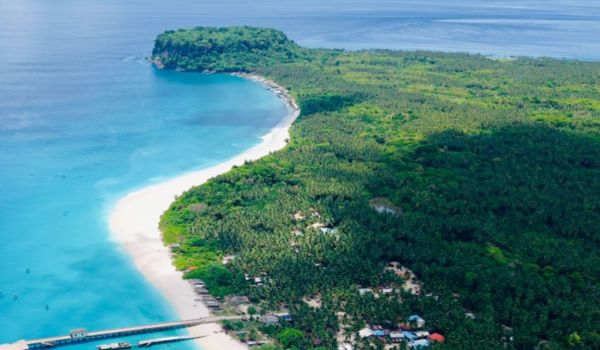
The Great Nicobar Project envisions transforming the remote island—located just 40 nautical miles from one of the world’s busiest East-West shipping routes—into a major maritime and economic hub. However, during his recent tour of the island, Rahul Gandhi alleged that the project would lead to massive rainforest loss, displace indigenous communities, and cause irreversible damage to a biodiversity hotspot.
“By clear-felling ancient rainforests and ignoring the rights of the Shompen and Nicobarese tribes, this project threatens the very soul of the island,” Gandhi had stated, drawing immediate political and administrative attention to the region.
In response, the MoEF&CC has acknowledged the concerns but insists that the project has undergone a rigorous Environmental Impact Assessment (EIA) under existing regulations. The government argues that the strategic necessity of the project—situated near the Malacca Strait—outweighs the logistical challenges, provided environmental safeguards are strictly enforced.
Strategic Imperative: Reducing Reliance on Foreign Ports
Officials familiar with the development plan highlight that the island’s proximity (approximately 40 nautical miles) to one of the world’s busiest shipping channels is not a coincidence but a geographical gift. Currently, a significant portion of Indian cargo is transshipped through ports in Singapore and Sri Lanka. The Great Nicobar Project aims to break this dependency by creating a domestic transshipment hub capable of handling mega-container vessels.
The government’s white paper on the project emphasizes that this is not merely an economic decision but a critical national security imperative. By controlling a domestic transshipment terminal, India can exercise greater oversight of its trade routes, reduce logistics costs for Indian exporters, and strengthen its military and commercial footprint in the strategic Indo-Pacific corridor.
Massive Infrastructure Components
According to the official project blueprint, the Great Nicobar Project includes several large-scale infrastructure components designed to boost connectivity, trade, and energy security. These are not piecemeal developments but a holistic township model spread across more than 16,000 hectares. The key components include:
- International Container Transshipment Terminal (ICTT): A deep-water port capable of handling the next generation of mega-ships, designed to compete directly with Colombo and Singapore.
- Greenfield International Airport: Built to handle 4,000 peak-hour passengers, this facility will connect the remote island to major domestic and international hubs, facilitating tourism, trade, and military logistics.
- 450 MVA Gas and Solar-Based Power Plant: To ensure energy autonomy, the project includes a hybrid power plant that combines natural gas with solar energy, aiming to reduce the carbon footprint of the development.
- Modern Township: A planned urban center covering over 166.10 sqkm (total project area) to house the workforce and support services required to run the port and airport.
The Deforestation Debate: Numbers and Mitigation
Perhaps the most contentious aspect of the Great Nicobar Project has been the cost to its lush forests. Rahul Gandhi’s allegations pointed to widespread tree felling. The government has now quantified this impact for the first time in this level of detail.
Officials noted that only 1.82 per cent of the total forest cover in the Andaman and Nicobar Islands will be diverted for the project. While an estimated 18.65 lakh trees fall within the broader project area, the actual number expected to be felled is approximately 7.11 lakh. Critically, the government maintains this will be carried out in phases to minimize sudden ecological shock.
To counterbalance the environmental impact, the Centre has planned compensatory afforestation on over 97.30 square kilometers of land. Additionally, designated green zones covering nearly 66 square kilometers will be preserved on the island. The government insists that for every tree lost, a robust re-greening effort is mandated.
Tribal Welfare: Protecting the Shompen and Nicobarese
One of the primary political flashpoints has been the fate of the indigenous communities, particularly the particularly vulnerable tribal group (PVTG) Shompen and the Nicobarese tribe. Rahul Gandhi had alleged that the Great Nicobar Project would lead to their marginalization or displacement.
The MoEF&CC has categorically denied this. In its statement, the government clarified that no displacement of these indigenous communities is planned.
“We have re-notified the tribal reserve areas to ensure a net increase in the total protected land for the Shompen and Nicobarese tribes,” a senior official stated. The government has established three independent monitoring committees to oversee environmental compliance, biodiversity conservation, and specifically, community welfare.
These committees will have the mandate to ensure that the cultural integrity, livelihoods, and rights of the tribal populations are not compromised during the construction or operational phases of the project. Authorities argue that improved infrastructure will actually bring better healthcare, education, and connectivity to communities that have historically remained isolated.
Phased Implementation: A 22-Year Journey (2025-2047)
To address fears of rapid, unchecked construction, the government has released a timeline for the Great Nicobar Project. It will be implemented in three phases between 2025 and 2047.
- Phase 1 (2025-2030): Focus on initial land clearing, construction of the basic township infrastructure, and commencement of the power plant and airport runway.
- Phase 2 (2031-2038): Development of the International Container Transshipment Terminal and expansion of the airport facilities.
- Phase 3 (2039-2047): Full-scale operation of the port, commercialization of the township, and integration into global shipping networks.
Officials argue that this 22-year horizon allows for careful, real-time monitoring of social and environmental impacts. “If at any stage the environmental degradation exceeds permissible limits, the independent monitoring committees have the authority to recommend halting specific activities,” the MoEF&CC statement read.
The Other Side of the Coin: Protests and Seismic Risks
Despite the government’s robust defense, the Great Nicobar Project remains a flashpoint. The government’s clarification comes against a backdrop of earlier protests and petitions, both within India and internationally. Environmental activists have consistently alleged that the initial Environmental Impact Assessments were flawed, underestimated the cumulative impact of deforestation, and ignored the water security needs of the island.
Furthermore, critics point to the island’s extreme vulnerability to seismic activity and tsunamis. The 2004 Indian Ocean tsunami had devastated parts of the Andaman and Nicobar chain. Experts question the prudence of placing a ₹81,000 crore nuclear-capable port and airport complex on an island located on a major tectonic fault line.
The project also highlights a governance friction. While the central government views the Great Nicobar Project as a non-negotiable strategic asset for the Indo-Pacific age, local political voices and environmental lawyers argue that the “strategic” tag is being used to bypass stringent green laws.
Conclusion: A Test Case for Indian Development
The Centre’s latest clarifications are a clear signal that the Great Nicobar Project is moving forward, regardless of political opposition. By quantifying the tree felling (7.11 lakh trees) against compensatory afforestation (97 sqkm), and by putting tribal non-displacement in writing, the government is attempting to insulate the project from legal challenges.
For news website publishers and SEO trackers, the keyword Nicobar project is now firmly associated with a high-stakes debate involving national security, climate change, and indigenous rights. The secondary keyword environmental impact remains the most searched modifier for this topic.
As the project gears up for its first phase in 2025, the world will be watching to see if India can pull off what it promises: creating a massive economic hub in a fragile island ecosystem without repeating the developmental mistakes of the past.
For now, the government maintains that “Great Nicobar represents a model for balancing development with ecological preservation,” a claim that will be tested by the tides of the Indian Ocean—and the courts of public opinion—for decades to come.