Supreme Court Reserves Verdict on Pawan Khera Anticipatory Bail Plea in Assam CM Himanta Biswa Sarma Wife Passport Forgery Case
Supreme Court Reserves Verdict on Pawan Khera Anticipatory Bail in High-Profile Case Involving Assam CM Himanta Biswa Sarma’s Wife
New Delhi, April 30, 2026: The Supreme Court on Thursday reserved its verdict on the anticipatory bail plea filed by Congress leader Pawan Khera in connection with an FIR registered by Assam Police. The case stems from allegations made by Pawan Khera against Riniki Bhuyan Sarma, wife of Assam Chief Minister Himanta Biswa Sarma, claiming she holds multiple foreign passports and undisclosed assets abroad.
A bench comprising Justice J.K. Maheshwari and Justice Atul S. Chandurkar heard detailed arguments from senior advocate Dr. Abhishek Manu Singhvi, representing Pawan Khera, and Solicitor General Tushar Mehta, appearing for the State of Assam. The court has reserved judgment after intense submissions that highlighted issues of personal liberty under Article 21, necessity of arrest, and allegations of forged documents.
This development marks the latest twist in a politically charged controversy that erupted ahead of the Assam Assembly elections. The case has drawn national attention due to its implications for political discourse, defamation laws, and the boundaries of custodial interrogation in cases involving public figures.
Background of the Pawan Khera Case: Allegations and FIR
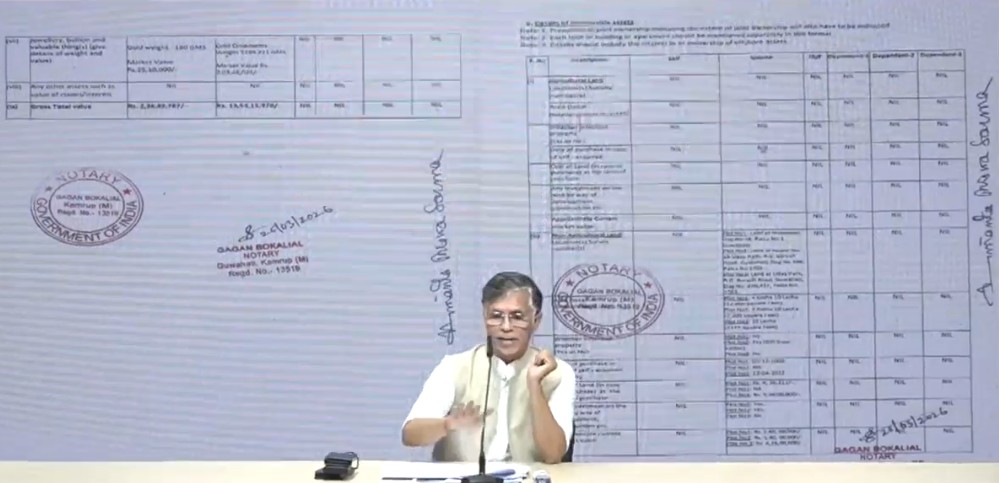
The controversy began when Congress leader Pawan Khera, who heads the party’s Media and Publicity Department, held press conferences in Delhi and Guwahati on April 5, 2026. During these briefings, Pawan Khera alleged that Riniki Bhuyan Sarma possessed passports from multiple countries, including the UAE, Egypt, and Antigua and Barbuda. He also claimed she had financial interests and a company registered in the USA, which were allegedly not disclosed in Chief Minister Himanta Biswa Sarma’s election affidavit.
Pawan Khera displayed purported images of these passports and related documents to support his claims, framing them as questions about transparency and possible violations of Indian citizenship laws, which generally do not permit dual citizenship.
In response, Riniki Bhuyan Sarma filed a complaint, leading to the registration of an FIR at the Guwahati Crime Branch Police Station. The FIR invokes multiple sections of the Bharatiya Nyaya Sanhita (BNS), 2023, including:
- Section 175 (false statement in connection with an election)
- Section 318 (cheating)
- Sections 337 and 338 (forgery of public record and valuable security)
- Section 340 (using forged document as genuine)
- Section 352 (intentional insult to provoke breach of peace)
- Section 356 (defamation)
Other sections related to criminal conspiracy and public mischief were also reportedly invoked, making it a multi-faceted case beyond simple defamation.
Assam Police and the complainant maintained that the documents shown by Pawan Khera were forged and fabricated. The Ministry of External Affairs (MEA) reportedly confirmed that the passport images were fake, with no evidence that Riniki Bhuyan Sarma holds foreign citizenship or multiple passports.
Chief Minister Himanta Biswa Sarma publicly countered the allegations, accusing the Congress of relying on materials from dubious sources, including social media groups with alleged foreign links, to interfere in the electoral process.
Legal Journey: From Telangana HC to Gauhati HC and Now Supreme Court
Pawan Khera first approached the Telangana High Court, which granted him one week’s transit anticipatory bail on April 10, 2026, to enable him to seek regular relief in Assam. However, the Supreme Court stayed this order on April 15, directing him to approach the competent court in Assam while clarifying that any anticipatory bail granted by the Assam court would be considered independently.
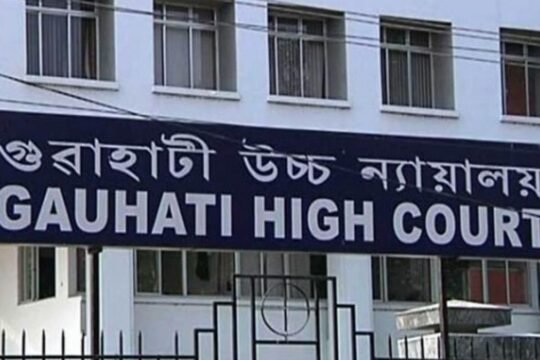
Following the Supreme Court’s directive, Pawan Khera moved the Gauhati High Court. On April 24, 2026, a single-judge bench of Justice Parthivjyoti Saikia rejected the anticipatory bail plea. The High Court observed that the case was not one of “defamation simpliciter.” It emphasized the need for custodial interrogation to uncover the source of the allegedly forged documents, accomplices, and possible foreign elements. The court also noted that Pawan Khera had dragged a “private individual” (Riniki Bhuyan Sarma) into a political controversy without substantiating his claims.
The Gauhati High Court further highlighted prima facie materials suggesting offences under forgery provisions, including references to Section 339 BNS (possession of forged documents), even if not explicitly listed in the initial FIR.
Supreme Court Hearing: Key Arguments by Singhvi and Mehta
In the Supreme Court on April 30, Dr. Abhishek Manu Singhvi launched a strong defence, describing the case as “unprecedented.” He made indirect references to statements by Chief Minister Himanta Biswa Sarma, calling him the “boss of the boss of the boss of the prosecutor” and alleging threats of life imprisonment for Pawan Khera. Singhvi declined to quote certain remarks in open court, terming them “unprintable,” and remarked that “Dr. Ambedkar would turn in his grave” if a constitutional office-holder spoke like a “constitutional cowboy or constitutional Rambo.”
Singhvi argued that the core offences were defamation and reputational damage, which are largely bailable and do not necessitate arrest or custodial interrogation. “Let me assume I am convicted ultimately… But where is the necessity of arrest? What is there in the case which cannot be done without an arrest?” he questioned. He stressed protection of personal liberty under Article 21 of the Constitution and pointed out that Pawan Khera is not a “hardened criminal” but an active politician. He also criticized the deployment of 50-60 Assam policemen in Delhi as excessive, likening it to treating Pawan Khera like a “terrorist.”
Singhvi challenged the Gauhati High Court’s observations, including its description of the complainant as an “innocent lady,” arguing this amounted to pre-judging the trial. He contended that most offences in the FIR are bailable and that adequate safeguards could ensure cooperation without arrest.
Solicitor General Tushar Mehta, opposing the plea, insisted that custodial interrogation was essential. He referred to the documents shown by Pawan Khera as forged and fabricated, including fake passports and US company records. Mehta argued that investigation needed to trace the source of these documents, identify accomplices, and examine if “foreign elements” were involved in interfering with Assam elections (held on April 9). He described Pawan Khera as “absconding” since the FIR and emphasized that custodial interrogation differs qualitatively from other methods.
Mehta took the court through the complaint, asserting that serious non-bailable offences like forgery under Section 338 BNS were made out, requiring deeper probe that could not be achieved without custody.
Broader Implications: Political Liberty, Defamation, and Investigative Needs
The Pawan Khera case raises significant questions about the balance between freedom of speech in political discourse and the protection of individual reputation, especially when allegations involve private citizens drawn into public controversies. Singhvi highlighted that the background of “venom spewing” statements necessitated relief to protect personal liberty.
On the other side, the State emphasized that when documents are allegedly forged and presented publicly with potential electoral motives, custodial interrogation becomes necessary to unravel the conspiracy and prevent miscarriage of justice.
Legal experts note that anticipatory bail under Section 482 BNSS (or equivalent provisions) is discretionary and guided by factors like the nature of accusations, role of the accused, and risk of tampering or fleeing. The Supreme Court’s eventual verdict could set precedents on when courts should deny pre-arrest bail in cases blending defamation with forgery and cheating allegations.
The timing—close to Assam polls and involving a senior Congress leader—has fueled debates on whether such cases reflect political vendetta or legitimate accountability. Pawan Khera and the Congress have positioned the matter as an attack on dissent, while the Assam government and complainant view it as defence against malicious falsehoods that could influence voters.
What Lies Ahead for Pawan Khera Case
With the Supreme Court reserving its verdict, all eyes are on the apex court’s reasoning. If anticipatory bail is granted, it could shield Pawan Khera from immediate arrest while allowing investigation to proceed. Denial might compel him to seek regular bail after arrest or cooperate differently.
The case also underscores evolving challenges under the new Bharatiya Nyaya Sanhita, particularly distinctions between bailable and non-bailable offences in forgery and defamation matters. Section 339 BNS, covering possession of forged documents with varying punishments (up to life imprisonment in grave cases), featured prominently in arguments.
As the investigation continues, Assam Police have indicated they cannot reveal all gathered material at this stage. Questions around the origin of the documents, their digital manipulation, and any broader network remain central.
This high-stakes legal battle between Pawan Khera and the Assam establishment reflects deeper tensions in Indian politics: the use of press conferences for explosive claims, the role of social media in amplifying unverified documents, and the judiciary’s role in safeguarding both liberty and truth-seeking processes.
The reserved verdict is expected soon and will likely clarify the contours of anticipatory bail in politically sensitive cases involving allegations of document forgery aimed at public figures or their families.