Supreme Court Stays Telangana High Court Order Granting Transit Anticipatory Bail to Pawan Khera in Assam FIR Case Involving Riniki Bhuyan Sharma
Supreme Court Delivers Major Setback to Congress Leader Pawan Khera: Stays Transit Anticipatory Bail in High-Profile Assam Case
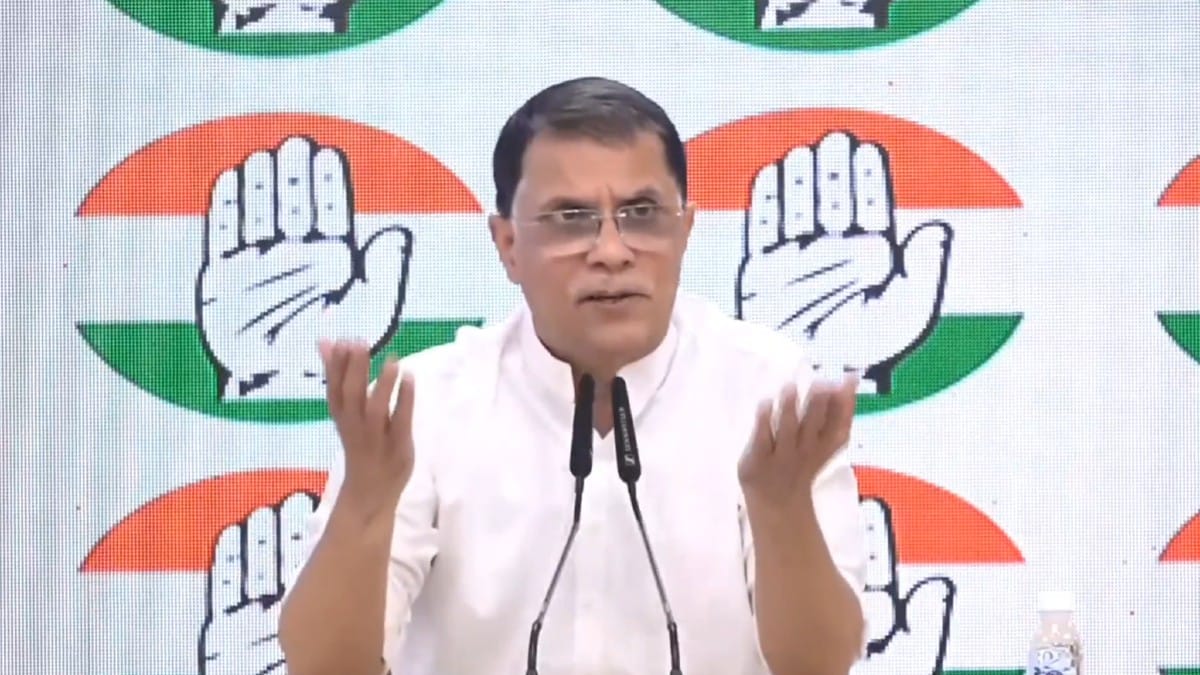
In a significant development in Indian legal and political circles, the Supreme Court of India on Wednesday stayed the order passed by the Telangana High Court granting one-week transit anticipatory bail to senior Congress leader and spokesperson Pawan Khera. The apex court issued notice on the petition filed by the State of Assam, challenging the maintainability of the bail application in a court outside the territorial jurisdiction where the FIR was registered.
The bench comprising Justice J.K. Maheshwari and Justice Atul S. Chandurkar passed the interim order while hearing the Special Leave Petition (SLP) filed by the Assam government. The court observed that it was “surprised” by the Telangana High Court’s decision and highlighted concerns over potential abuse of process through forum shopping.
Pawan Khera, who serves as the Chairman of the Media and Publicity Department of the Indian National Congress, found himself at the center of a major controversy after making serious allegations against Riniki Bhuyan Sharma, the wife of Assam Chief Minister Himanta Biswa Sarma. The FIR against him was lodged at the Guwahati Crime Branch Police Station following these claims, which surfaced just ahead of the Assam Assembly elections.
Background of the Controversy: Allegations Against Riniki Bhuyan Sharma
The case traces back to early April 2026 when Pawan Khera held a press conference and alleged that Riniki Bhuyan Sharma held multiple passports from different countries, including India, UAE, and Egypt. He further claimed she possessed undisclosed foreign assets and properties, such as luxury holdings in Dubai and a company in the UK or US, which were allegedly not declared in the election affidavits of her husband, the Assam CM.
These allegations were described by the Sarma family as “false, fabricated, baseless, and malicious.” Riniki Bhuyan Sharma strongly denied the claims, asserting that India does not permit dual citizenship and that the documents cited by Khera appeared manipulated or AI-generated. She vowed to take legal action, stating “See you in court,” and filed a complaint leading to the registration of the FIR.
Assam Police registered the case under several provisions of the Bharatiya Nyaya Sanhita (BNS), including:
- Section 175 (false statement in connection with an election)
- Sections 35 and 36 (general conspiracy provisions)
- Section 318 (cheating)
- Section 338 (forgery of valuable security, will, etc.)
- Section 337 (forgery of record of Court or public register)
- Section 340 (forged document or electronic record and using it as genuine)
- Section 352 (intentional insult with intent to provoke breach of peace)
- Section 356 (defamation)
Notably, one of the offences carries a maximum punishment of up to 10 years imprisonment, a point emphasized by the Solicitor General during the Supreme Court hearing.
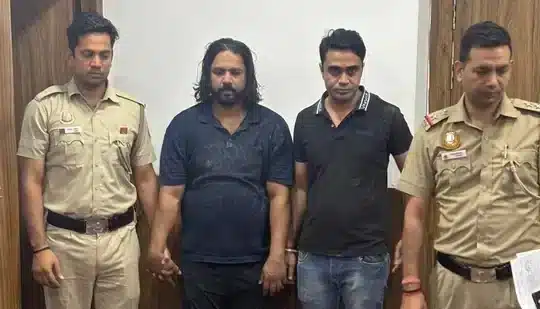
Following the FIR, Assam Police teams visited Pawan Khera’s residence in Delhi for searches and also reached Hyderabad in pursuit of the Congress leader, escalating the political and legal drama.
Telangana High Court Grants Transit Anticipatory Bail to Pawan Khera
On April 10, 2026, Justice K. Sujana of the Telangana High Court granted Pawan Khera limited transit anticipatory bail for one week. The court imposed conditions such as executing a personal bond of Rs 1 lakh with two sureties, cooperating with the investigation, and not leaving the country without permission. It also directed him to approach the competent court in Assam (Gauhati High Court or appropriate sessions court) for regular relief within that period.
The Telangana High Court rejected the Assam government’s arguments on maintainability, observing that under Article 21 of the Constitution (right to life and personal liberty), a High Court could grant limited transit anticipatory bail even outside its territorial jurisdiction when there is a reasonable apprehension of arrest. The judge noted that the concept of transit bail exists precisely to provide immediate protection so the accused can approach the jurisdictional court without fear of immediate arrest.
The order explicitly stated that denying such limited protection could not be justified merely because the petitioner could directly approach courts in Assam, especially given the apprehension of arrest.
Assam Government Challenges the Order in Supreme Court: Allegations of Forum Shopping
Aggrieved by the Telangana High Court order, the State of Assam, represented by Solicitor General of India Tushar Mehta, moved the Supreme Court. The primary grounds of challenge were:
- Lack of territorial jurisdiction — Pawan Khera failed to demonstrate any valid reason why he could not approach the courts in Assam directly.
- No averment in the petition explaining the need for filing in Telangana.
- Potential abuse of process and forum shopping.
During the hearing, Solicitor General Tushar Mehta argued forcefully that the Telangana High Court overlooked critical facts. He pointed out that one offence carried a maximum punishment of 10 years, making it a serious case. Mehta further submitted that Pawan Khera’s claim of his wife’s residence in Hyderabad was contradicted by her Aadhaar card showing Delhi as the address.
Justice Maheshwari observed that Khera’s note during the hearing mentioned his wife’s Hyderabad residence, but the SG countered with evidence from the Aadhaar card. The Solicitor General warned that allowing such practices could lead to a situation where “a person can buy properties across the country and seek anticipatory bail from places they choose.” He termed it “forum-shopping, if not forum-choosing,” and cited the Supreme Court’s judgment in Priya Indoria vs. State of Karnataka (2023), where the apex court frowned upon such practices and laid down guidelines for granting transit anticipatory bail only in exceptional circumstances with a clear territorial nexus.
Mehta emphasized that Pawan Khera did not explain in his petition why he could not go to Assam or mention any property owned by his wife in Hyderabad, calling it a “complete abuse of process.”
The Supreme Court bench appeared to agree with the concerns, staying the Telangana High Court order and noting that if Khera applies for anticipatory bail in the court having jurisdiction in Assam, the interim stay would not adversely affect its consideration.
What is Transit Anticipatory Bail? Legal Context and Priya Indoria Judgment
Transit anticipatory bail refers to limited pre-arrest protection granted by a court outside the territorial jurisdiction of the FIR to allow the accused to approach the competent court safely. While the Bharatiya Nagarik Suraksha Sanhita (BNSS) does not explicitly provide for it, courts have evolved the concept under inherent powers and Article 21.
The landmark Priya Indoria judgment by the Supreme Court (authored by Justice B.V. Nagarathna) clarified the law on extra-territorial anticipatory bail. The apex court held that High Courts or Sessions Courts can grant limited transit anticipatory bail in exceptional cases, but only when:
- There is a genuine apprehension of inter-state arrest.
- The applicant demonstrates a clear territorial connection or proximity (residence, occupation, etc.).
- Reasons for not approaching the jurisdictional court are recorded.
- The order is for a short duration to enable approaching the proper court.
The judgment strongly cautioned against forum shopping, where accused persons might choose a “favorable” court by traveling across states without genuine reasons, undermining territorial jurisdiction principles under CrPC/BNSS.
In the Pawan Khera case, the Supreme Court’s intervention underscores these principles, signaling that transit bail cannot be granted casually without satisfying the tests laid down in Priya Indoria.
Political and Electoral Implications
The controversy erupted at a sensitive time, just before the Assam Assembly elections on April 9, 2026. Allegations against the family of a sitting Chief Minister naturally gained massive traction in the politically charged environment of Northeast India.
Congress leaders, including Pawan Khera, positioned the claims as questions of transparency and accountability in election affidavits. On the other hand, the BJP and the Sarma family countered that it was a smear campaign involving potentially forged or edited documents aimed at maligning a political opponent.
Riniki Bhuyan Sharma, who maintains a low public profile and has no direct political role, expressed distress over repeated targeting of her family despite staying away from politics. Assam CM Himanta Biswa Sarma had earlier warned of both civil and criminal defamation suits.
The police action — searches in Delhi and visits to Hyderabad — further intensified the narrative of a high-stakes political-legal battle.
Current Status and What Lies Ahead
With the Supreme Court staying the transit bail order, Pawan Khera no longer enjoys the one-week protection granted by the Telangana High Court. He remains free to apply for regular anticipatory bail before the appropriate court in Assam (likely the Gauhati High Court or sessions court in Guwahati), and the apex court has clarified that its stay will not prejudice such an application.
The matter is now listed for further hearing after notice is served on Khera and other respondents. Legal experts believe the Supreme Court’s final decision could set important precedents on the limits of transit anticipatory bail and the prevention of forum shopping in criminal cases involving multiple states.
This case also highlights the evolving jurisprudence under the new criminal laws (BNS and BNSS), particularly regarding serious offences like forgery, cheating, and defamation linked to electoral matters.
Broader Significance for Indian Judiciary
The Pawan Khera episode brings into focus several key issues:
- Balance between personal liberty (Article 21) and territorial jurisdiction in criminal procedure.
- Prevention of misuse of anticipatory bail provisions through strategic forum selection.
- The role of media and political spokespersons in making serious allegations that can trigger criminal proceedings.
- Challenges in handling cross-state investigations in a federal structure.
As the case progresses, it will be closely watched not only by legal professionals but also by political observers across the country, given the high-profile personalities involved.
The Supreme Court’s prompt intervention and critical observations send a strong message that while the right to seek protection from arbitrary arrest is sacrosanct, it cannot be invoked in a manner that defeats the principles of justice, jurisdiction, and fair investigation.
Pawan Khera and his legal team will now have to strategize their next move carefully, likely preparing a fresh anticipatory bail application in Assam while addressing the serious charges under multiple BNS sections.
This unfolding legal saga involving Pawan Khera, the Assam government, and the allegations surrounding Riniki Bhuyan Sharma continues to captivate public attention, blending elements of politics, defamation, forgery claims, and crucial questions of constitutional and procedural law.