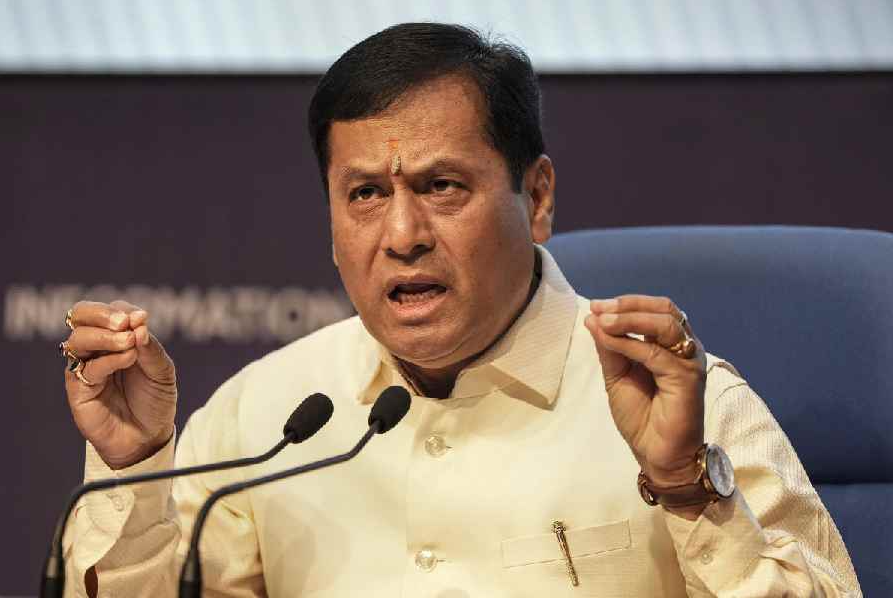
Sarbananda Sonowal Directs Swift Resolution of Exporters’ Issues Amid West Asia Crisis: Transparency Boost in Ports and Shipping Sector
Sarbananda Sonowal Emphasizes Exporters’ Problem Resolution in West Asia Crisis, Orders Transparency in Ports and Shipping
New Delhi, April 11, 2026: In a proactive move to safeguard India’s export economy amid escalating tensions in West Asia, Union Minister of Ports, Shipping and Waterways Sarbananda Sonowal has directed focused attention on resolving issues faced by exporters. The minister chaired a high-level review meeting on Friday, April 10, 2026, where the current geopolitical situation and its ripple effects on maritime trade were thoroughly discussed.
The West Asia crisis, involving disruptions around key maritime chokepoints like the Strait of Hormuz and lingering Red Sea challenges, has impacted global shipping routes. Shipping lines rerouted vessels, leading to initial container backlogs at Indian ports. However, timely government intervention has significantly mitigated these issues, according to official statements.
During the meeting with all ports, organizations, and stakeholders under the ministry, Sarbananda Sonowal issued clear instructions to port authorities and the Directorate General of Shipping (DG Shipping) to address any problems raised by exporters or other parties promptly. This initiative underscores the government’s commitment to maintaining seamless export flows even in challenging times.
Detailed Review and Stakeholder Consultations
The Friday meeting followed a separate consultation on Thursday with exporter organizations. In these discussions, exporters were encouraged to clearly specify their challenges along with the names of the concerned ports. This targeted approach aims to ensure precise and effective resolutions.
To enhance accountability, Sarbananda Sonowal directed all ports to publicly disclose rebates, concessions, and facilities offered for containers. This step promotes greater transparency and visibility in port operations, helping businesses plan better and avoid unnecessary costs.
Additional Secretary in the Ministry of Ports, Shipping and Waterways, Mukesh Mangle, briefed attendees on the latest geopolitical developments in West Asia. He explained that initial container congestion at ports was not due to port inefficiencies but resulted from shipping lines suspending services to the Middle East region.
Mangle highlighted positive developments: “Currently, there is no container congestion or backlog at any port due to operational issues.” He provided specific figures demonstrating remarkable progress in decongestion efforts.
At Kandla Port (Deendayal Port Authority), the number of stranded containers dropped from 1,575 to just 44 — a staggering 97% reduction. Similarly, at Jawaharlal Nehru Port Authority (JNPA) in Navi Mumbai, backlog containers fell from 4,500 on March 8 to 394, marking a 92% decrease. These improvements reflect coordinated efforts between ports, terminals, and shipping stakeholders to clear yards and restore normal cargo movement.
Safe Repatriation of Indian Seafarers: A Humanitarian Priority
Amid the volatility, ensuring the safety of Indian maritime personnel remains a top priority. The ministry reported that 1,927 Indian seafarers have been safely repatriated so far due to the West Asia crisis. Notably, 124 seafarers were brought back in the last 24 hours alone.
These evacuations involve close coordination with ship owners, recruitment and placement service agencies (RPSL), Indian missions abroad, and the Directorate General of Shipping. The government continues to monitor the situation vigilantly, with mechanisms activated to protect both seafarers and Indian-flagged vessels.
No maritime incidents involving Indian vessels have been reported recently, providing reassurance to the industry. The swift repatriation efforts demonstrate India’s robust crisis response framework in protecting its human capital in the global shipping sector.
Broader Impact of West Asia Crisis on Indian Maritime Trade
The ongoing tensions in West Asia, including risks around the Strait of Hormuz and Red Sea routes, have forced many shipping companies to opt for longer detours via the Cape of Good Hope. This rerouting adds 10-14 days (or more) to voyage times, increases fuel consumption, and elevates freight rates significantly — sometimes by 200-300% on affected lanes.
For India, a major player in global trade, these disruptions initially created challenges for exports to the Middle East, Europe, and beyond. Sectors like textiles, pharmaceuticals, engineering goods, and perishables faced delays, while importers dealt with higher insurance premiums and working capital strains.
Container congestion peaked at several west coast ports earlier, with reports of thousands of TEUs (Twenty-foot Equivalent Units) stuck at JNPA, Kandla, and other facilities. Exporters raised concerns over ground rent, storage charges, and reefer (refrigerated) container costs for stranded cargo.
In response, ports like JNPA introduced relief measures such as waivers on dwell time charges and reefer plug-in fees for a specified period. Similar supportive policies were extended at other major ports to ease the burden on trade stakeholders.
Sarbananda Sonowal has repeatedly emphasized that the crisis should not become an opportunity for profiteering. He urged all stakeholders to maintain ethical practices and focus on collective resilience. The minister’s directives for transparency in shipping-related charges aim to prevent opaque pricing and ensure fair dealings during this period of uncertainty.
Government’s Multi-Pronged Strategy for Supply Chain Resilience
The Ministry of Ports, Shipping and Waterways, under Sarbananda Sonowal‘s leadership, has adopted a comprehensive approach:
- Real-time Monitoring: Continuous assessment of vessel movements, port capacities, and cargo flows.
- Stakeholder Engagement: Regular meetings with exporters, shipping lines, terminal operators, and trade bodies.
- Infrastructure Utilization: Promoting multimodal transport (rail-road-sea) to decongest ports faster.
- Policy Support: Waivers, rebates, and clear guidelines to support affected cargo.
- Seafarer Welfare: Prioritizing safe repatriation and welfare of Indian crew members.
These measures have helped clear nearly 90% of the cargo backlog at major ports, as per recent updates. Ports are now operating with improved efficiency, and container velocity is gradually normalizing despite external pressures.
India’s major ports, including Mundra, JNPA, Kandla, and others, continue to handle high volumes. Kandla Port, for instance, has achieved record cargo handling even amid challenges, reflecting inherent operational strengths.
Implications for Indian Exporters and Economy
Exporters, particularly those dealing with time-sensitive or perishable goods, stand to benefit from the minister’s intervention. By mandating quick grievance redressal and public disclosure of concessions, the government is creating a more predictable and supportive ecosystem.
The West Asia region is a crucial market for Indian exports, with bilateral trade worth billions of dollars. Disruptions here can affect sectors ranging from gems and jewellery to chemicals and agricultural products. Stable port operations and transparent shipping practices will help maintain India’s competitive edge in global markets.
Moreover, successful management of the crisis enhances investor confidence in India’s maritime infrastructure. Initiatives like Sagarmala and the development of inland waterways further strengthen long-term resilience.
Future Outlook and Recommendations
While significant progress has been made, the situation in West Asia remains fluid. Stakeholders are advised to:
- Stay updated with advisories from the Directorate General of Shipping.
- Explore alternative routing options where feasible.
- Utilize government-provided relief measures promptly.
- Maintain close communication with port authorities for real-time support.
Sarbananda Sonowal‘s leadership in this crisis highlights a balanced strategy — addressing immediate pain points for exporters while building systemic transparency and efficiency in the ports and shipping sector.
As India navigates these geopolitical headwinds, the focus remains on minimizing disruptions to trade, protecting lives at sea, and ensuring economic continuity. The safe return of 1,927 seafarers, coupled with drastic reductions in container backlogs, signals effective governance and stakeholder collaboration.
This development is expected to bolster export momentum and reinforce India’s position as a reliable maritime nation. For the latest updates on ports, shipping, and trade policies, continue following reliable sources.